How Aerial Refueling Works—and Why Militaries Need It
Aerial refueling lets military aircraft stay airborne for hours longer by transferring fuel mid-flight. Two competing systems—the flying boom and probe-and-drogue—each bring distinct advantages to modern air operations.

Filling Up at 30,000 Feet
Modern military operations depend on a deceptively simple idea: pumping fuel from one aircraft to another while both fly at hundreds of kilometres per hour. Aerial refueling—also called air-to-air refueling or in-flight refueling—extends the range, endurance, and payload of combat and support aircraft without requiring them to land. It is the invisible backbone of power projection, enabling bombers to strike distant targets, fighters to maintain continuous patrols, and surveillance planes to loiter over a theatre for hours on end.
A Century of Mid-Air Gas Stations
The concept dates back to 27 June 1923, when two US Army Air Service DH-4B biplanes completed the first successful mid-air fuel transfer. A crewmember on the tanker aircraft simply lowered a hose into the receiver's fuel filler while both planes flew in tight formation. Within months, the same team set an endurance record of over 37 hours aloft using nine mid-air refuels, demonstrating the technique's potential.
Practical systems emerged in the 1930s when British engineer Sir Alan Cobham founded Flight Refuelling Ltd and patented a "crossover" method using trailing lines. The technology saw its first combat use during the Korean War, when F-84 fighter-bombers flying from Japanese airfields topped up from converted B-29 tankers to reach targets in Korea.
Two Competing Systems
The Flying Boom
Favoured by the US Air Force, the flying boom is a rigid, telescoping tube mounted beneath the tanker's tail. A boom operator—lying prone or seated at a control station—visually guides the boom into a receptacle on the receiving aircraft. The key advantage is speed: a boom can transfer fuel at roughly 6,000 pounds per minute, making it ideal for thirsty large aircraft like bombers and heavy transports.
Probe-and-Drogue
Used by the US Navy, NATO allies, and most other air forces worldwide, this system trails a flexible hose with a cone-shaped basket (the drogue) behind the tanker. The receiving pilot manoeuvres a fixed or retractable probe into the drogue to establish connection. The fuel flow rate is roughly half that of the boom method, but the system is simpler and more versatile—a single tanker can deploy multiple hoses and refuel two or three aircraft simultaneously.
The choice between systems is not merely technical. Receiver pilots must hit the drogue at a precise speed: too slow and the probe fails to latch; too fast and it can puncture or damage the hose. Boom refueling, by contrast, places the burden on the boom operator rather than the receiver pilot, but limits transfers to one aircraft at a time.
The Tanker Fleet
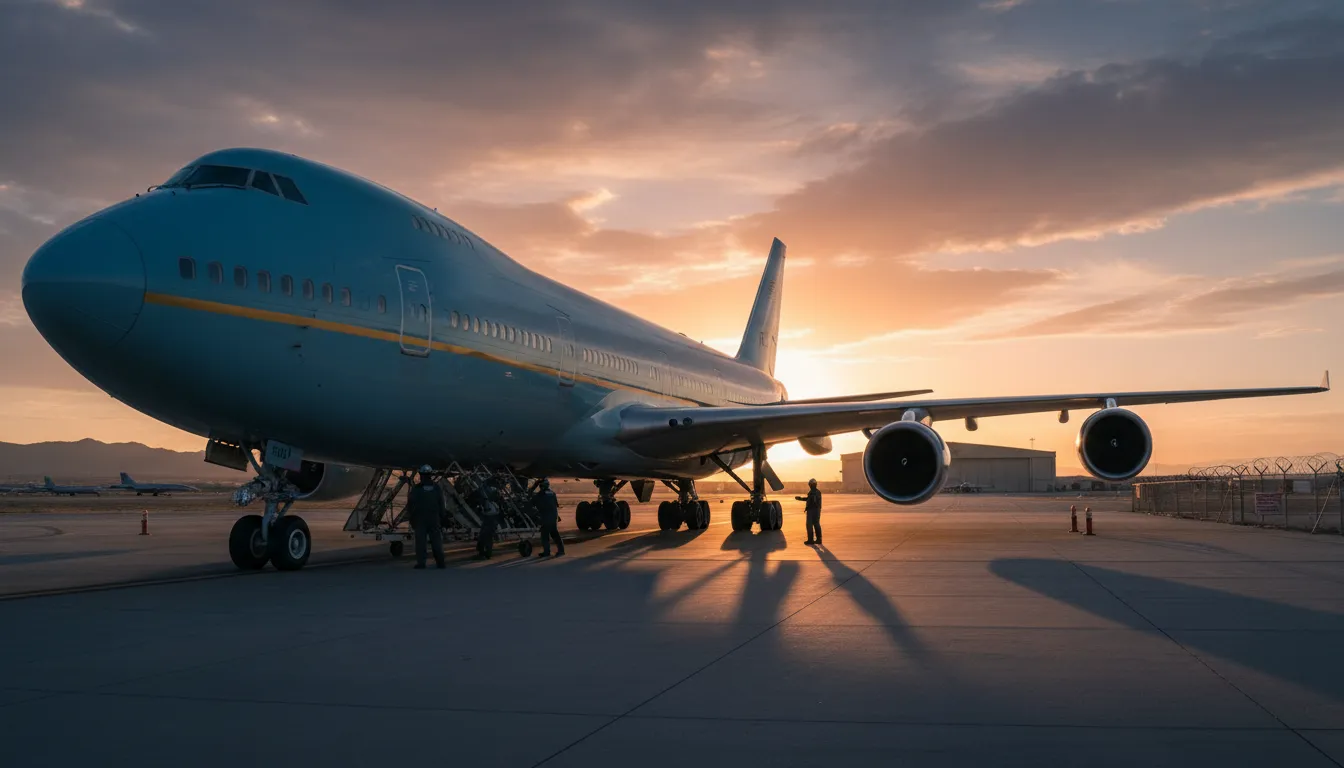
The KC-135 Stratotanker, derived from the same Boeing prototype as the 707 airliner, has been the US Air Force's workhorse tanker for over six decades. Nearly all of its internal fuel can be pumped through the flying boom, and a drogue adapter allows it to service probe-equipped aircraft as well. The fleet is now being supplemented—and eventually replaced—by the KC-46A Pegasus, a Boeing 767-based tanker that carries more fuel, operates from shorter runways, and offers a receiver envelope three times larger than the KC-135.
Beyond the United States, the Airbus A330 MRTT serves as the primary tanker for several NATO nations, Australia, and others, capable of both boom and hose-and-drogue refueling.
Why It Matters
Without aerial refueling, modern air power would look fundamentally different. Fighters would need forward bases close to conflict zones—bases that are themselves vulnerable to attack. Strategic bombers could not fly intercontinental missions without landing in foreign countries. Surveillance and reconnaissance aircraft would have drastically reduced loiter times. Aerial refueling effectively turns range into a variable rather than a constraint, giving commanders flexibility that no other technology can replicate.
As tanker fleets modernise with next-generation platforms and autonomous refueling drones enter development, the century-old art of mid-air fuel transfer remains as strategically vital as ever.