Merz in Beijing: 120 Airbus Jets and a Fresh Start with China
On his first trip to China, Chancellor Friedrich Merz secured an order for up to 120 Airbus aircraft and sought new economic avenues – as a response to growing US trade protectionism under Trump.
Major Order for Airbus as Travel Highlight
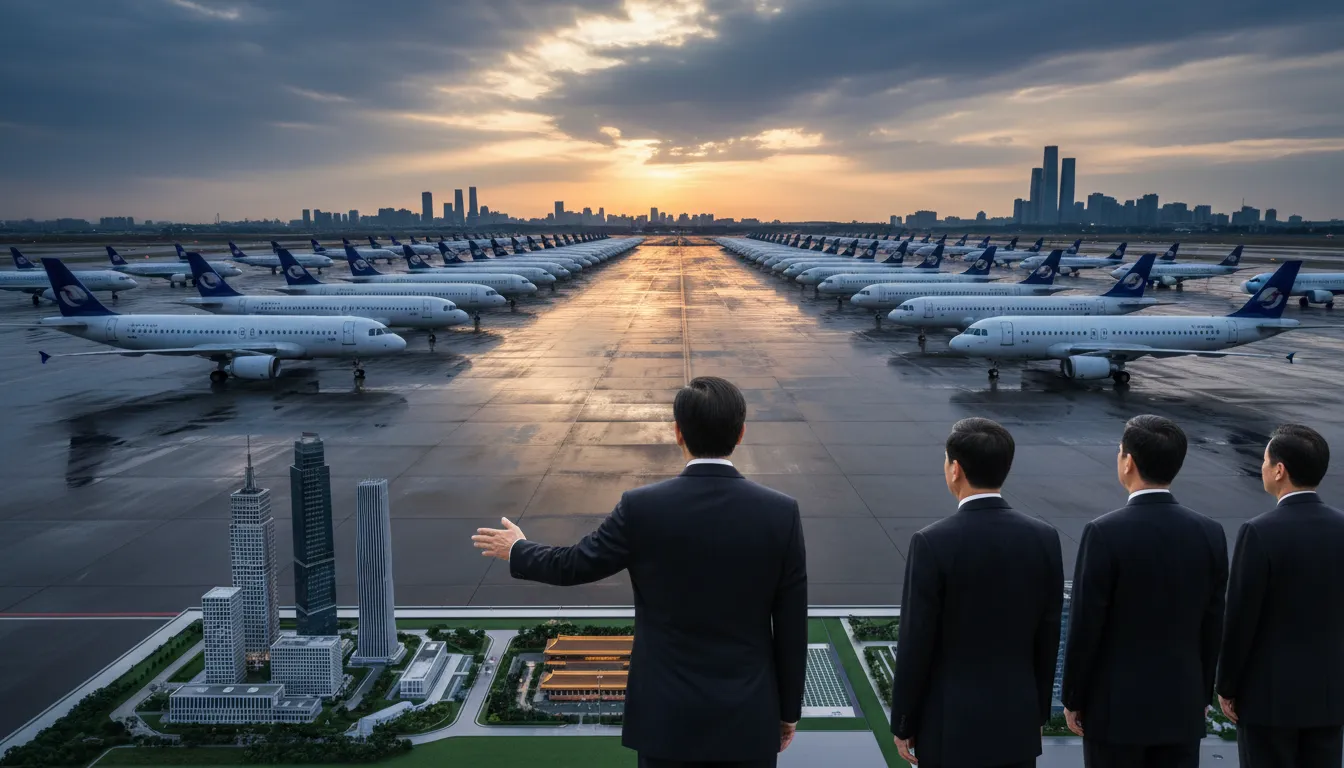
Chancellor Friedrich Merz achieved an economic success on his first official trip to China (February 24-26, 2026): Beijing ordered up to 120 additional aircraft from Airbus. Merz made the announcement after his meeting with President Xi Jinping in Beijing – a strong signal for the deepening of German-Chinese economic relations.
The agreement comes at a strategically opportune moment. Just weeks earlier, Air China had already ordered 60 A320 Neo aircraft. With the new major order, Beijing underscores its continued dependence on European aviation technology – at least as long as the state-owned manufacturer Comac cannot yet compete with Airbus and Boeing.
Hangzhou: In the Heart of the Technology Boom
On the second day of his trip, Merz traveled to the technology center of Hangzhou, where he visited the robotics company Unitree Robotics and Siemens Energy. He was accompanied by around 30 business representatives – including executives from Volkswagen, BMW, and Mercedes-Benz. The selection of stations was programmatic: Germany wants to cooperate more closely with China in the areas of robotics, artificial intelligence, and energy technology.
In Hangzhou, Merz emphasized the need for fair competitive conditions. Germany's trade deficit with China currently exceeds 80 billion euros annually and has quadrupled since 2020 – due to Chinese overcapacities and state subsidies. The total trade volume between the two countries amounted to more than 250 billion euros in 2025; China thus once again overtook the USA as Germany's most important trading partner.
Balancing Act Between Beijing and Washington
The China trip is also a diplomatic tightrope walk. US President Donald Trump had burdened transatlantic trade with far-reaching tariffs and forced Berlin to look for alternatives. Merz used Beijing as a counterweight – without, however, abandoning the ties to Washington. The Chancellery emphasized that foreign, economic, and security policy can no longer be separated today.
The question of China's role in the Ukraine war remained sensitive. Merz urged Xi Jinping to exert his influence on Moscow. On the Taiwan issue, the Chancellor reaffirmed Germany's One China policy – but insisted on a peaceful solution. According to reports, Beijing's answers remained vague.
Pressure at Home is Growing
While Merz set foreign policy accents, the pressure at home is growing. The CDU/CSU is at around 26 percent in national polls, and dissatisfaction with the federal government is high. On March 8, the first important state election since the formation of the government will take place in Baden-Württemberg – an early mood test. Current surveys see the CDU and Greens almost neck and neck there, which makes the result difficult to predict.
More Cooperation Planned
Merz announced that German ministers will visit China and that German-Chinese government consultations – for the first time in years – are planned for 2026. He formulated five guiding principles for Germany's future China policy: De-risking instead of decoupling, fair competition, integration into European structures, and recognition of China as a major power. The approximately 5,200 German companies that operate in China are likely to welcome this course – even if many structural questions remain open.