How the Chernobyl Sarcophagus Works—and What's Inside
The Chernobyl New Safe Confinement is the largest moveable land-based structure ever built, an engineering marvel designed to seal 200 tons of radioactive fuel for a century. Here is how it works.
A Steel Giant Over a Nuclear Grave
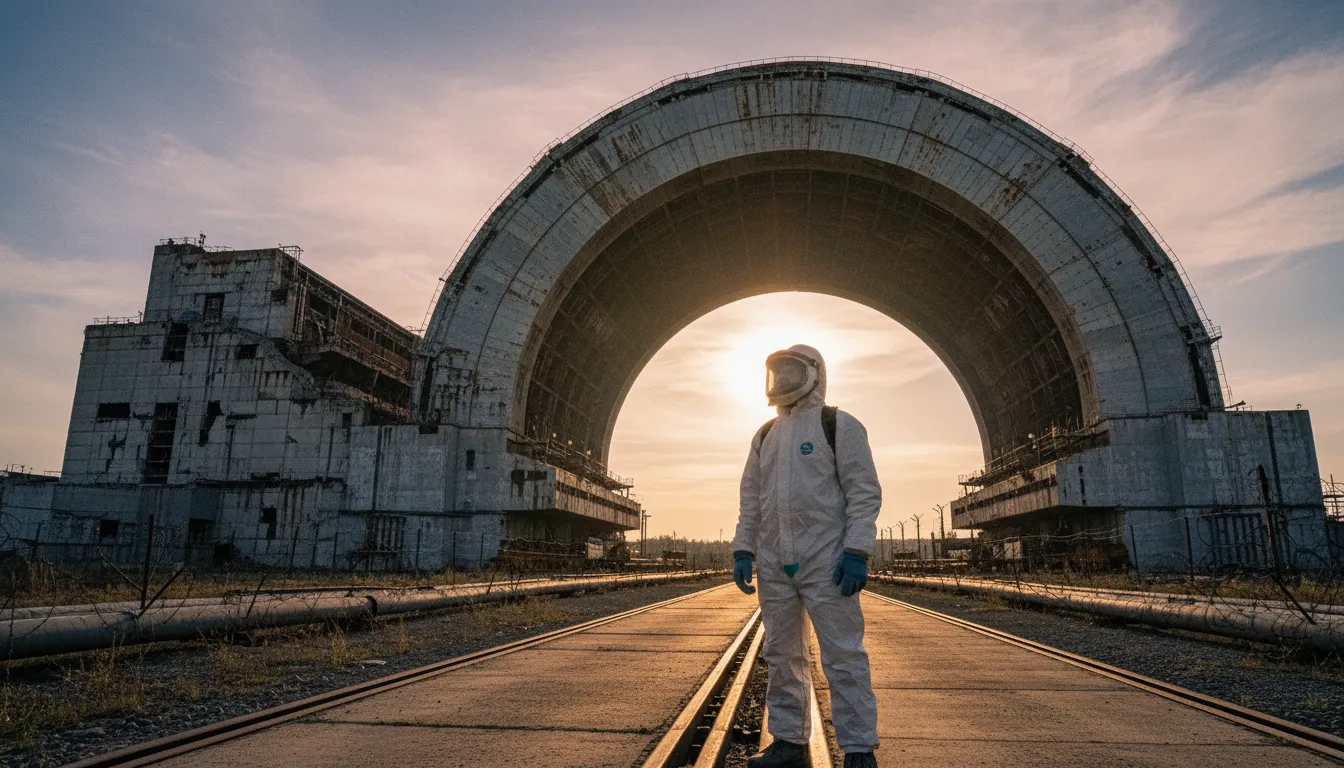
Forty years after the worst nuclear disaster in history, roughly 200 tons of radioactive fuel still sit inside the ruins of Reactor 4 at the Chernobyl Nuclear Power Plant in northern Ukraine. Containing that lethal material falls to a single structure: the New Safe Confinement (NSC), an arch of steel and cladding so large it could comfortably shelter the Statue of Liberty. It is the largest moveable land-based structure ever built, and its job is deceptively simple — keep rain out and radiation in for 100 years.
Why the Original Sarcophagus Failed
In the frantic months after the April 1986 explosion, Soviet engineers erected an emergency "sarcophagus" over the shattered reactor in just six months. Built under extreme radiation — workers could spend only minutes at a time near the wreckage — the shelter had no welded or bolted joints. It stood upright largely through gravity.
By the mid-1990s, the sarcophagus was already deteriorating. Rainwater leaked through holes in the roof, became radioactively contaminated, and seeped into the soil below. Corrosion ate into the supporting beams. Soviet scientists had warned as early as 1988 that the structure would last only 20 to 30 years. A replacement was not optional — it was urgent.
Engineering the Impossible
The solution, designed by the French consortium Novarka (a joint venture of Vinci Construction and Bouygues), took more than a decade to plan and build. The NSC is an arch-shaped steel structure spanning 257 metres, stretching 162 metres long, and rising 108 metres high. At roughly 36,000 tonnes, it weighs about three times as much as the Eiffel Tower. Its exterior cladding covers 86,000 square metres — the area of 12 football pitches.
The arch rests on foundations of 400 concrete piles, each one metre in diameter and 19 metres deep. It is engineered to withstand temperatures from −43°C to +45°C, a Class 3 tornado, and an earthquake registering 6 on the Mercalli scale.
The Double-Skin Trick
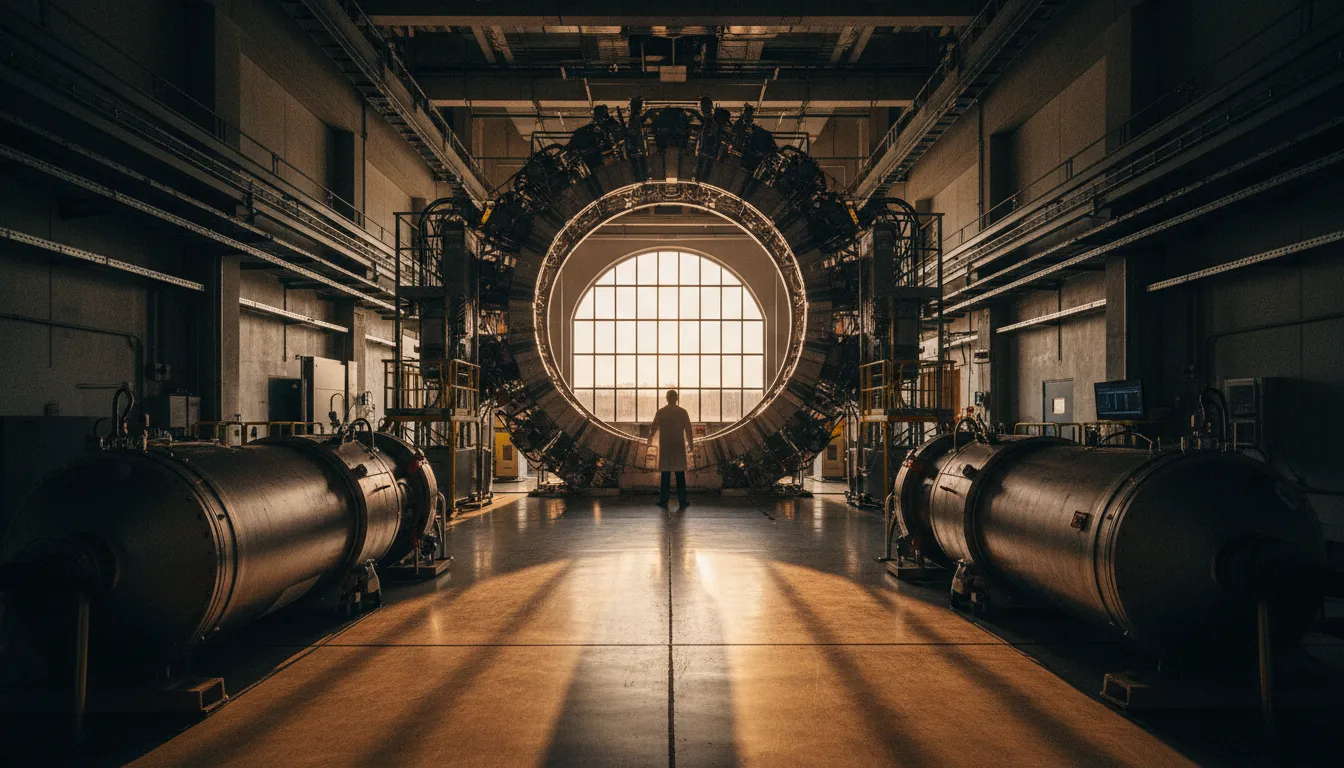
A key safety feature is the NSC's double-cladding system. The arch has both an internal and an external skin. Dry, warm air is continuously pumped between the two layers, creating overpressure that prevents radioactive particles from escaping outward. This ventilation system is what transforms the arch from a passive shell into an active containment barrier.
Built Beside, Then Slid Into Place
Workers could not construct the NSC directly over the reactor — radiation levels were still too high. Instead, the arch was assembled on a site 300 metres to the west. Once complete, it was pushed along rails using 224 hydraulic jacks, advancing 60 centimetres per stroke. The slide took 15 days, from 14 to 29 November 2016, and was controlled entirely by remote operation. The system used 116 skid shoes, each rated for an average capacity of 700 tonnes.
What Lies Beneath
Beneath the arch and inside the crumbling original sarcophagus sits an estimated 200 tonnes of nuclear fuel — a mixture of uranium, plutonium, and highly radioactive fission products. Much of this material melted during the disaster and solidified into a glass-like substance called corium, also known as "the Elephant's Foot" in its most famous formation. Retrieving this fuel is expected to take approximately 40 years, and the work cannot begin until the unstable remains of the old sarcophagus are dismantled first.
A Century of Containment — Under Threat
The NSC was designed for a 100-year lifespan, but that timeline assumed peacetime conditions. In February 2025, a Russian combat drone struck the structure, tearing a hole roughly six metres in diameter and creating more than 300 smaller breaches. The attack compromised the arch's primary containment function — the pressurized air gap between its two skins was broken.
International donors have since pledged roughly €500 million for repairs, with the United States alone committing up to $100 million. Full restoration is targeted for late 2026, according to the European Bank for Reconstruction and Development, which manages the Chernobyl Shelter Fund.
The episode underscored an uncomfortable truth: even the most ambitious engineering cannot guarantee safety when a nuclear site sits in a war zone. For now, the giant arch remains humanity's best answer to a 40-year-old question — how to cage a disaster that will stay dangerous for centuries to come.