How NASA's Artemis Program Works—Moon and Beyond
NASA's Artemis program aims to return humans to the Moon and eventually reach Mars. Here's how SLS, Orion, and commercial landers work together to make it happen.
Humanity's Return to the Moon
More than half a century after Apollo 17 left the lunar surface, NASA is sending astronauts back to the Moon—this time to stay. The Artemis program is the American space agency's ambitious plan to establish a sustained human presence on and around the Moon, then use the lessons learned to send crews to Mars.
Named after the twin sister of Apollo in Greek mythology, Artemis represents a fundamentally different approach from its predecessor. Where Apollo planted flags and collected rocks in brief visits, Artemis aims to build infrastructure for long-duration stays, international cooperation, and commercial participation on a scale the earlier program never attempted.
The Hardware: SLS, Orion, and Landers
Three core systems form the backbone of every Artemis mission.
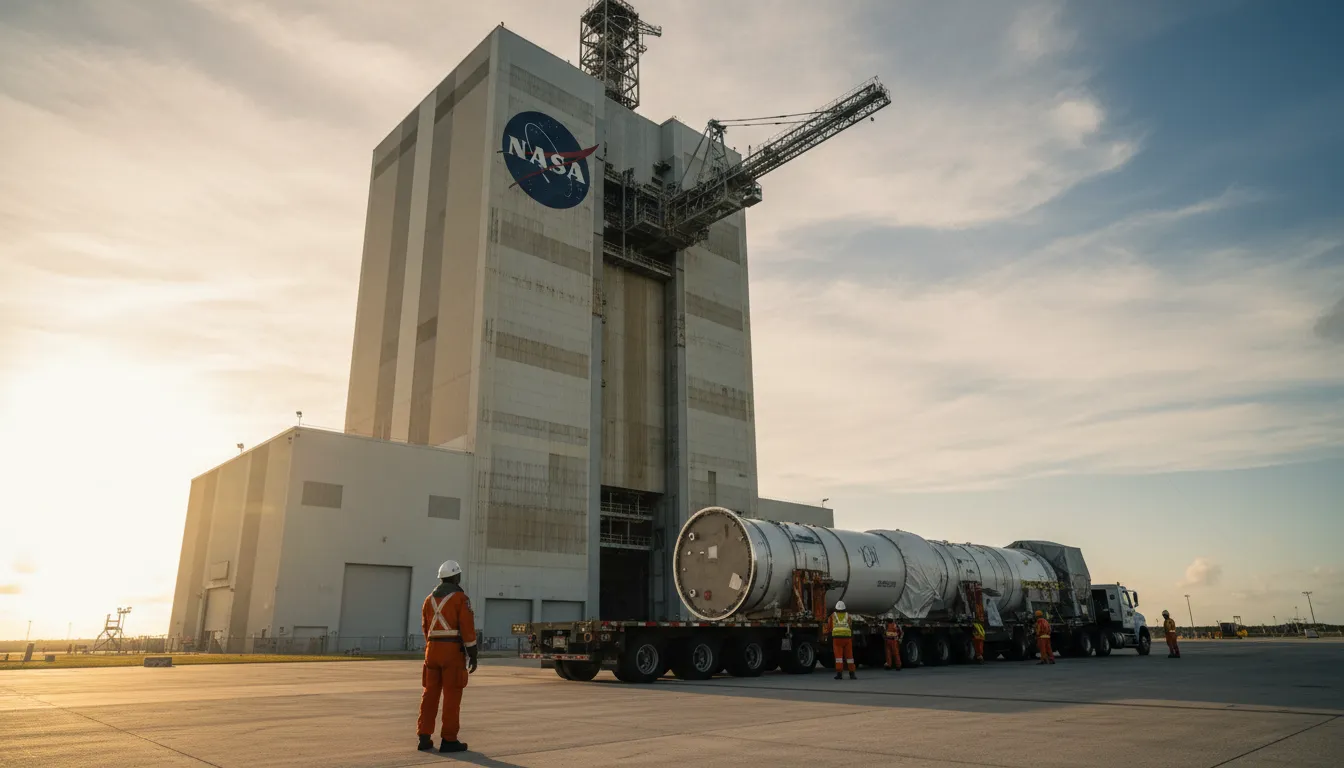
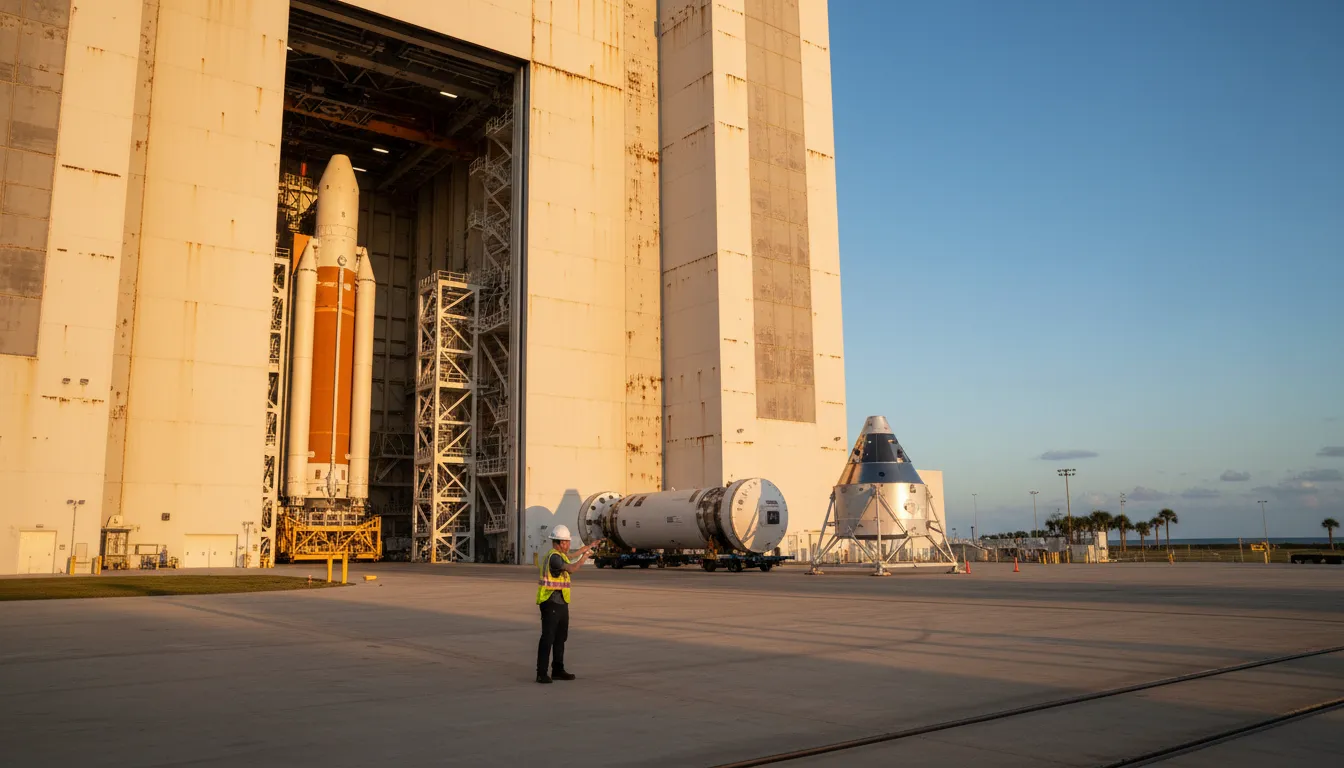
The Space Launch System (SLS) is a super heavy-lift rocket standing 322 feet tall—taller than the Statue of Liberty. Generating 8.8 million pounds of thrust at liftoff, it is 15% more powerful than the Saturn V that carried Apollo astronauts to the Moon. SLS is the only rocket currently capable of sending the Orion spacecraft, crew, and cargo directly to the Moon in a single launch.
The Orion spacecraft sits atop the SLS and serves as the crew's home during transit. Built by Lockheed Martin with a service module provided by the European Space Agency, Orion carries up to four astronauts, provides life support, and is the only component designed to survive the blazing 5,000°F re-entry back to Earth. Its crew module is partially reusable.
Because Orion cannot land on the Moon, NASA contracted two commercial Human Landing Systems (HLS): SpaceX's Starship HLS and Blue Origin's Blue Moon lander. These vehicles launch separately and rendezvous with Orion in lunar orbit, ferrying astronauts down to the surface and back.
The Mission Roadmap
Artemis is structured as a sequence of progressively harder missions, each building on the last:
- Artemis I (November 2022) — An uncrewed test flight that sent Orion into a distant retrograde orbit around the Moon for roughly six days, validating the SLS rocket and spacecraft systems.
- Artemis II (April 2026) — The first crewed flight. Four astronauts—including Canadian Space Agency astronaut Jeremy Hansen—flew a free-return trajectory around the Moon, traveling 252,756 miles from Earth and breaking the distance record set by Apollo 13.
- Artemis III (targeted late 2027) — A crewed Earth-orbit mission to test docking between Orion and one or both commercial landers, a critical rehearsal before any lunar landing.
- Artemis IV (targeted 2028) — Currently planned as the first crewed lunar landing of the program, putting astronauts on the Moon's south pole.
From Artemis V onward, NASA envisions annual lunar landings, each extending surface stay times and deploying more infrastructure.
Why the South Pole?
Unlike Apollo, which targeted equatorial regions, Artemis focuses on the lunar south pole. Scientists believe permanently shadowed craters there contain water ice—a resource that could provide drinking water, oxygen, and even rocket fuel. Access to these deposits is considered essential for any long-term human presence on the Moon.
International and Commercial Partners
Artemis is not a solo American effort. The Artemis Accords, signed by more than 40 nations, establish principles for peaceful lunar exploration. Canada contributes astronauts and robotics, the European Space Agency builds Orion's service module, and Japan provides life-support technology and future surface rovers.
The program also leans heavily on the commercial sector. Beyond SpaceX and Blue Origin's landers, NASA's Commercial Lunar Payload Services (CLPS) program contracts private companies to deliver scientific instruments and supplies to the Moon ahead of crewed missions—with up to 30 robotic landings planned starting in 2027.
The Price Tag and the Payoff
Artemis is expensive. A NASA inspector general estimate put total program costs at roughly $93 billion through 2025, with each SLS launch costing over $4 billion. Development of the SLS and Orion alone exceeded $44 billion. A planned lunar surface base could add another $20 billion over seven years.
Supporters argue the investment drives technological innovation, strengthens international alliances, and lays the groundwork for the ultimate goal: sending humans to Mars. Where Apollo proved humans could reach the Moon, Artemis is designed to prove they can live and work there—and use the Moon as a stepping stone to deeper space.