Macron to Redefine Nuclear Deterrence for Europe
Emmanuel Macron will deliver a key speech on Monday at the Île Longue naval base, outlining France's nuclear doctrine and its contribution to European security, amid growing doubts about American guarantees.
A Historic Speech at the Île Longue Naval Base
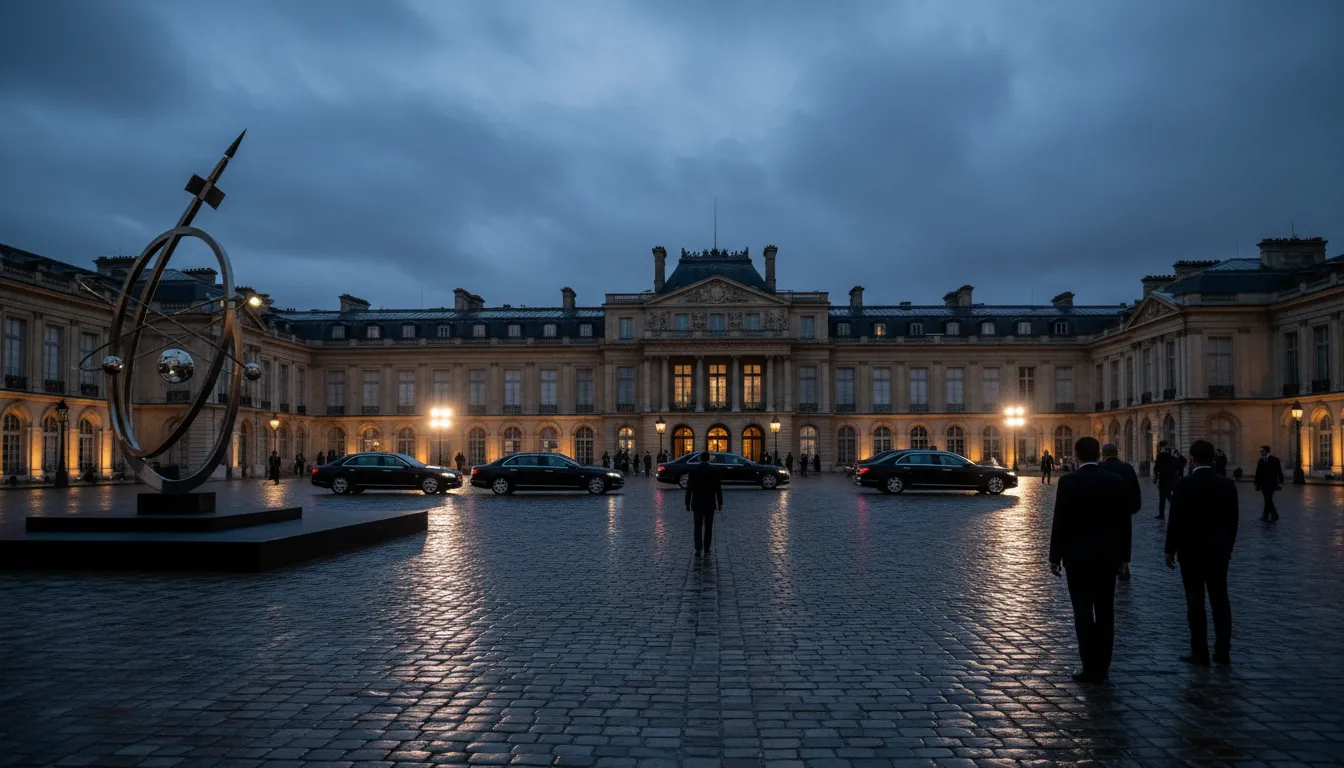
President Emmanuel Macron will deliver a highly anticipated speech on Monday, March 2, 2026, from the Île Longue submarine base in Brest. This site houses the four nuclear-powered ballistic missile submarines of the French Navy — the core of France's oceanic nuclear deterrent. This is the second major speech of this kind since Macron's election in 2017, the first having taken place in February 2020, in a very different context.
Since then, the world has changed: the Russian invasion of Ukraine in 2022, the rise of Chinese and North Korean nuclear arsenals, and Donald Trump's ambiguous statements about American commitment within NATO have profoundly reshaped the perception of risks in Europe.
"Significant" Developments Announced
The Élysée Palace has described the address as an "important moment of the term," promising "shifts and fairly significant developments." Without revealing the precise content, the President is expected to clarify how French nuclear deterrence can contribute to the security of the European continent. One principle remains, however, inviolable: the decision to use nuclear weapons rests solely with the French head of state — no sharing of this responsibility is contemplated.
France, the only country in the European Union with nuclear weapons, has an arsenal estimated at fewer than 300 warheads, structured around two components: the Strategic Air Force (Rafale aircraft) and the Strategic Oceanic Force (submarines). The budget allocated to deterrence amounted to seven billion euros in 2025.
Germany Enters the Nuclear Conversation
On the sidelines of the Munich Security Conference, Chancellor Friedrich Merz mentioned his "confidential discussions" with Macron on "European nuclear deterrence," even mentioning the possibility of the German Air Force's involvement in the French deterrence system. This unprecedented openness from Berlin illustrates the upheaval of strategic taboos imposed by the new geopolitical situation. For the first time in decades, Germany is daring to publicly address the nuclear question.
Complementarity with NATO and Limits of the Offer
The Élysée insists: any evolution of French doctrine is intended to be "complementary to NATO," and not in competition with the Atlantic Alliance. Nuclear strategy specialist Héloïse Fayet notes, however, that "the expectations of allies and partners are high." No European financial participation in the French arsenal or any sharing of command is on the agenda.
What are the Stakes for Belgium and Switzerland?
For non-nuclear French-speaking countries such as Belgium and Switzerland, Macron's speech raises a fundamental question: can French deterrence, even partially, compensate for a possible withdrawal of American commitment? The answer outlined on Monday in Brest may trace the outlines of a new security architecture for Europe — a Europe that, for the first time since the end of the Cold War, is seriously considering its strategic autonomy.