How the Masters Tournament Works—Golf's Elite Event
The Masters at Augusta National is golf's most exclusive major championship. Here's how its invitation-only format, storied traditions, and unique rules set it apart from every other tournament.
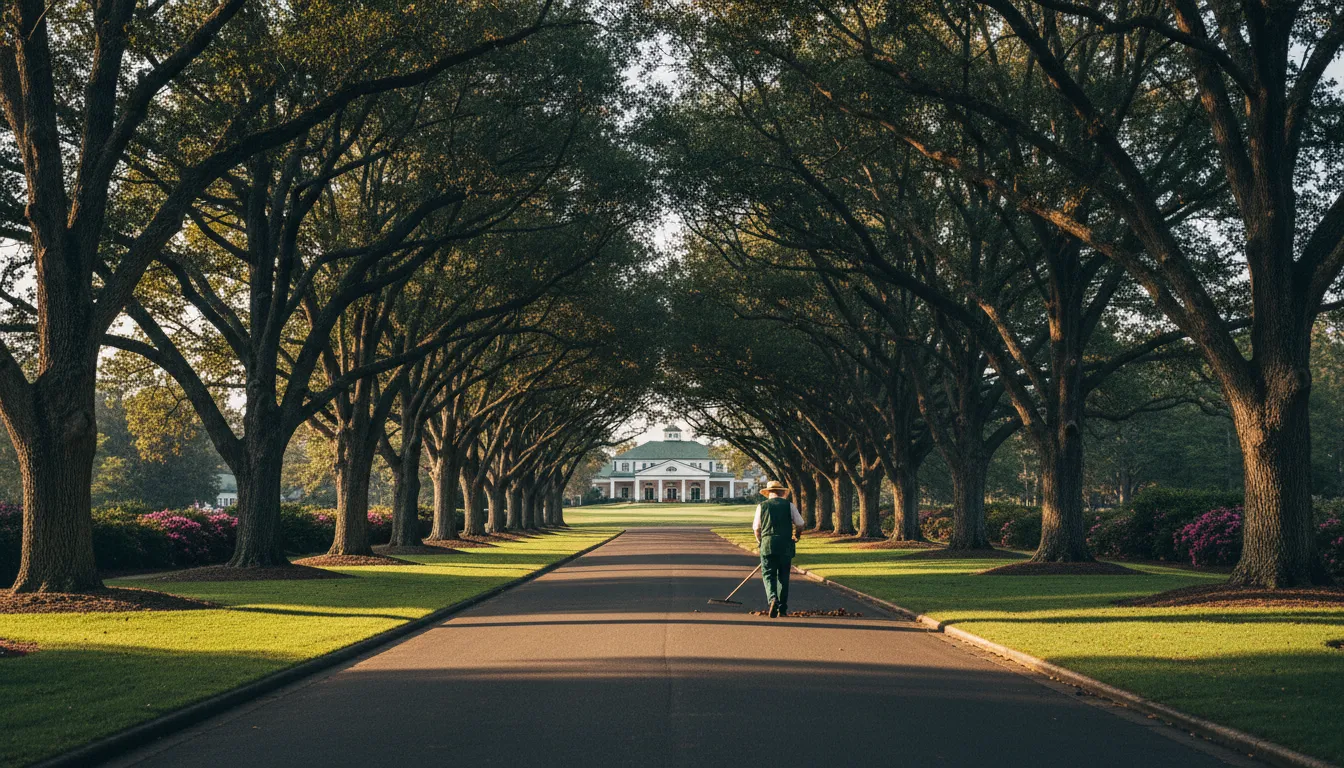
A Tournament Like No Other
Every April, the world's best golfers converge on a single course in Augusta, Georgia, for the Masters Tournament—the most exclusive and tradition-bound event in professional golf. Unlike any other major championship, the Masters is an invitational event, held at the same venue every year, and governed by rules and customs that have barely changed since 1934.
Understanding how the Masters works means understanding Augusta National Golf Club itself—a place where spectators are called "patrons," cell phones are banned, and the waiting list for membership doesn't officially exist.
How Golfers Get Invited
The Masters field typically includes only about 90 to 100 players, far fewer than the 156 who compete in other majors. There are no Monday qualifiers and no sponsor exemptions. Instead, Augusta National extends invitations based on roughly 27 qualification categories, which include:
- All past Masters champions (a lifetime invitation)
- Winners of the other three major championships within the past five years
- Recent winners on the PGA Tour and other elite circuits
- Players ranked in the top 50 of the Official World Golf Ranking by specific cutoff dates
- Finalists of top amateur events, such as the U.S. Amateur
Augusta National also reserves the right to issue discretionary invitations, though it rarely exercises this power. The result is a compact, elite field where every player has earned the right to compete.
The Format: Four Rounds and a Cut
The Masters follows a 72-hole stroke-play format spread across four days, Thursday through Sunday. After the first two rounds, a cut eliminates players who fail to finish within the top 50 (plus ties) or within 10 strokes of the leader. The remaining golfers play the final 36 holes, and the lowest cumulative score wins.
If players are tied after 72 holes, the Masters uses a sudden-death playoff, introduced in 1976 and first used in 1979 when Fuzzy Zoeller claimed victory. The playoff begins on the par-4 18th hole and continues until one player wins a hole outright.
Traditions That Define the Masters
No sporting event is more steeped in ritual than the Masters. Its traditions are inseparable from its identity.
The Green Jacket
The Masters' most iconic symbol wasn't originally meant for champions. Augusta National members first wore green jackets (specifically Pantone 342C, "Augusta Green") so patrons could identify club officials. In 1949, Sam Snead became the first winner to receive one. The champion keeps the jacket for one year, after which it must be returned to the clubhouse—though it remains his personal property for life.
The Champions Dinner
Inaugurated by Ben Hogan in 1952, the Champions Dinner is held on the Tuesday before each Masters. Only past champions and select Augusta National board members may attend. The defending champion selects the menu, often reflecting his home country's cuisine—a tradition that has produced everything from haggis to sushi.
Amen Corner
Holes 11, 12, and 13—collectively known as Amen Corner—form perhaps the most famous stretch in golf. Named by writer Herbert Warren Wind in 1958, these holes are notorious for swirling winds over Rae's Creek that can turn a birdie opportunity into a tournament-ending disaster.
The Par 3 Contest
On the Wednesday before the tournament, players compete in a lighthearted nine-hole event on Augusta's short course. A curious piece of lore: no player has ever won the Par 3 Contest and the Masters in the same year.
Augusta National: The Course and the Club
Augusta National was founded in 1932 by Bobby Jones, the legendary amateur golfer, and Clifford Roberts, an investment dealer. Jones enlisted British architect Alister MacKenzie to design the course on a 365-acre former nursery and antebellum plantation called Fruitland. MacKenzie died in January 1934, just months before the first tournament was played.
The club maintains roughly 300 members at any time, all admitted by invitation only. Its rules are famously strict: no running, no loud talking, and electronic devices are prohibited on the grounds. Violators face permanent bans. The club admitted its first female members—Condoleezza Rice and Darla Moore—only in 2012.
Why the Masters Endures
The Masters occupies a singular place in sport because it controls every detail of the experience—the field, the course, the broadcast, and the atmosphere. By keeping the field small, the venue permanent, and the traditions unchanged, Augusta National has created something rare: a modern sporting event that feels timeless. Whether a viewer is watching for the first time or the fiftieth, the green jacket ceremony, the roars echoing through the Georgia pines, and the drama of Amen Corner remain unmistakable.