Colombia's Deadliest Election Campaign in Decades
With 61 politicians killed and a third of municipalities deemed unsafe for campaigning, Colombia is heading into its most violent electoral season in a generation — raising urgent questions about democracy, Petro's peace strategy, and surging narco power.
A Democracy Under Fire
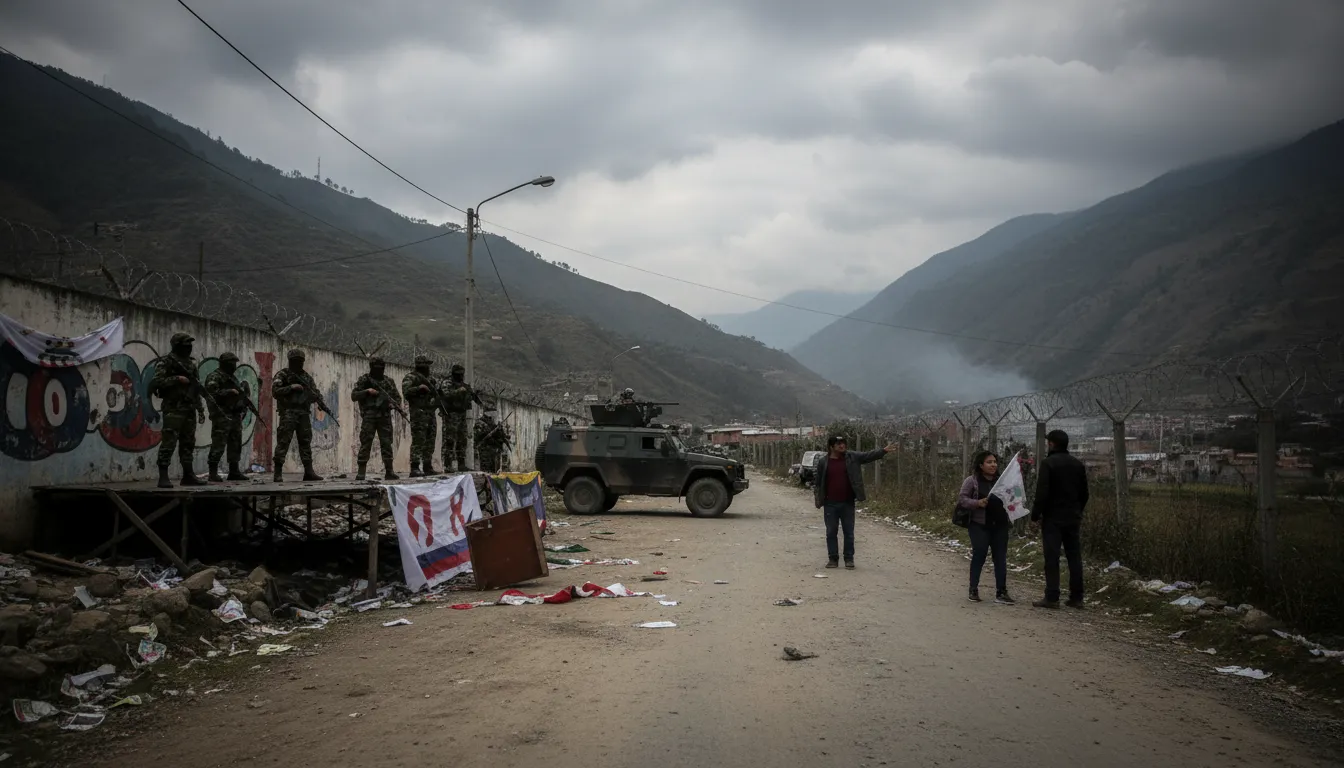
Colombia is approaching a dual electoral moment — congressional elections on March 8 and a presidential vote on May 31 — under a cloud of violence not seen in a generation. At least 61 political leaders have been killed since campaigning began, according to the country's independent Electoral Observation Mission (MOE). Candidates in roughly a third of the country's municipalities cannot safely hold public rallies or even visit constituents.
The MOE now counts 170 municipalities at electoral risk — a 30 percent jump from the 2022 cycle — with 81 classified as being in extreme danger. Armed groups have effectively turned vast stretches of Colombia into campaign-free zones, dictating which candidates may enter their territory and pressuring voters on how to cast ballots.
Assassinations and Ambushes
The most shocking single incident came when presidential candidate Miguel Uribe Turbay was assassinated — the first killing of a presidential aspirant in more than 30 years. In February, suspected ELN guerrillas ambushed the convoy of Senator Jairo Castellanos in the Arauca department, killing two bodyguards and riddling vehicles with over 400 rounds. Days later, congresswoman Aida Quilcué was briefly kidnapped in the restive Cauca region.
The ELN escalated further on February 10 by publicly declaring conservative presidential candidate Abelardo de la Espriella a military target. Fellow candidate Paloma Valencia has sharply curtailed her movements. "I used to walk around, go on tours, but I can't do any of that now," she told reporters. Departments including Arauca, Cauca, and Norte de Santander are essentially off-limits without the permission of armed groups that control the ground.
The Petro Paradox
Critics point squarely at President Gustavo Petro's signature "Total Peace" policy as the root cause of the crisis. Launched in 2022, the strategy sought to negotiate simultaneously with all armed actors — guerrillas, paramilitaries, and criminal gangs — rather than pursue military confrontation. An analysis by the Armed Conflict Location and Event Data Project (ACLED) found that while clashes between security forces and armed groups fell 28 percent during Petro's first 27 months, inter-group violence surged 40 percent as organizations competed for territory freed from state pressure.
Armed groups now operate in over 580 municipalities — 43 more than during the equivalent period under the previous government. Coca cultivation has more than doubled since 2020, with Nariño and Cauca as primary hotspots. The Gulf Clan, Colombia's largest cocaine cartel, abandoned peace talks entirely after the government began pursuing its leadership; the ELN's year-long ceasefire, hailed in 2023 as historic, ultimately collapsed in early 2025 when the rebels launched a major offensive in Catatumbo that killed over 100 people and displaced more than 65,000.
Democracy at Stake
The violence has injected security policy into the heart of the presidential race. Hardliner de la Espriella — before becoming an ELN target himself — pledged to halt negotiations and "neutralize" non-surrendering groups. Left-wing candidate Iván Cepeda, an architect of Total Peace, argues dialogue remains the only viable path. The stark divergence reflects a country deeply divided over how to reclaim sovereignty from armed groups.
International observers warn that allowing armed actors to veto candidacies and intimidate voters corrodes the democratic process at its foundation. With Petro constitutionally barred from re-election, the next president will inherit both a shattered peace process and a narco economy operating near peak capacity — a poisoned chalice that candidates are, quite literally, risking their lives to pursue.