How Cuba's One-Party System Works—and Why It Persists
Cuba's Communist Party has monopolized power since 1965. Here's how the island's political system is structured, how elections work without real choice, and why the regime endures despite deepening economic crisis.
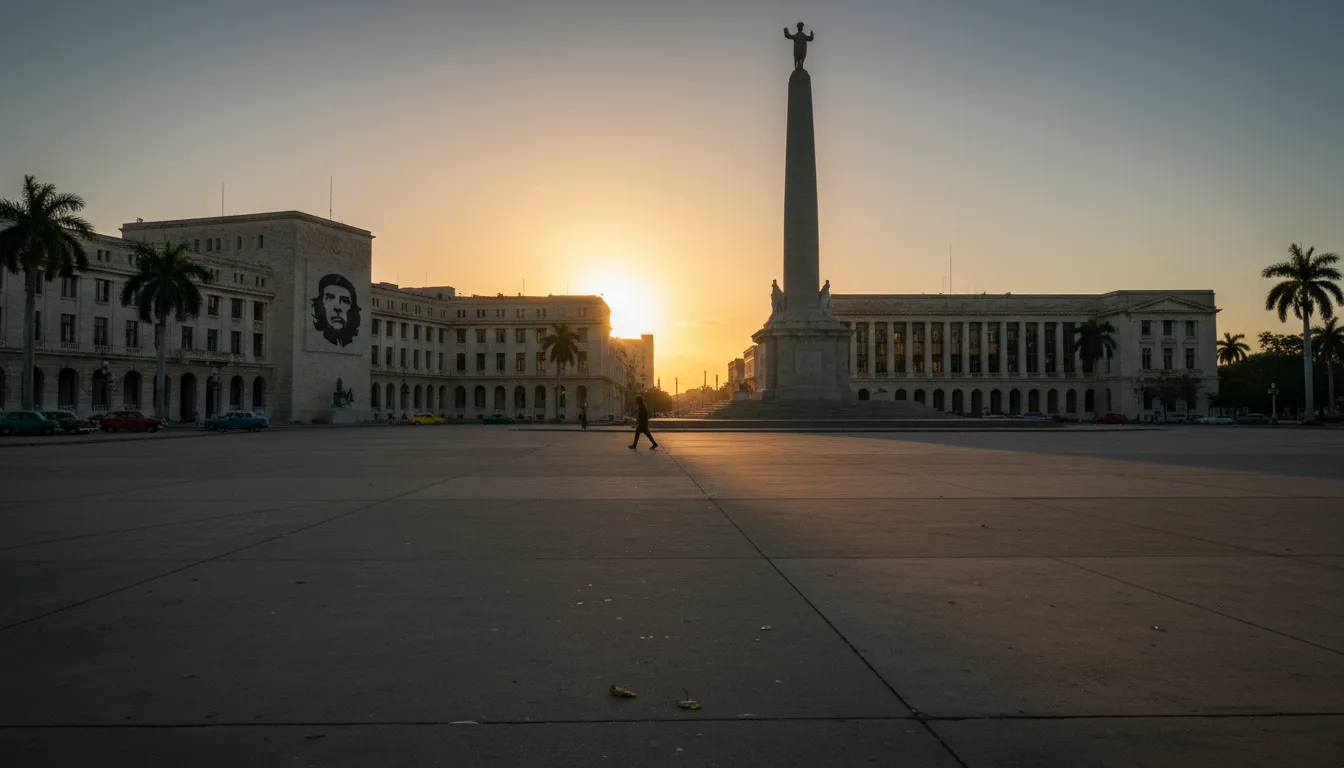
A Constitution Built Around One Party
Cuba is one of the few remaining single-party Marxist-Leninist states. Its 2019 constitution identifies the Communist Party of Cuba (PCC) as "the superior driving force of society and the state." All other political parties are illegal. Unlike multiparty systems where power can rotate through elections, Cuba's political architecture is designed to keep the PCC permanently in charge.
The party was formally established on October 3, 1965, unifying three revolutionary organizations that had fought alongside Fidel Castro. For nearly six decades it has governed without interruption, making it one of the longest-ruling communist parties in the world.
How Power Is Structured
Cuba's government operates through a hierarchy that mirrors the party itself. At the top sits the First Secretary of the PCC—currently Miguel Díaz-Canel—who also serves as president. Below him, power flows through several interlocking bodies:
- Party Congress — The PCC's supreme body, convening roughly every five years to set national policy and strategic direction.
- Central Committee — Governs between congresses, meeting twice a year.
- Politburo — Handles day-to-day decision-making and wields the most practical power.
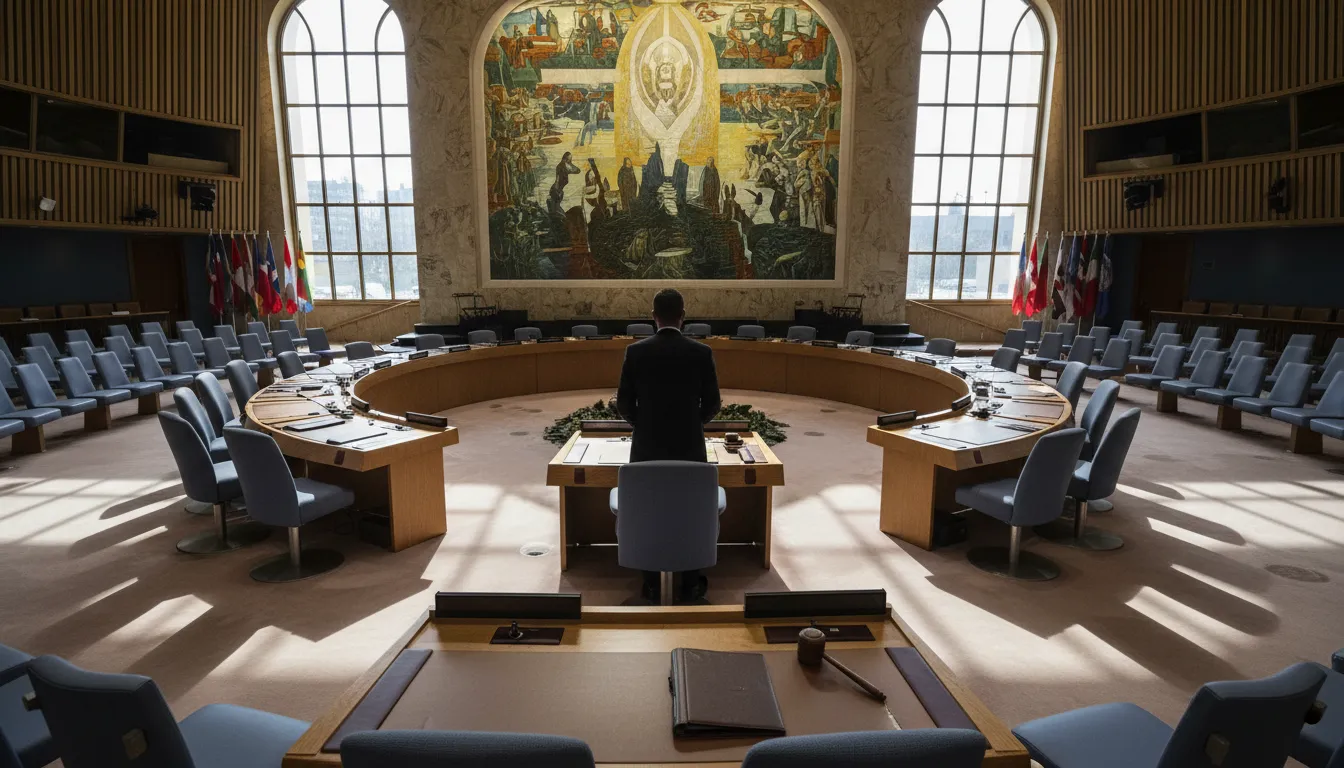
- National Assembly of People's Power — Cuba's legislature, with 470 deputies who meet twice annually to approve laws. It also elects the president and the Council of State.
In practice, the party sets policy and the state implements it. The National Assembly has never rejected a bill proposed by the party leadership, according to Freedom House.
Elections Without Choice
Cuba does hold elections, but they bear little resemblance to competitive votes. For municipal assemblies, neighborhoods nominate candidates at local meetings—the only level where more than one person can run for a seat. Campaigning, however, is prohibited. Candidates are presented through posted biographies rather than political platforms.
For the National Assembly, the process is tightly controlled. Candidacy commissions—composed of representatives from state-aligned mass organizations like trade unions and the Federation of Cuban Women—compile a single list of candidates, one per seat. Voters can approve or reject each name, but there is no alternative. In the 2023 parliamentary election, all 470 candidates were confirmed. Voting is compulsory for citizens aged 16 and older.
The Surveillance Architecture
The PCC maintains control not just through institutions but through a vast network of grassroots surveillance. The Committees for the Defense of the Revolution (CDR), established in 1960, operate in every neighborhood, workplace, and factory across the island. Originally created to detect counter-revolutionary activity, the CDRs today monitor dissent and report suspicious behavior to authorities.
Cuba's 2022 penal code increased penalties for "contempt" of officials and "public disorder," provisions routinely used against activists and independent journalists. The country ranks among the most restrictive media environments in the world, with independent reporters facing detention and charges of spreading "enemy propaganda."
Why the System Endures
Cuba's one-party model has survived the Soviet Union's collapse, Fidel Castro's death in 2016, and repeated economic crises. Several factors explain its resilience:
- Institutional depth — The PCC is woven into every level of society, from schools to workplaces to neighborhood committees.
- Security apparatus — A well-resourced military and intelligence service suppress organized opposition. After mass protests in July 2021, authorities arrested roughly 1,500 people.
- Emigration as a safety valve — Since 2021, more than 374,000 Cubans have been detained at the U.S. southern border, representing about 3% of the island's population. Those most frustrated often leave rather than organize domestically.
- Nationalist narrative — The government frames dissent as foreign interference, leveraging decades of U.S. sanctions and hostility to rally support.
An Economy Under State Control
The political monopoly extends to economics. After the 1959 revolution, Cuba nationalized virtually all private enterprise, creating a Soviet-style command economy. When the Soviet Union collapsed in 1991, Cuba lost its main trading partner and economic lifeline, and GDP shrank by roughly 35%.
Modest reforms since then—permitting small private businesses, expanding internet access—have not altered the fundamental structure. The state still dominates industry, agriculture, and services. Cuba's aging power grid, built with Soviet-era technology, requires about 100,000 barrels of oil per day to function, leaving the island perpetually vulnerable to fuel disruptions and blackouts.
The result is a political system engineered for permanence—but one facing mounting pressure from citizens who, despite lacking formal channels for opposition, have increasingly taken to the streets.