How Scientists Discover New Deep-Sea Species
From ROV dives to decades-long taxonomy backlogs, the process of finding and naming unknown ocean life is a race against extinction in Earth's last great frontier.
Earth's Last Frontier
More than 90 percent of ocean species remain undiscovered. Of an estimated two million marine species, fewer than 250,000 have been formally identified and named. The deep sea — everything below 200 meters — covers more than half of Earth's surface, yet humans have directly observed less than 0.001 percent of the deep seafloor. Every expedition to this realm brings back creatures science has never seen.
Recent discoveries underscore the scale of what remains hidden. In early 2026, researchers found hundreds of previously unknown species living nearly 4,000 meters beneath the Pacific, while a separate expedition off Japan's coast identified 38 confirmed new species and 28 more candidates in a single cruise. Yet species are vanishing faster than scientists can catalog them, raising an urgent question: how does the discovery process actually work?
Getting There: ROVs, Submersibles, and Ship Time
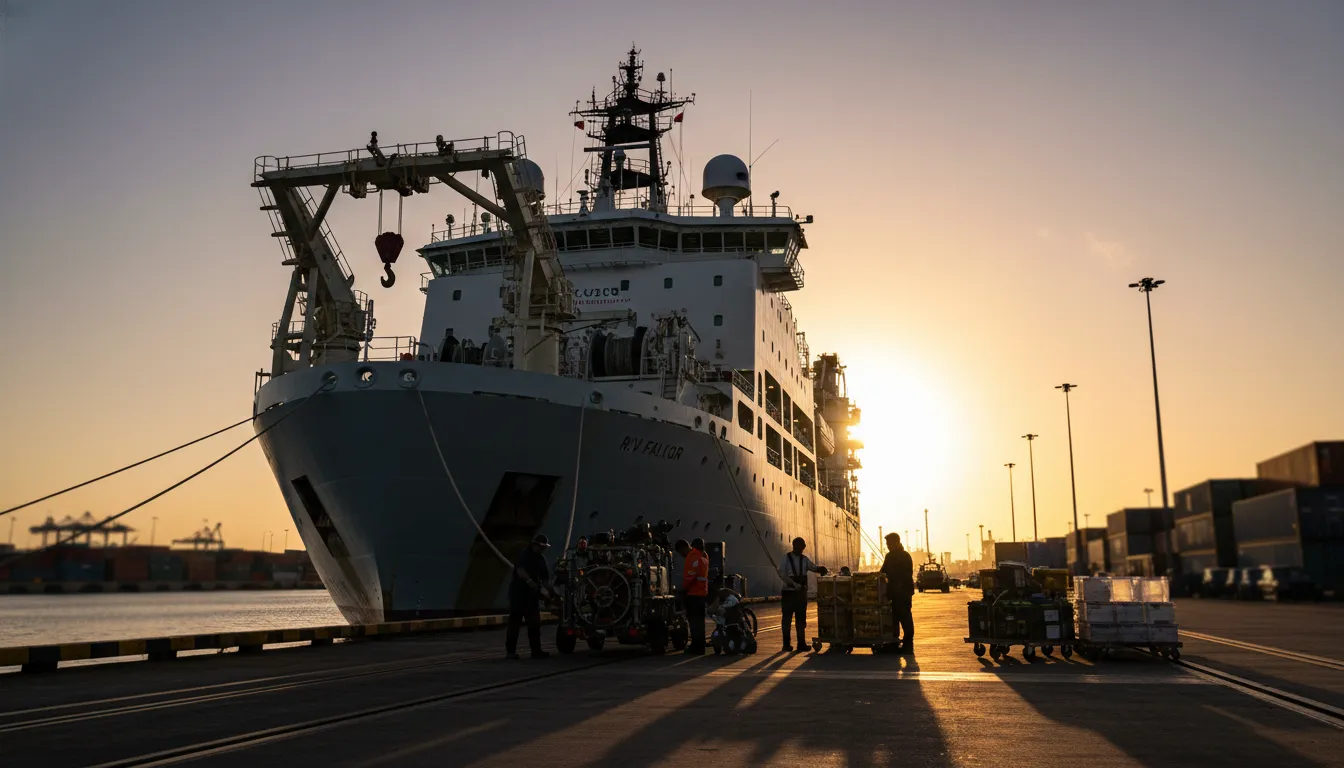
Deep-sea discovery begins with expensive hardware. Remotely operated vehicles (ROVs) — robotic submersibles tethered to a surface ship by fiber-optic cable — carry high-definition cameras, scientific sensors, and hydraulic manipulator arms that can delicately pluck organisms from the seafloor. Crewed submersibles offer a complementary approach, placing scientists directly at depth with collection tools ranging from suction samplers to specialized specimen boxes.
A single deep-sea research cruise can cost millions of euros and require months of planning. Ship time is scarce, weather windows are narrow, and target sites may lie days from the nearest port. Water samples are also collected for environmental DNA (eDNA) analysis — filtering seawater to capture genetic fragments shed by organisms — which can reveal the presence of species never glimpsed on camera.
From Specimen to Species Name
Collecting a strange creature is only the beginning. Formally describing a new species — assigning it a scientific name and publishing a peer-reviewed description — is a painstaking process that traditionally takes an average of 13.5 years, and in some cases up to 40 years. The pipeline involves several stages:
- Sorting and preservation: Thousands of specimens from a single cruise must be cataloged, photographed, and preserved — often in ethanol for DNA work or formalin for morphological study.
- Morphological analysis: Taxonomists compare physical features under microscopes, measuring body structures down to fractions of a millimeter against known species.
- Genetic sequencing: DNA barcoding confirms whether a specimen represents a genuinely new lineage or a variant of a known species.
- Peer-reviewed publication: A formal species description must meet strict nomenclatural rules set by the International Commission on Zoological Nomenclature before the name becomes official.
The Taxonomy Bottleneck
The world has a taxonomist shortage. Deep-sea taxonomy is a highly specialized skill, and the number of experts qualified to identify particular groups — amphipods, polychaete worms, sponges — is shrinking as funding priorities shift elsewhere. The result is a growing backlog: specimens sit on museum shelves for years or decades, waiting for the right expert with the right funding to examine them.
At the current description rate of roughly 2,300 new marine species per year, cataloging the ocean's remaining unknown life would take several hundred years — far longer than many species may survive given climate change, deep-sea mining pressures, and habitat destruction.
Accelerating the Race
Initiatives like the Ocean Census, launched by the Nippon Foundation and Nekton, aim to dramatically speed up the process. By 2026, the program had already documented over 860 new species by assembling large, interdisciplinary teams that combine imaging, morphology, and genetics in intensive workshops. What once took a decade can now sometimes be accomplished in a single week.
New platforms like Ocean Species Discoveries offer streamlined, data-rich publication channels designed specifically for concise marine invertebrate descriptions, cutting years off the traditional journal timeline.
Why It Matters
Species that have never been named cannot be legally protected. As industries eye the deep seafloor for mineral extraction, the gap between what exists and what science has documented becomes a governance crisis. Every undescribed species is invisible to environmental law. The race to discover deep-sea life is not just academic curiosity — it is the foundation on which conservation policy must be built.