How Clean Air Zones Work—and Why Cities Adopt Them
Clean air zones restrict or charge polluting vehicles in city centers. With over 320 active across Europe alone, these zones measurably cut nitrogen dioxide, reduce hospital visits, and are spreading to Asia and Latin America.
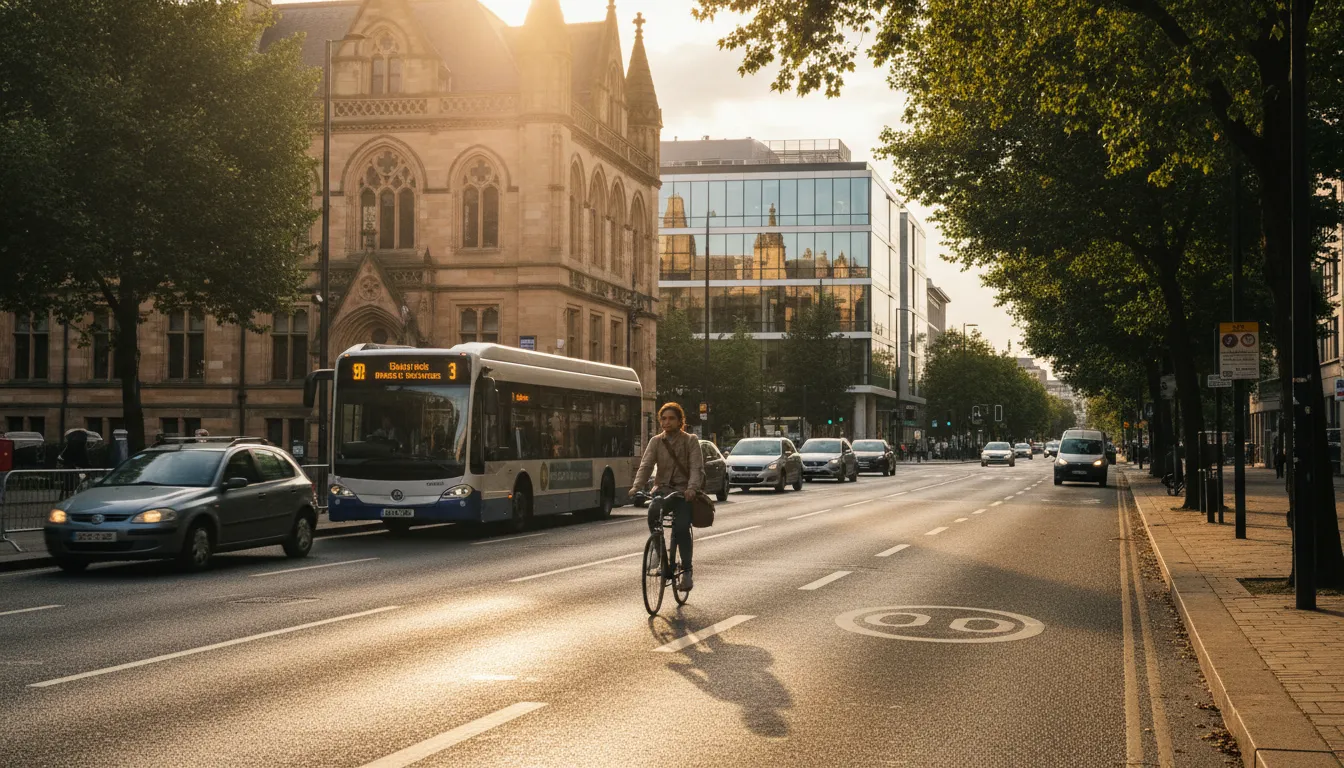
A Growing Urban Tool Against Toxic Air
Across the world, hundreds of cities have drawn invisible boundaries around their most polluted streets. Step inside, and the rules change: drive a high-emission vehicle and you may face a daily charge, a fine, or an outright ban. These areas—known as clean air zones (CAZs) or low emission zones (LEZs)—are one of the fastest-growing urban policy tools for tackling air pollution, and the evidence increasingly shows they work.
What Exactly Is a Clean Air Zone?
A clean air zone is a defined area within a city where local authorities impose restrictions on the most polluting vehicles. The goal is straightforward: reduce concentrations of harmful pollutants—primarily nitrogen dioxide (NO₂) and particulate matter (PM2.5 and PM10)—by discouraging older, dirtier cars, trucks, and buses from entering busy areas.
There are two broad types. Charging zones levy a daily fee on non-compliant vehicles. London's Ultra Low Emission Zone (ULEZ), for example, charges £12.50 per day for cars that fail to meet Euro 4 petrol or Euro 6 diesel standards. Non-charging zones rely on complementary measures—improved public transport, cycling infrastructure, traffic rerouting—rather than direct fees.
Many cities layer multiple approaches. Paris uses the Crit'Air sticker system, banning the most polluting vehicle categories during high-pollution episodes. Berlin and Stuttgart operate permanent zones where only vehicles meeting minimum emission standards may enter.
How Many Exist—and Where?
Europe leads the way. As of 2022, the continent had over 320 active low emission zones, a 40 percent increase from 2019, according to the Urban Access Regulations database. Italy alone operates 172 zones, Germany has 78, and London's zone—covering nearly all of Greater London—is the largest in the world.
The concept is spreading. Seoul enforces a LEZ across its entire metropolitan area. Beijing restricts older vehicles from central districts. In late 2023, Sofia became the first Eastern European capital to launch a zone, and in early 2024, Guadalajara in Mexico announced its own. Over 30 C40 climate-leadership cities—including Bogotá, Seattle, and Stockholm—are actively developing clean air zones.
Do They Actually Work?
The evidence is robust. A systematic review in The Lancet Public Health found consistent reductions in air pollution and health benefits, particularly for cardiovascular disease.
London provides the clearest case study. According to London City Hall data, NO₂ levels across the city were 27 percent lower in 2024 than they would have been without ULEZ, with central London seeing a 54 percent drop. Nearly 100,000 fewer non-compliant vehicles were detected daily after the expansion, and over 97 percent of cars now meet the emission standards.
Health benefits follow. A study on Bradford's Clean Air Plan found respiratory primary care visits fell by 25 percent and cardiovascular visits by 24 percent after implementation. Research from the University of Bath found LEZs reduced COPD cases by 14.5 percent and sick leave by 17 percent, while also improving residents' mood and life satisfaction.
Criticisms and Trade-offs
Clean air zones are not without controversy. Critics argue they impose a regressive financial burden on lower-income drivers who cannot afford to upgrade vehicles. Small businesses that rely on older diesel vans face increased operating costs. Some opponents contend the zones simply push polluting traffic to surrounding areas rather than eliminating it.
Proponents counter that the health costs of inaction are far higher and that well-designed exemptions, scrappage schemes, and public transport investment can soften the transition. London's data suggests the economic fears may be overstated: visitor footfall in outer London actually increased by nearly two percent in the year after the ULEZ expansion.
What Comes Next
As more cities adopt clean air zones and electric vehicle adoption accelerates, the next frontier is the zero-emission zone—areas where only fully electric or hydrogen vehicles are permitted. Oslo, Amsterdam, and several Chinese cities are already piloting such restrictions. For urban residents breathing increasingly cleaner air, the invisible boundary may prove to be one of the most effective public health interventions of the decade.