How Lebanon's Sectarian Power-Sharing System Works
Lebanon divides every government post by religious sect — a system born in 1943 that was meant to keep the peace but has repeatedly produced paralysis, corruption, and crisis.
A Country Carved Up by Religion
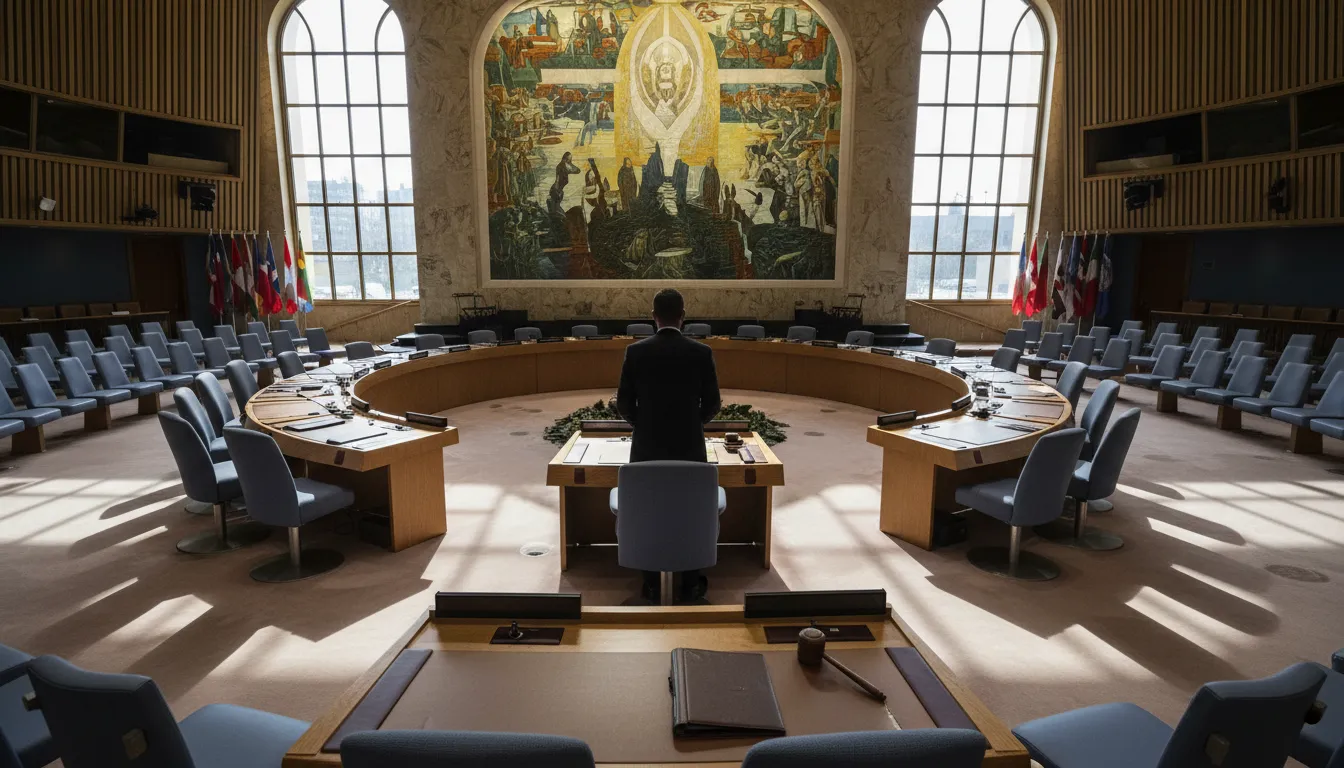
Walk into the Lebanese parliament and you will find 128 seats split perfectly in half: 64 for Christians and 64 for Muslims. The president is always a Maronite Christian. The prime minister is always a Sunni Muslim. The speaker of parliament is always a Shia Muslim. These are not laws written in any constitution — they are unwritten rules that have governed Lebanon since 1943, and they explain almost everything about why one of the Arab world's most cosmopolitan countries has lurched from crisis to crisis for decades.
This arrangement is called confessionalism — a system of government in which political power is divided proportionally among recognised religious communities. Lebanon officially recognises 18 religious sects, and every significant public office, ministry, and army command is parcelled out among them. Understanding how it works is essential to understanding why Lebanon is so fragile — and so explosive.
The 1943 Bargain
The roots of the system lie in the final years of French colonial rule. In 1943, as Lebanon moved toward independence, the country's Christian and Muslim leaders struck an unwritten gentleman's agreement known as the National Pact. Christians, who were a slim majority according to a 1932 French census, would hold the presidency and most senior posts. In return, they would renounce French protection and accept Lebanon's identity as an Arab state. Muslims would accept the new nation's borders and give up aspirations for union with Syria.
The formula was pragmatic but brittle. It locked in a demographic snapshot that quickly became outdated. As the Muslim population grew and Palestinian refugees reshaped Lebanon's social landscape, the 6-to-5 Christian-to-Muslim ratio in parliament increasingly failed to reflect reality. Pressure built, grievances accumulated, and in 1975, the country collapsed into a fifteen-year civil war that killed an estimated 150,000 people.
The Taif Agreement: Reform That Preserved the System
The civil war ended with the 1989 Taif Agreement, brokered in Saudi Arabia. Taif rebalanced some of the power — parliament was set to an equal 50-50 Muslim-Christian split, and the prime minister gained new authority at the expense of the president. But the core logic of confessionalism remained untouched. Power was still distributed by sect. The warlords and militia leaders of the civil war simply became politicians.
Critics argue that Taif preserved the cause of all ills. By requiring consensus among the president, prime minister, and parliament speaker — the so-called troika — the system built gridlock into government. Any major decision requires agreement across sectarian lines. When those lines harden, the state simply stops functioning. Lebanon went two and a half years without a president between 2022 and 2025, because parliament could not agree on a candidate acceptable to all factions.
How Paralysis Breeds Corruption
The confessional structure creates powerful incentives for patronage over policy. Each sect's leaders control a share of state resources — ministries, contracts, public-sector jobs — and distribute them to their communities. This clientelism cements loyalty and perpetuates the same political families across generations, but it hollows out the state.
According to the World Bank, Lebanon's economic collapse — described as one of the worst in modern history — was not an accident but the result of deliberate elite choices. GDP shrank by more than 58 percent between 2019 and 2021, from roughly $52 billion to $21.8 billion, a contraction the World Bank ranked among the worst globally in 150 years. The currency lost over 90 percent of its value. Banks froze depositors' savings. Yet Lebanon's political class spent years blocking the IMF reforms that would have threatened their grip on power.
Hezbollah: The System's Most Powerful Player
Confessionalism did not just produce corrupt politicians — it also created space for armed movements to operate as parallel states. Hezbollah, the Iran-backed Shia militant group and political party, has exploited the system brilliantly. By providing schools, hospitals, and social services to the Shia community — services the state could not deliver — it built a loyalty that translated into parliamentary seats and, eventually, veto power over the government.
Hezbollah's dual identity as both a political party in parliament and an armed force that operates independently of the Lebanese army epitomises the system's central paradox: it was designed to integrate Lebanon's communities, but it has instead enabled powerful actors to capture parts of the state while bypassing others.
Why the System Persists
Despite near-universal acknowledgement that confessionalism is broken, abolishing it is almost impossible. Every sect fears that a non-confessional system would leave it dominated by another group. The Maronites fear losing the presidency; the Shia fear losing influence; minority sects fear disappearing altogether. Each reform proposal triggers the same veto from someone.
The result, as the United States Institute of Peace noted, is a political system that is too divided to reform itself and too entrenched to collapse entirely. Lebanon survives — barely — as a state perpetually on the edge, held together less by functioning institutions than by the mutual interest of its power brokers in keeping some version of the game going.
For the Lebanese people, that is rarely enough.