How Marine War Risk Insurance Works
When conflict erupts near vital shipping lanes, a specialised layer of insurance — war risk coverage — determines whether goods keep moving or global trade grinds to a halt. Here's how the system works and why it matters.
The Hidden Tax on Global Trade
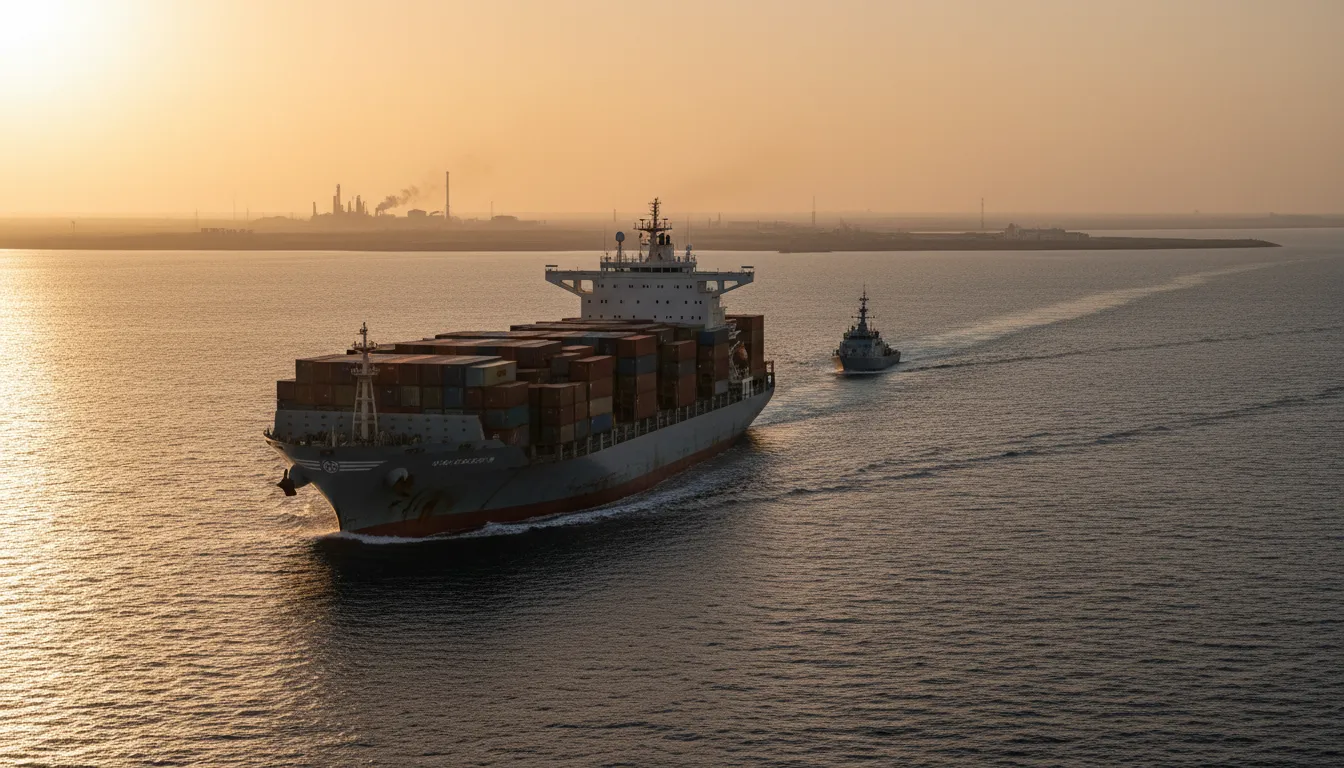
Every time a tanker threads through a geopolitical flashpoint — the Strait of Hormuz, the Red Sea, the Black Sea — its owners face a cost that rarely makes headlines but shapes the price of nearly everything: war risk insurance. When premiums spike, shipping becomes dramatically more expensive. When insurers withdraw cover entirely, ships simply stop sailing.
Standard marine insurance, which protects vessels against storms, collisions, and mechanical failures, explicitly excludes losses caused by acts of war. That carve-out is not an oversight — it is centuries old, and it created an entire parallel market dedicated to one of the riskiest categories of coverage in the world.
A History Traced to a London Coffee House
Marine insurance itself was born at Lloyd's Coffee House, established on Tower Street in London around 1689 by Edward Lloyd. Merchants and ship owners gathered there to share news and negotiate coverage, writing their names beneath risk descriptions on slips of paper — hence the term "underwriter." Early Lloyd's policies covered losses from "enemies, pirates, rovers, thieves" alongside perils of the sea; war and weather were bundled together.
The formal separation came much later. Rising political tensions in the 1890s made war risks increasingly unpopular, and in 1898 Lloyd's held a general meeting calling for their exclusion from standard marine policies. By 1939, on the eve of the Second World War, the London market introduced the Institute War and Strikes Clauses, making war perils the subject of a separate, additional policy. That structure remains in place today.
What War Risk Insurance Covers
A war risk policy steps in where a standard hull or cargo policy stops. It covers damage or loss resulting from:
- Acts of war, invasion, and hostilities between nations
- Civil war, revolution, rebellion, and insurrection
- Terrorism and sabotage
- Strikes, riots, and civil commotions (the "SRCC" extension)
- Detonation of mines and stray weapons
Two types of interests are insured separately. Hull war risk covers the physical ship itself. Cargo war risk covers the goods being transported. Crew liability — injury, death, ransom — falls under Protection and Indemnity (P&I) clubs, mutual associations that collectively insure more than 95 percent of the world's ocean-going tonnage.
The Joint War Committee and Listed Areas
The key gatekeeper in this market is the Joint War Committee (JWC), a body of twelve underwriting representatives operating within Lloyd's and the London company market. Advised by independent security analysts, the JWC publishes and updates a list of geographic "Listed Areas" — regions deemed to present an enhanced risk of war-related perils.
When a vessel enters a Listed Area, insurers are permitted to charge an Additional War Risk Premium (AWRP) on top of the base annual premium. Owners typically have 48 to 72 hours' notice before a new area is added, allowing them to reroute or negotiate coverage before sailing in. If they cannot secure cover or choose not to pay, the vessel is effectively uninsurable in that zone — and most reputable charterers will not load cargo onto an uninsured ship.
How Premiums Are Calculated
In calm periods, war risk premiums are almost negligible — as low as 0.001 percent of a vessel's market value per year for tankers trading in low-risk waters. In conflict zones, those numbers shift dramatically and rapidly.
Premiums are recalculated voyage by voyage in high-risk areas, based on the vessel's value, its cargo, the specific route, and the intensity of current hostilities. During acute crises, rates have historically jumped tenfold or more within days. Underwriters review quotes continuously, and a premium agreed on Monday may be unavailable by Friday if the situation deteriorates. For a tanker worth $100 million, a jump from 0.2 percent to 1 percent of hull value adds roughly $800,000 to the cost of a single voyage — a cost that ultimately flows into the price of oil, food, and manufactured goods.
When Insurers Walk Away
In the most severe scenarios, underwriters do not raise premiums — they cancel cover entirely, issuing 48-hour withdrawal notices to shipowners. This forces vessels either to anchor and wait, reroute thousands of miles, or sail "bare" and risk catastrophic uninsured losses. A single tanker stranded without cover can lock up hundreds of millions of dollars in ship and cargo value, and the knock-on effect across dozens of vessels can freeze entire trade corridors.
The insurance market therefore functions as an early-warning system for global commerce. When Lloyd's syndicates and P&I clubs become unwilling to write policies, it signals that professional risk assessors regard the danger as too severe to price — a judgment that moves oil markets and supply chains faster than any diplomatic communiqué.
Why It Matters Beyond Shipping
Marine war risk insurance is invisible to most consumers, yet its effects are felt at petrol pumps, supermarkets, and electronics retailers worldwide. Roughly 80 percent of global trade by volume travels by sea, according to the UN Conference on Trade and Development (UNCTAD). When insurers restrict or reprice coverage on critical chokepoints, carriers pass those costs forward through freight rates, triggering inflationary pressure across entire supply chains.
Understanding how war risk insurance works — its history, its mechanics, and its limits — helps explain why distant conflicts can raise prices at home and why the quiet decisions of a dozen underwriters in London can shape the flow of the world's goods.