How the Brain Rewires Itself After a Stroke
After a stroke destroys brain tissue, the brain can reroute lost functions through neuroplasticity—forming new pathways, sprouting axons, and even making undamaged regions appear biologically younger.
When Damage Sparks Adaptation
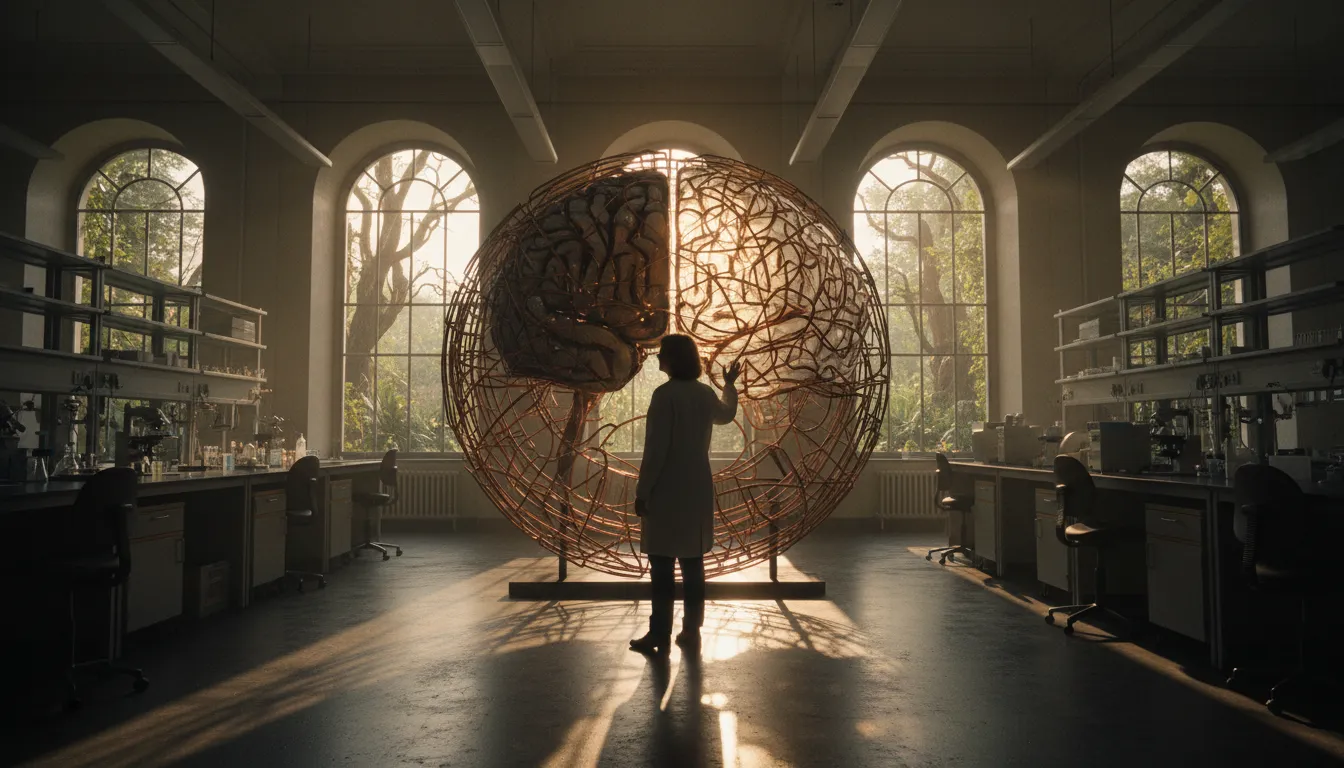
Every year, roughly 15 million people worldwide suffer a stroke. When a blood clot or burst vessel cuts oxygen to part of the brain, neurons in the affected area die within minutes. The tissue lost at the stroke's core cannot be restored. Yet many survivors regain speech, movement, and cognitive abilities over months and years—sometimes dramatically so. The explanation lies in neuroplasticity, the brain's ability to reorganize its structure and connections in response to injury.
What Neuroplasticity Actually Means
Neuroplasticity is not a single mechanism but a family of processes. At its simplest, it describes how the nervous system modifies the strength, number, and routing of connections between neurons. It operates throughout life—every time you learn a new skill or form a memory, synapses are strengthened or pruned. After a stroke, however, the brain kicks these processes into overdrive.
Three Key Mechanisms of Recovery
Axonal Sprouting
When connections between neurons are severed by stroke damage, surviving neurons can grow new axon branches—a process called axonal sprouting. These sprouts reach toward intact neurons, forming fresh synapses that bypass the dead zone. The result is a rerouted circuit that can partially restore lost functions like grip strength or word retrieval.
Cortical Remapping
Intact brain areas can take over duties that the damaged region once handled. If a stroke destroys the area controlling the right hand, neighboring cortical tissue—or even the opposite hemisphere—may gradually assume that role. This cortical remapping is especially pronounced in the frontoparietal network, which governs movement planning, attention, and coordination.
Synaptic Strengthening and Pruning
Repetition is the engine of rewiring. Each time a patient practices a movement or repeats a word, the new neural pathways carrying that signal grow stronger. Connections that go unused, meanwhile, weaken and are eventually eliminated—a process called synaptic pruning. This use-it-or-lose-it principle is why intensive, repetitive rehabilitation produces better outcomes than passive rest.
The Critical Window—and Beyond
The first three to six months after a stroke represent a critical recovery window. During this subacute phase, the brain is exceptionally receptive to change: inflammation subsides, growth factors surge, and new synapses form at an accelerated rate. Patients who begin rehabilitation early typically achieve the fastest and largest functional gains.
But neuroplasticity does not have an expiration date. Research published in Frontiers in Neurology confirms that meaningful improvement can continue for years, provided patients maintain consistent practice. The pace slows, but the door never fully closes.
A Brain That Grows 'Younger'
A striking 2026 study in The Lancet Digital Health, analyzing MRI scans from more than 500 stroke survivors across 34 research centers, revealed something unexpected. While damaged brain regions aged faster after a stroke, the opposite hemisphere appeared biologically younger than expected. Researchers used AI to estimate the biological age of 18 brain regions and found that survivors with severe motor impairments showed the most pronounced "rejuvenation" in undamaged areas—suggesting the brain actively strengthens healthy networks to compensate for injury.
What Drives Better Recovery
Not all stroke survivors recover equally. Several factors influence how effectively the brain rewires:
- Rehabilitation intensity: High-repetition, task-specific therapy produces stronger neural pathways.
- Stroke severity and location: Smaller strokes in less critical areas leave more healthy tissue available for remapping.
- Age: Younger brains generally rewire more efficiently, though older adults still benefit significantly.
- Stress and fatigue: New neural connections are fragile. When patients are tired or stressed, recently formed pathways can struggle to function reliably.
Why It Matters
Understanding neuroplasticity has transformed stroke rehabilitation from passive bed rest into active, evidence-based therapy. Emerging tools—including virtual-reality training, non-invasive brain stimulation, and AI-guided rehabilitation programs—aim to amplify the brain's natural rewiring. The message from decades of research is clear: the brain is not a fixed machine. Even after catastrophic injury, it retains a remarkable capacity to rebuild.