How UN Peacekeeping Works—and Why It Struggles
UN peacekeeping deploys tens of thousands of Blue Helmets to conflict zones worldwide, but structural limits, veto politics, and rules of engagement often leave missions unable to protect the people they are sent to help.
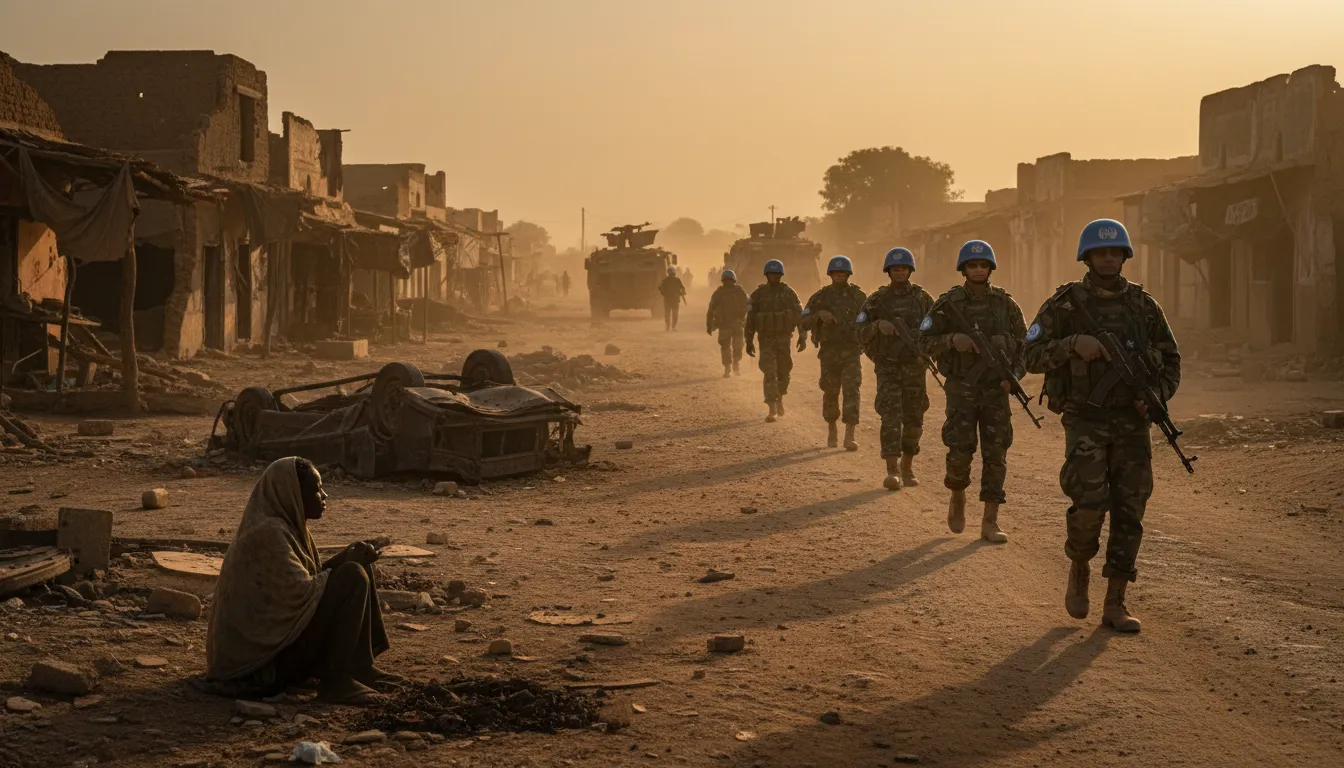
Blue Helmets on the Ground
When conflict erupts and diplomacy stalls, the United Nations Security Council can authorize one of its most visible tools: a peacekeeping operation. Since the first mission deployed in 1948, more than one million men and women have served as UN peacekeepers. Today, roughly 70,000 military, police, and civilian personnel from over 100 countries serve across 11 active missions, from Lebanon to the Democratic Republic of the Congo.
But what exactly do peacekeepers do, who sends them, and why do missions so often fall short of expectations?
How a Mission Gets Authorized
Every peacekeeping operation begins with a Security Council resolution. The Council's 15 members—including five permanent members with veto power (the United States, the United Kingdom, France, Russia, and China)—must agree on a mandate that defines the mission's objectives, size, and rules of engagement. The host country must also consent to the deployment.
Once authorized, the UN Secretariat assembles the force. Unlike a standing army, the UN has no troops of its own. It relies on voluntary contributions from member states. Pakistan, Bangladesh, India, Ethiopia, and Rwanda consistently rank among the top troop contributors. Western nations, meanwhile, tend to fund operations rather than provide soldiers—the United States alone covers roughly 26 percent of the peacekeeping budget, which totaled approximately $5.4 billion for 2025–2026.
Three Core Principles
UN peacekeeping rests on three pillars outlined in its founding doctrine:
- Consent of the parties: All main parties to a conflict must agree to the peacekeepers' presence.
- Impartiality: Peacekeepers do not take sides, though they may act against spoilers who violate peace agreements.
- Non-use of force except in self-defense and defense of the mandate: Blue Helmets are not a warfighting force. They may use lethal force only when directly attacked or when civilians under their protection face imminent threat.
These principles distinguish peacekeeping from enforcement actions, but they also create a persistent tension: missions are expected to protect civilians yet lack the authority—or firepower—to compel compliance from armed groups.
What Peacekeepers Actually Do
Modern peacekeeping extends far beyond patrolling ceasefire lines. Today's multidimensional missions may monitor elections, support disarmament and demobilization of former combatants, train local police, protect human rights workers, and help rebuild judicial systems. In Lebanon, for instance, the United Nations Interim Force in Lebanon (UNIFIL) has operated since 1978, monitoring hostilities along the volatile border with Israel and supporting the Lebanese Armed Forces.
Data suggests that, on balance, peacekeeping works. Research compiled by UN News shows that peacekeepers significantly reduce civilian casualties, shorten conflicts, and help make negotiated settlements stick. Two-thirds of completed post-Cold War missions successfully implemented their mandates before departing.
Why Missions Struggle
The record, however, is stained by catastrophic failures. In Rwanda in 1994, a small UN force stood by—bound by restrictive rules of engagement—while nearly 800,000 people were slaughtered in 100 days. A year later in Srebrenica, Bosnia, peacekeepers failed to prevent the massacre of some 8,000 Bosniak Muslims in a zone the UN itself had declared "safe."
Several structural problems persist:
- Veto gridlock: Any permanent Security Council member can block a mission's creation, expansion, or strengthening. Geopolitical rivalries regularly prevent action in conflicts where a P5 member has interests at stake.
- Under-resourcing: Missions are often deployed with fewer troops, helicopters, and intelligence assets than commanders request.
- Accountability gaps: Scandals involving sexual exploitation and abuse by peacekeepers—most notoriously in the Central African Republic—have eroded trust in communities the UN is meant to protect.
- Host-state obstruction: Governments or armed groups that initially consented to a mission may later restrict its movements or attack its personnel. UNIFIL has recorded dozens of incidents in which its positions and convoys were fired upon or physically obstructed.
Reform Efforts and the Road Ahead
The UN has acknowledged these shortcomings. In 2018, Secretary-General António Guterres launched the Action for Peacekeeping (A4P) initiative, calling on member states to commit to better-equipped, better-trained, and more politically supported missions. Proposals include expanding the Security Council to reduce veto bottlenecks, giving force commanders more flexible rules of engagement, and investing in intelligence and technology such as drones for surveillance.
Yet reform moves slowly in an organization built on consensus among 193 sovereign states. For now, UN peacekeeping remains an imperfect but indispensable tool—deployed where no single nation is willing to act alone, and constrained by the very politics it is sent to manage.