How Unmanned Naval Vessels Work—and Why Navies Want Them
Unmanned surface vessels are transforming naval warfare by performing dangerous missions like mine sweeping, submarine tracking, and surveillance without risking human lives—at a fraction of the cost of crewed warships.
Boats Without Sailors
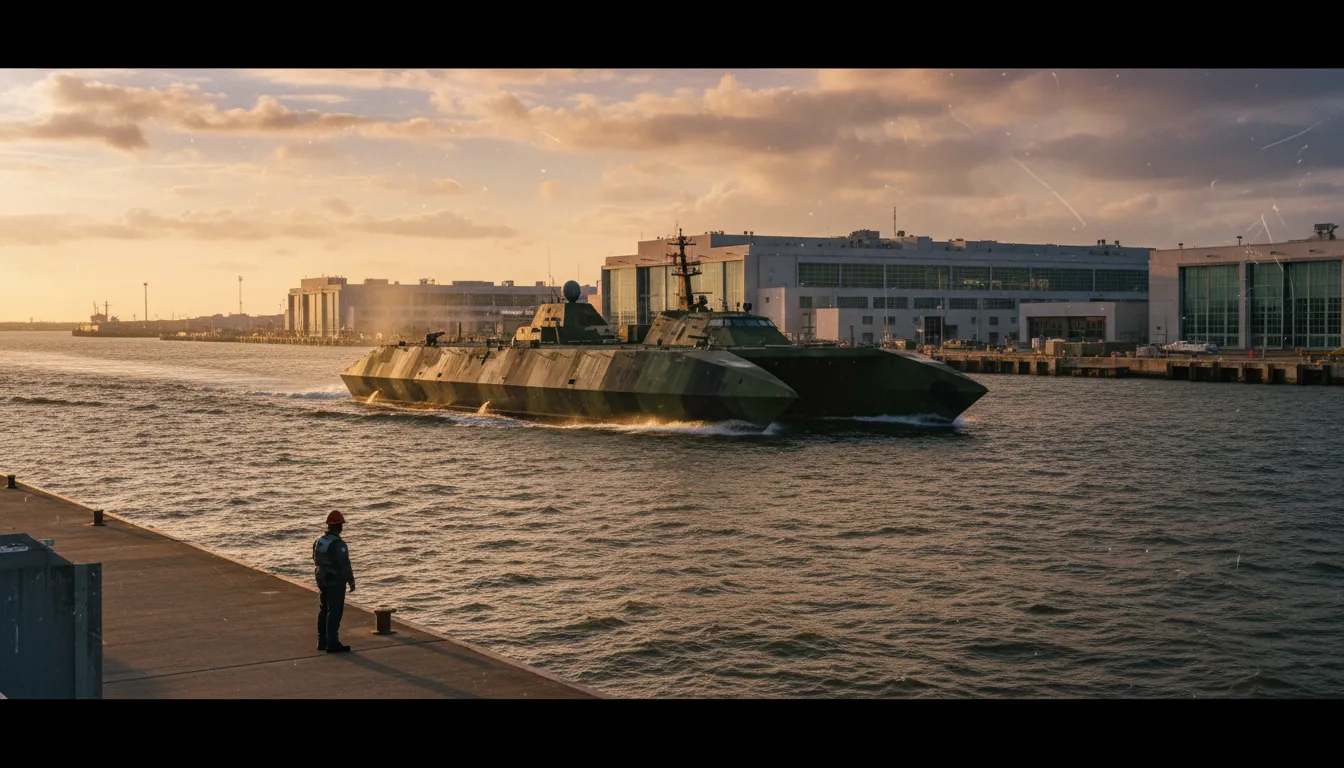
They look like ordinary patrol boats slicing through open water, but nobody is aboard. Unmanned surface vessels (USVs)—also called drone boats or sea drones—are ships that operate on the ocean's surface with no crew. Some are steered remotely by operators on shore or on a nearby warship. Others navigate autonomously, following pre-planned routes and making real-time decisions with minimal human input.
Once confined to research labs and experimental programs, USVs have matured into operational military assets. The U.S. Navy now maintains dedicated squadrons for them, and navies from Israel to Norway are fielding their own fleets. The logic is simple: send a machine into harm's way instead of sailors, and do it at a fraction of the cost.
How They Navigate and Operate
A modern USV integrates several core systems into a single hull: propulsion (typically diesel engines or electric motors), autonomous navigation software, satellite and radio communications, power management, and modular payload bays that can be swapped depending on the mission.
Autonomy exists on a spectrum. At the lowest level, a human operator drives the vessel remotely using cameras and sensors relayed over satellite links. At the highest level, the vessel plans its own route, avoids shipping traffic using radar and automatic identification system (AIS) data, and executes its mission with only periodic check-ins from a supervisor. Advanced USVs comply with international maritime collision-avoidance rules (COLREGS) on their own, a major technical challenge given the unpredictability of busy sea lanes.
What Missions They Perform
USVs are not one-size-fits-all. Their modular designs let navies reconfigure them for different roles:
- Anti-submarine warfare (ASW): USVs equipped with sonar arrays can trail enemy submarines for weeks at a time. DARPA's Sea Hunter, a 40-metre trimaran launched in 2016, demonstrated that an unmanned vessel could autonomously track diesel-electric submarines—the kind many adversaries operate—at roughly $15,000–$20,000 per day, compared with $700,000 per day for a crewed destroyer.
- Mine countermeasures: Drone boats can tow sweep systems that emit acoustic and magnetic signals, triggering sea mines to detonate at a safe distance—a task that has historically been among the most dangerous in naval warfare.
- Intelligence, surveillance, and reconnaissance (ISR): Fitted with radar, electro-optical sensors, infrared cameras, and signals-intelligence payloads, USVs can patrol borders and littoral zones for extended periods without crew fatigue.
- Surface warfare: Some nations are developing armed USVs that can carry missiles or serve as fast-attack craft, though the ethics and legality of lethal autonomous weapons remain hotly debated.
Who Operates Them
The U.S. Navy established its first dedicated unit, Unmanned Surface Vessel Squadron One (USVRON-1), at Port Hueneme, California. The squadron operates vessels including Sea Hunter, Seahawk, Ranger, and Mariner. A third squadron, USVRON-3, followed in 2024. During exercises in the Indo-Pacific, these vessels collectively logged over 46,000 nautical miles navigated primarily by autonomous systems.
Israel's Elbit Systems produces the Seagull, a multi-mission USV designed for mine hunting and ASW. Norway has developed mine-countermeasure mothership concepts that deploy smaller underwater drones. Turkey, China, and several NATO allies are investing in their own programs.
Why They Matter
Cost is the clearest driver. A medium USV can be built for roughly $20 million—a fraction of a guided-missile destroyer's multi-billion-dollar price tag. Navies can field larger numbers of cheaper unmanned platforms, creating what strategists call a distributed fleet that is harder for an adversary to knock out in a single strike.
Risk reduction is equally important. Mine clearance, submarine trailing, and close-in surveillance put sailors in danger. Removing the crew removes the casualty risk—and eliminates the need for berthing, food, medical facilities, and life-support systems, which further shrinks the vessel and its cost.
As autonomous navigation software improves and naval budgets tighten, USVs are shifting from experimental curiosities to core fleet assets. The question is no longer whether navies will adopt drone boats, but how fast they can build and integrate them.