US Launches Battle for Unified AI Regulation
The White House unveiled a national AI legislative framework in March 2026, seeking to replace a patchwork of state laws with a single federal approach, as two competing bills vie for dominance in Congress.
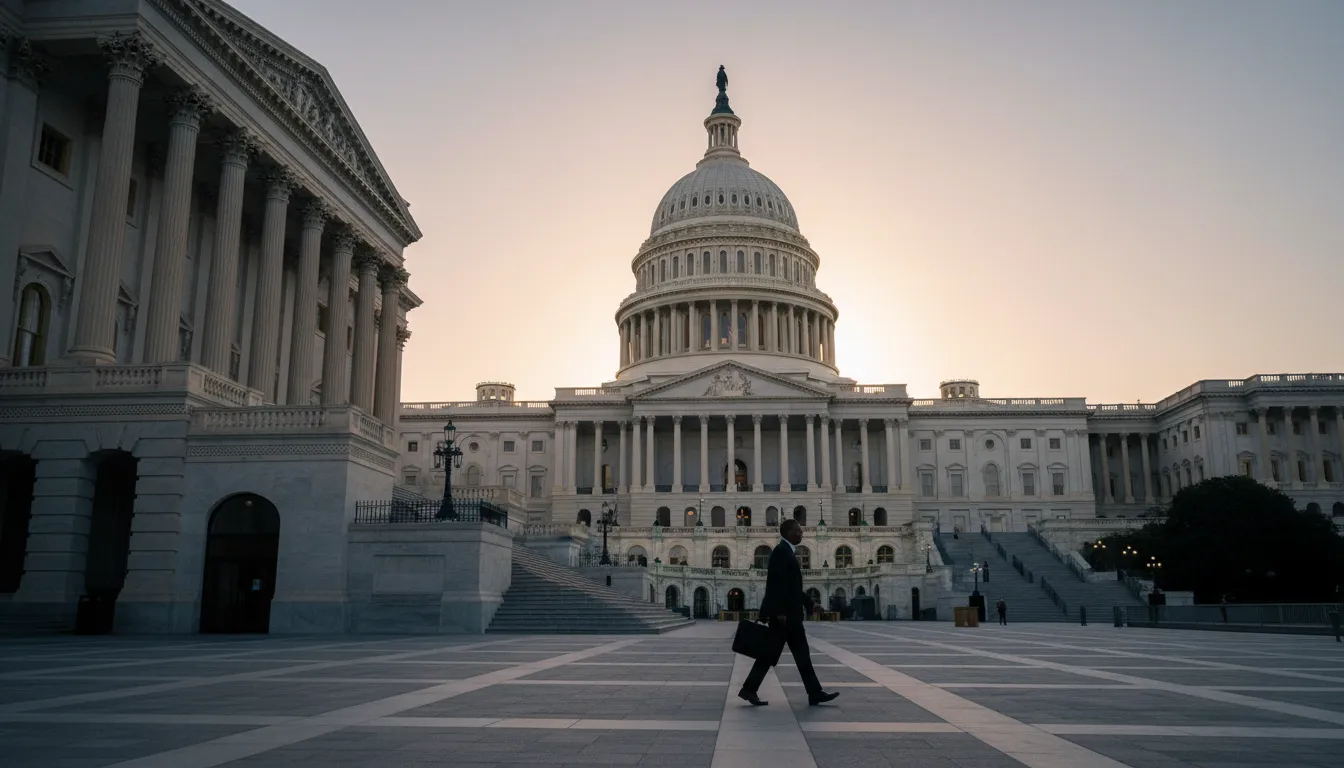
White House Draws the Line on AI Governance
On March 20, 2026, the Trump Administration released a sweeping National Policy Framework for Artificial Intelligence, signaling its intent to centralize AI regulation at the federal level. The framework targets seven policy areas — child safety, infrastructure, intellectual property, free speech, innovation, workforce development, and crucially, the preemption of state AI laws — arguing that a patchwork of local regulations imposes undue burdens on American companies.
The move comes as more than a dozen states have already enacted or proposed their own AI rules, creating what industry groups call a compliance nightmare. The White House framework urges Congress to establish a "minimally burdensome national standard" that would override conflicting state legislation, while still preserving generally applicable laws like consumer protection statutes.
Two Bills, Two Visions
The framework has energized an already heated debate in Congress, where two fundamentally different approaches are competing for support.
Senator Ed Markey's AI Civil Rights Act focuses squarely on algorithmic discrimination. The legislation would mandate independent, third-party audits of AI systems used in employment, lending, healthcare, and education. It empowers the Federal Trade Commission to enforce compliance and establishes legal protections for individuals harmed by biased algorithms. The bill has garnered over 50 endorsements from civil rights organizations, including the Lawyers' Committee for Civil Rights Under Law.
On the other side, Senator Marsha Blackburn's TRUMP AMERICA AI Act — formally "The Republic Unifying Meritocratic Performance Advancing Machine Intelligence by Eliminating Regulatory Interstate Chaos Across American Industry Act" — takes a broader approach. It imposes a "duty of care" on AI developers to prevent foreseeable harm, requires catastrophic risk protocols for frontier AI systems, and grants the FTC rulemaking authority. Critically, it would preempt state laws governing frontier AI risk management and largely override state regulations on digital replicas.
States Aren't Waiting
While Washington debates, states have moved ahead. Since January 1, 2026, Illinois HB 3773 has prohibited employers from using AI that discriminates based on protected characteristics, requiring companies to notify workers whenever AI influences employment decisions. New York City's Local Law 144 already mandates annual independent bias audits for automated hiring tools. And Colorado's SB 24-205, set to take effect June 30, 2026, will become the nation's first comprehensive state AI statute, requiring impact assessments and algorithmic bias safeguards.
This regulatory fragmentation is precisely what the White House framework aims to resolve. Yet critics argue that federal preemption could weaken protections that states have carefully crafted to address real harms. Civil rights advocates warn that a "light-touch" federal standard might leave vulnerable populations exposed to algorithmic discrimination.
What Comes Next
The stakes extend well beyond US borders. As the European Union's AI Act enters full enforcement and other nations develop their own frameworks, America's approach will shape global norms for AI governance. Technology companies operating internationally face a growing web of obligations — and whether the US achieves regulatory coherence or remains fractured will influence investment decisions and innovation trajectories for years to come.
For now, the battle lines are drawn: industry groups largely favor federal preemption and lighter regulation, while civil society organizations push for robust accountability measures. With both the Markey and Blackburn bills advancing through committee, 2026 is shaping up to be the year that defines how America governs artificial intelligence.