Tesla Pushes for FSD Approval in Europe
Tesla has completed 1.6 million kilometers of testing in Europe and hopes for approval starting in April 2026 — but US safety concerns and delayed deadlines raise questions.
1.6 Million Kilometers — Still No Green Light
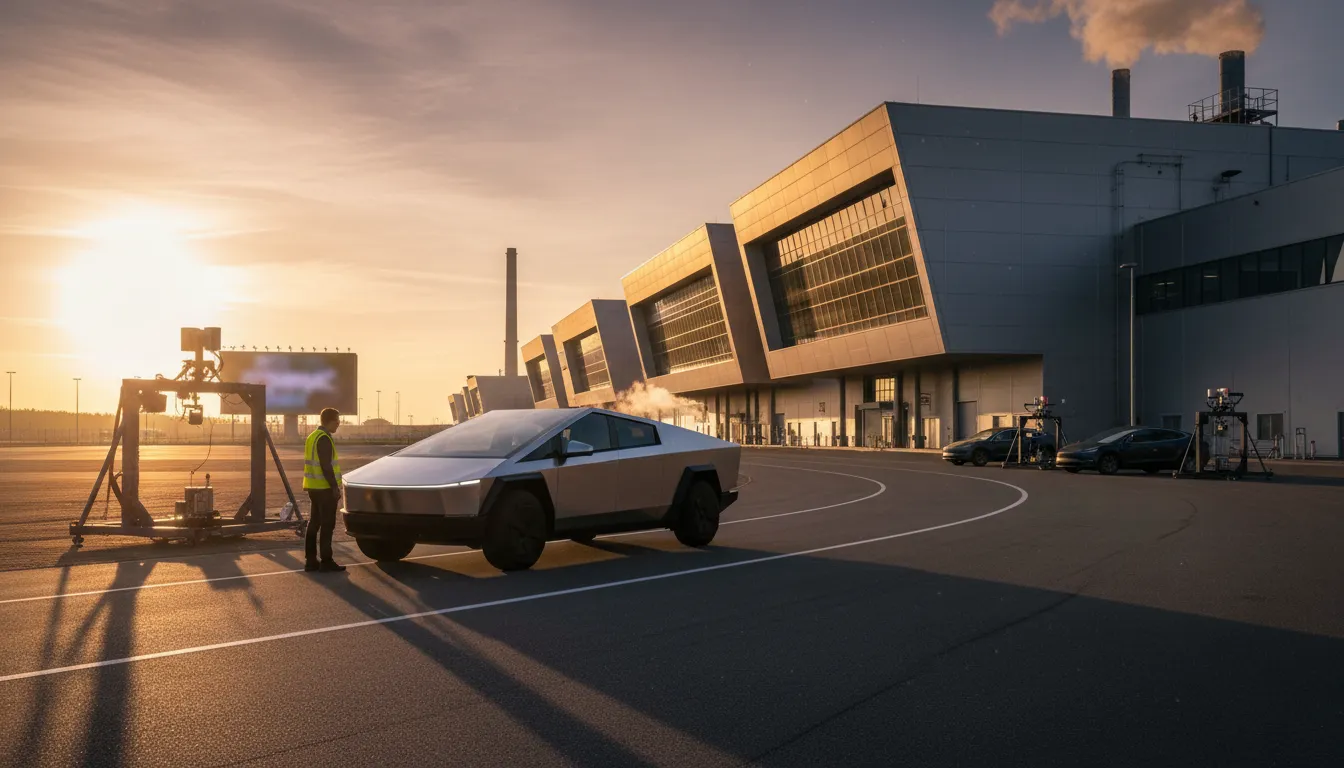
Tesla is facing a crucial milestone on the path to European approval for its Full Self-Driving (FSD) driver assistance system. According to the US electric car manufacturer, it has tested the system for more than 1.6 million kilometers on European roads, conducted over 13,000 rides with customers, and completed 4,500 test scenarios on test tracks. Elon Musk reiterated on March 28 that only regulatory bureaucracy is delaying the introduction in Europe.
However, the reality is more complicated: the Dutch vehicle authority RDW, Tesla's most important approval partner in the EU, has already postponed the original approval date several times — most recently from March 20 to April 10, 2026. An EU-wide launch is not expected until the summer at the earliest.
Level 2 Instead of Full Autonomy
Despite the name "Full Self-Driving," Tesla's system is a Level 2 assistance system. This means that the driver must remain attentive at all times and intervene in complex situations. Tesla itself describes the system as "supervised" with escalating warnings. In Germany, FSD is expected to cost 7,500 euros.
For approval, Tesla is pursuing the path via the UN Regulation R-171 and so-called Article 39 exemptions. If the RDW receives approval, other EU countries can adopt it through mutual recognition — a strategic advantage of the Dutch approval route.
US Safety Authority Intensifies Investigation
Parallel to the European approval offensive, pressure is growing in the US. The NHTSA has upgraded its investigation of Tesla's FSD system to a so-called Engineering Analysis — the last stage before a possible recall. This affects 3.2 million vehicles. The focus is on the question of whether the camera-based system reacts adequately in limited visibility due to sunlight, fog, or dust.
Particularly problematic: The NHTSA identified nine accidents related to limited camera visibility, including one fatal crash. In addition, the authority documented 80 traffic violations by FSD — an increase of 60 percent since October. These findings could also influence the European approval process.
German Manufacturers Under Pressure
An FSD approval would have significant consequences for the German automotive industry. Mercedes-Benz offers true Level 3 driving with the Drive Pilot — but only up to 60 km/h on selected motorway sections. BMW has partially withdrawn from Level 3 development because customers hardly demanded the feature.
Tesla's approach is fundamentally different: While German manufacturers rely on a combination of cameras, radar, and ultrasound, Tesla uses a purely camera-based approach. It is precisely this "vision-only" strategy that is now at the center of the US safety investigation.
Waiting for April
Tesla's history with European approval deadlines is long — as early as 2022, Musk promised a soon FSD launch in Europe. Whether April 10, 2026, will actually bring the breakthrough remains to be seen. The RDW made it clear that a timetable for the review does not mean a commitment to approval. The coming weeks should be trend-setting for Europe's drivers and car manufacturers.