Nepal Goes to the Polls After Gen Z Revolution
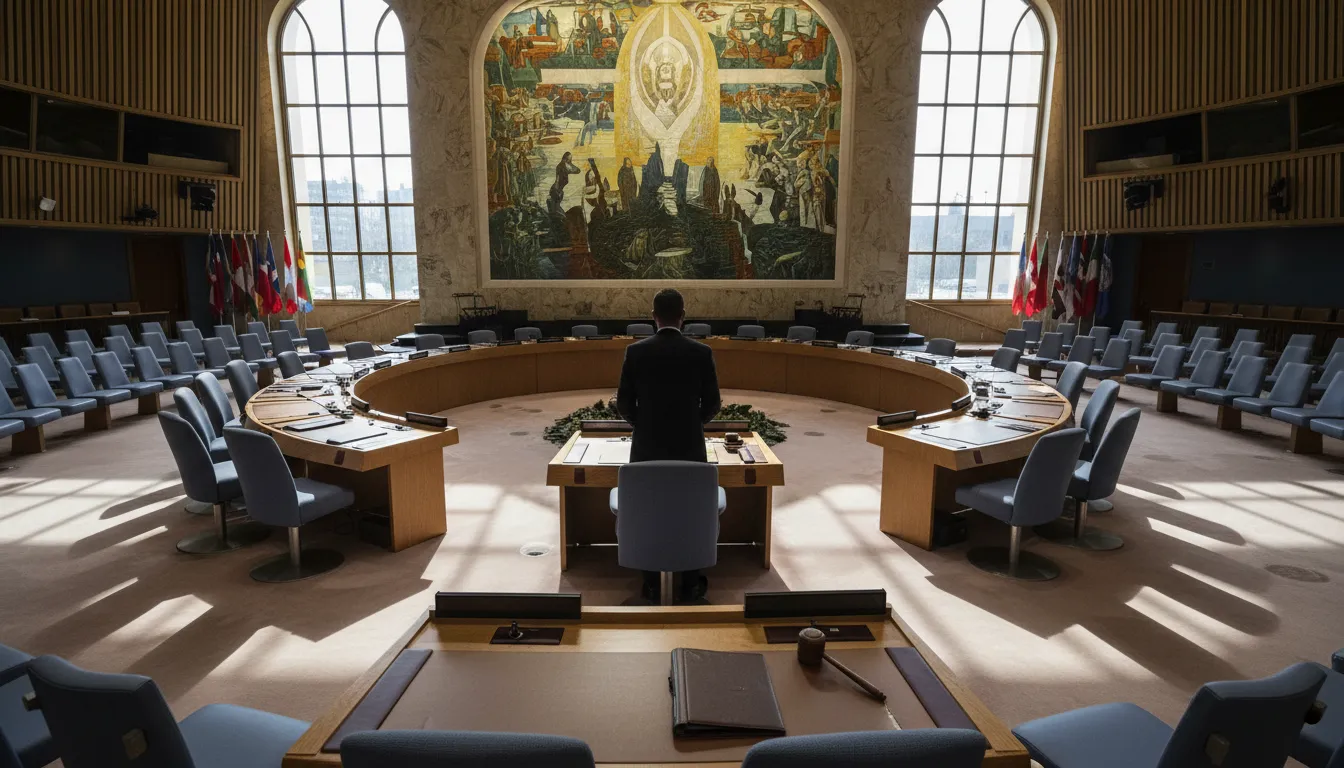
Nepal holds snap elections on March 5, just five months after Generation Z protesters forced the prime minister's resignation. The vote pits a youth-driven anti-establishment alliance against a seasoned political old guard — with nearly 19 million ballots to decide the Himalayan nation's future.
From Protest to Ballot Box
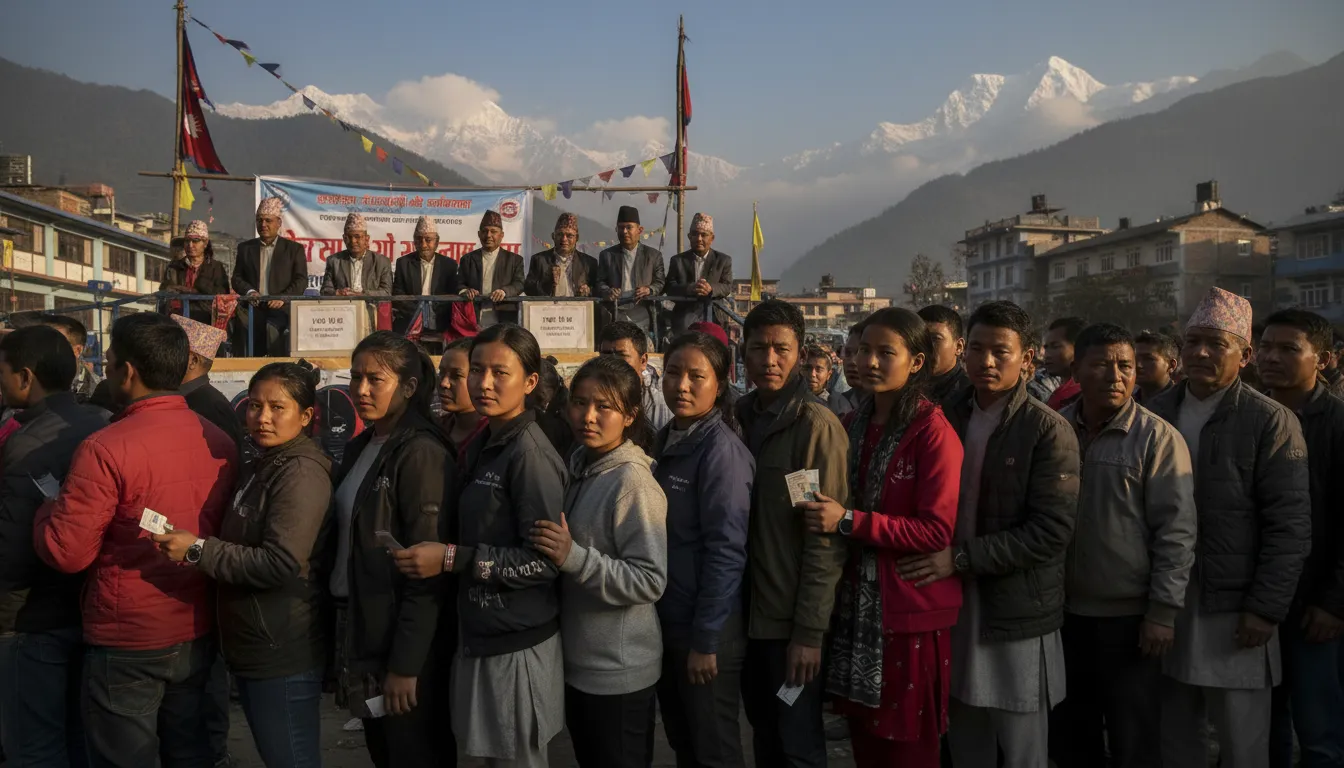
In seven days, Nepal holds its most consequential election since the fall of the monarchy. The March 5 snap vote was triggered by a violent Generation Z uprising that shook the Himalayan nation last September — and now nearly 19 million voters will choose between an entrenched political old guard and a new wave of leaders determined to rewrite the rules of Nepali democracy.
The Uprising That Changed Everything
What began as protests against a proposed social media ban quickly escalated into a nationwide anti-corruption movement in September 2025. Security forces opened fire on demonstrators, killing at least 19 protesters — the majority under 30 — and wounding hundreds more. The bloodshed forced Prime Minister K.P. Sharma Oli, the 73-year-old chairman of the Communist Party of Nepal (Unified Marxist-Leninist), to resign under pressure.
Parliament was formally dissolved on September 12. Former Chief Justice Sushila Karki was appointed interim prime minister — the first woman to hold the office — and tasked with organizing credible elections more than a year ahead of schedule. The Election Commission has since mobilized roughly 338,000 security personnel across 10,967 polling stations. Alcohol sales have been banned and the Nepal-India border sealed 72 hours before voting begins.
The Generational Fault Line
The contest crystallizes around a single symbolic face-off. Oli runs directly against Balendra Shah — a 35-year-old rapper and former Kathmandu mayor who became the uprising's de facto figurehead — in the Jhapa district constituency. The two men's names have become shorthand for the election's broader stakes: continuity versus rupture.
Shah is the prime ministerial candidate of the fast-growing Rastriya Swatantra Party (RSP), led by television host Rabi Lamichhane. Their "youth alliance" frames itself explicitly as the political continuation of the September protests. The RSP's manifesto pledges to transform Nepal from a passive "buffer state" into a "vibrant bridge" — positioning the country as a trilateral economic partner balancing India and China rather than a pawn between them.
The energy behind this movement is measurable: more than 915,000 new voters registered since the uprising, over two-thirds of them Generation Z. More than 120 political parties have entered the race — over a third founded after September — making this the most crowded ballot since democracy was restored in 2006.
Old Guard Still in the Fight
Analysts caution against writing off established parties too quickly. Both the CPN-UML and the Nepali Congress — Nepal's dominant forces for decades — are fielding candidates in all 165 first-past-the-post constituencies. The Nepali Congress elected 49-year-old Gagan Thapa as party president, repositioning itself as reformed but experienced. The sheer number of new parties also risks fragmenting the youth-aligned vote, potentially handing advantage to organizations with deeper grassroots machinery.
No party is expected to win an outright majority, meaning the real test may come in coalition negotiations after polling closes — precisely the arena where Nepal's old guard has historically excelled.
Geopolitical Stakes
The election's implications extend well beyond Kathmandu. Nepal has long maintained careful nonalignment between Beijing and New Delhi, but the Atlantic Council warns that the new government "could challenge Nepal's hedging approach toward India, China, and the West." A pivot in either direction would reverberate across South Asia at a moment when both great powers are competing intensively for regional influence.
A Nation at a Crossroads
Nepal has cycled through more than a dozen governments since abolishing the monarchy in 2008. Whether March 5 delivers the accountability that protesters died demanding — or merely reshuffles the deck — will shape the country's democratic trajectory for a generation. The world will be watching a small but strategically placed nation decide whether a revolution can survive the ballot box.