Pakistan Bombs Kabul, Declares 'Open War' on Taliban
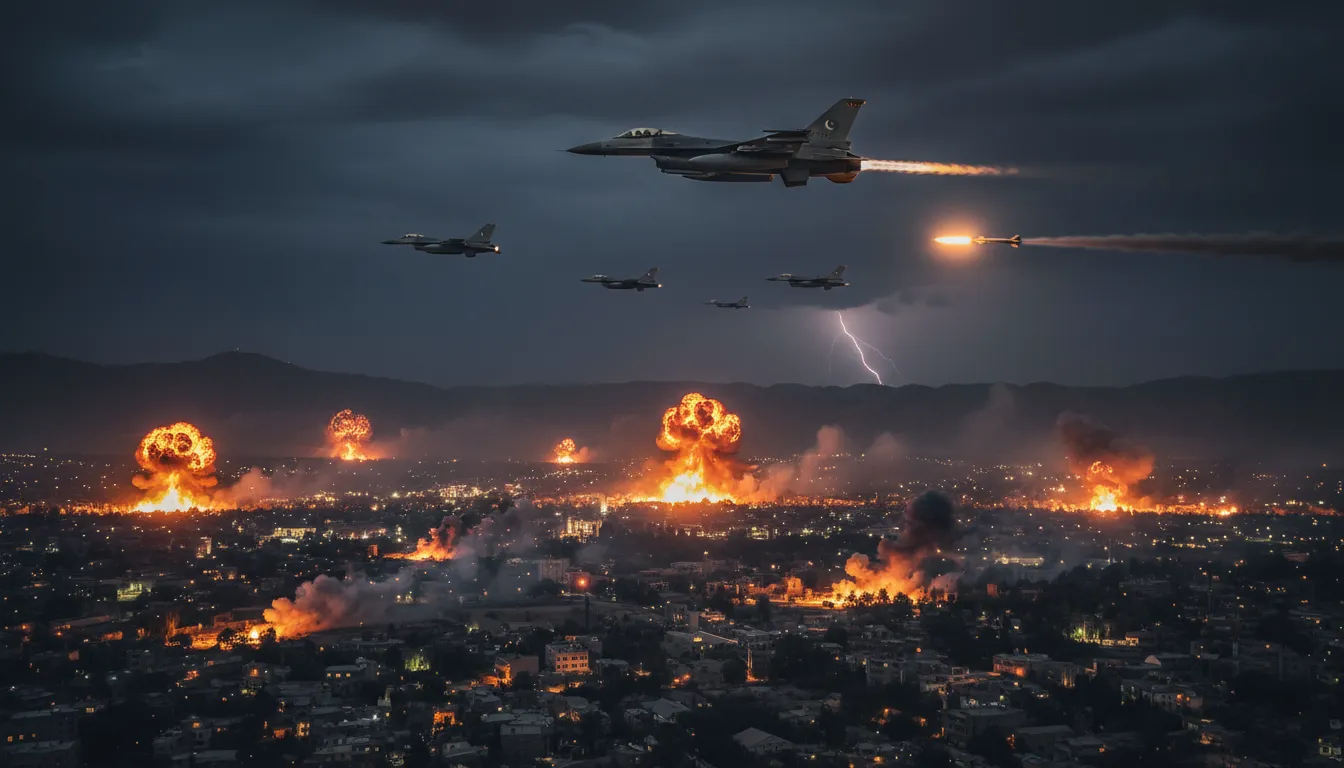
Pakistan's defense minister declared 'open war' with Afghanistan on February 27 after Pakistani warplanes struck Kabul and at least two other provinces, marking the most dramatic escalation between the neighboring countries in decades.
A New War on the World's Doorstep
Pakistan declared "open war" with Afghanistan on Friday after its warplanes struck the Afghan capital Kabul and at least two other provinces, sending shockwaves through a region already battered by years of instability. Defense Minister Khawaja Asif said Islamabad's "patience has run out," marking a dramatic escalation that threatens to unravel fragile regional diplomacy and draw in international powers.
What Sparked the Crisis
The current conflict has deep roots in a devastating wave of terrorism inside Pakistan. On February 6, a suicide bomber killed at least 36 people at a Shia mosque in Islamabad and wounded 170 others during Friday prayers. Days later, an explosives-laden vehicle rammed a security checkpoint in Bajaur, killing 11 soldiers and a child. Pakistani officials blamed the Tehreek-e-Taliban Pakistan (TTP) — which Islamabad designates as "Fitna al-Khawarij" — and accused the Afghan Taliban government of sheltering the group on Afghan soil.
On February 21 and 22, Pakistan responded with airstrikes targeting seven TTP and ISIS-Khorasan Province (ISKP) camps in Afghanistan's Nangarhar, Paktika, and Khost provinces. The Taliban government in Kabul condemned the strikes as a blatant violation of sovereignty and pledged retaliation.
Bombs Over Kabul
On Thursday night, Afghan forces launched cross-border strikes against Pakistani military installations. By the early hours of Friday, Pakistani jets were striking Kabul. Afghan government spokesperson Zabihullah Mujahid confirmed strikes in Kabul, Kandahar, and Paktia province but claimed there were no casualties — a figure Pakistan flatly contradicted. Prime Minister's spokesperson Mosharraf Zaidi claimed 133 Taliban fighters were killed and over 200 wounded. Al Jazeera said it was unable to independently verify either side's figures.
A Region Holds Its Breath
The violence has shattered a Qatar-mediated ceasefire that had barely held through 2025. Diplomatic efforts involving Qatar, Turkey, and Saudi Arabia have all failed to halt the cycle of retaliation. United Nations Secretary-General António Guterres urged both nations to protect civilians and return to dialogue, according to Euronews.
The stakes are exceptionally high. Pakistan is a nuclear-armed state with a military far more capable than Afghanistan's Taliban forces. The conflict also intersects with a broader regional realignment: Al Jazeera analysts noted that India has been quietly deepening ties with the Taliban government, adding a strategic dimension that directly threatens Islamabad's calculations.
No End in Sight
The underlying conflict appears structural. Pakistan has long accused Afghanistan of being unwilling to crack down on the TTP — a group responsible for hundreds of soldiers and civilians killed inside Pakistan. The Afghan Taliban, for their part, appear reluctant to act due to ideological affinities with the TTP and fear of pushing militants toward their chief rival, ISIS-Khorasan. Without a fundamental change in that dynamic, analysts told CNN, further escalation is inevitable.
With bombs falling on a capital city and a defense minister invoking the language of all-out war, the Pakistan-Afghanistan conflict has entered a dangerous new chapter — and the international community has yet to find an answer.