Poland Imposes 90-Day Flight Ban Near Belarus Border
The Polish Air Navigation Services Agency (PAŻP) is introducing the EP R130 restricted zone in four eastern provinces from March 10 to June 9, 2026. The ban covers drones and light civil aviation in response to reconnaissance violations of Polish airspace.
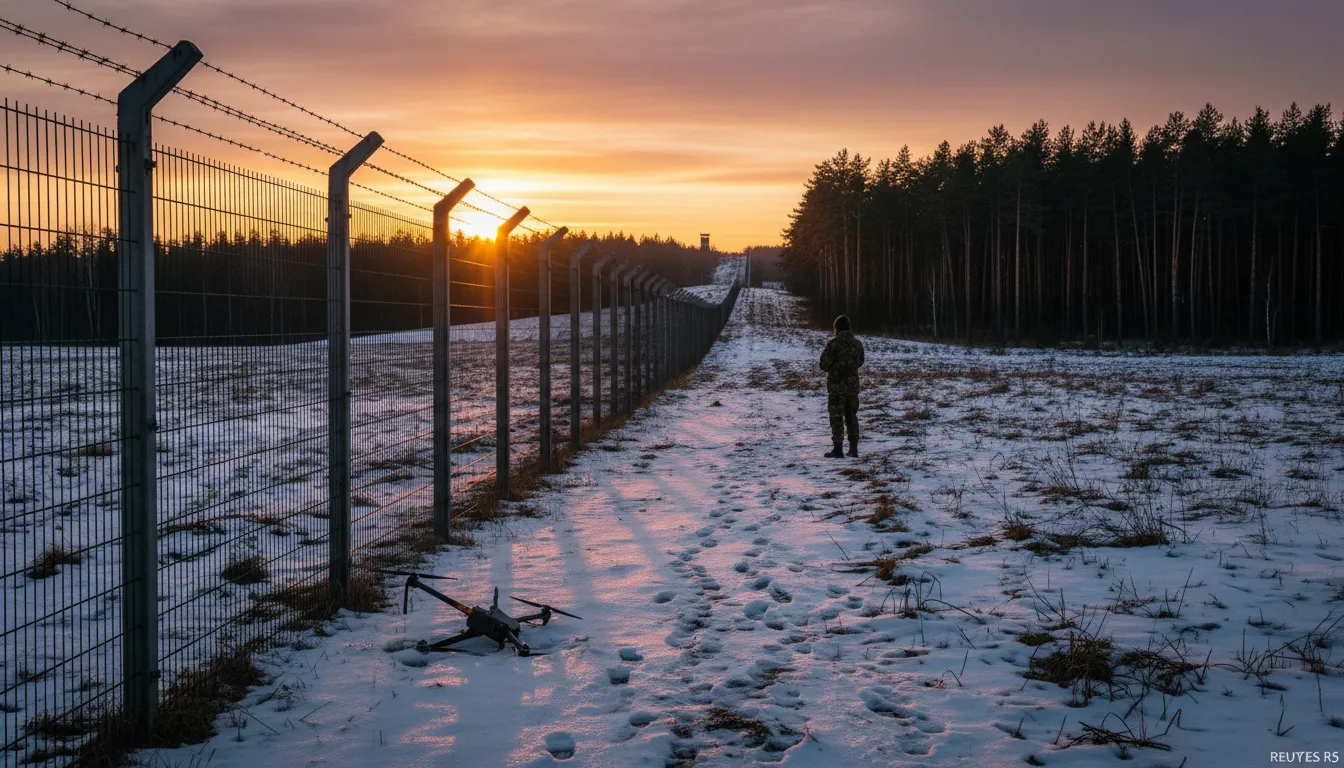
New Skies Over Eastern Poland
From March 10, 2026, the Polish Air Navigation Services Agency (PAŻP) will implement a new restricted zone, EP R130, covering the entire eastern part of the country along the border with Belarus, Ukraine, and the Kaliningrad Oblast of Russia. The restrictions are in effect for 90 days—until June 9—and apply to airspace from ground level up to FL95, or approximately 3 kilometers in altitude.
The decision was made at the request of the Operational Command of the Armed Forces and covers four provinces: Podlaskie, Lubelskie, Podkarpackie, and Warmińsko-Mazurskie. According to a PAŻP statement, this is a direct response to the need to ensure national security in the face of violations of Polish airspace by unidentified aerial objects.
What Exactly Does the NOTAM Prohibit?
The regulations for the EP R130 zone differentiate rules depending on the time of day. At night—from sunset to sunrise—there is a complete ban on flights under VFR (Visual Flight Rules), with the exception of military aircraft and coordinated operations from Depułtycze Królewskie airfield. During the day, flights are only possible after filing a flight plan, with a functioning transponder in Mode A/C or S, and while maintaining constant communication with air traffic control.
In practice, this means that civilian drones, recreational flights, gliding, sports aviation, and aerial agricultural spraying are suspended for three months in the border area. Regular passenger traffic remains unaffected—commercial airliners fly above FL95.
Drones from Belarus—A Series of Incidents
The immediate impetus for tightening the regulations was a series of airspace violations by objects linked to Belarus. On the night of December 24-25, 2025, dozens of unknown objects crossed the Polish border from the Belarusian side. In February 2026, military radar systems recorded further incursions by balloons and reconnaissance drones, and one of the objects crashed on the grounds of a military base in Leźnica Wielka.
The National Security Bureau published maps of the violations, indicating the systematic nature of the activities. Belarus initially maintained that the drones "strayed off course" due to electronic warfare conducted by Russia and Ukraine—an explanation that the Polish side rejected as implausible.
Broader Context: Poland Arms Itself Like Never Before
The ban is part of a broader defense strategy by Warsaw. At the beginning of 2026, Prime Minister Donald Tusk announced that Poland would build the strongest army in Europe, declaring 2026 "the year of Polish acceleration." According to Anadolu Agency, the plans call for expanding the armed forces to 500,000 soldiers.
At the beginning of March, Tusk went even further—in an interview quoted by Bloomberg, he signaled that Poland would seek to possess its own nuclear weapons, holding talks with France and other European partners on an "advanced nuclear deterrence system." Poland is already the NATO country with the highest share of defense spending in GDP.
Consequences for Agriculture and Sports Aviation
The restrictions directly affect the aerial agriculture industry—spring is the peak season for aerial spraying in border regions. Agricultural drone operators and companies providing cartographic services must either obtain individual coordination or suspend operations in the prohibited area.
Sports pilots and glider pilots from the eastern provinces have been deprived of the possibility of normal flying for three months. Industry aviation organizations have announced consultations with PAŻP regarding mechanisms for exceptional permits.
NATO Observes With Attention
Poland is the first NATO country to introduce such an extensive and long-term restricted zone along the border with Belarus. Analysts point out that Warsaw is setting a precedent for other countries on the eastern flank of the Alliance—Lithuania, Latvia, and Estonia—struggling with similar provocations in the air domain.