UN Backs Ukraine Peace Resolution as U.S. Abstains
On the fourth anniversary of Russia's full-scale invasion, the UN General Assembly adopted a resolution calling for an immediate ceasefire in Ukraine, with the United States — historically a key ally — notably abstaining from the vote.
A Historic Vote on Ukraine's Fourth War Anniversary
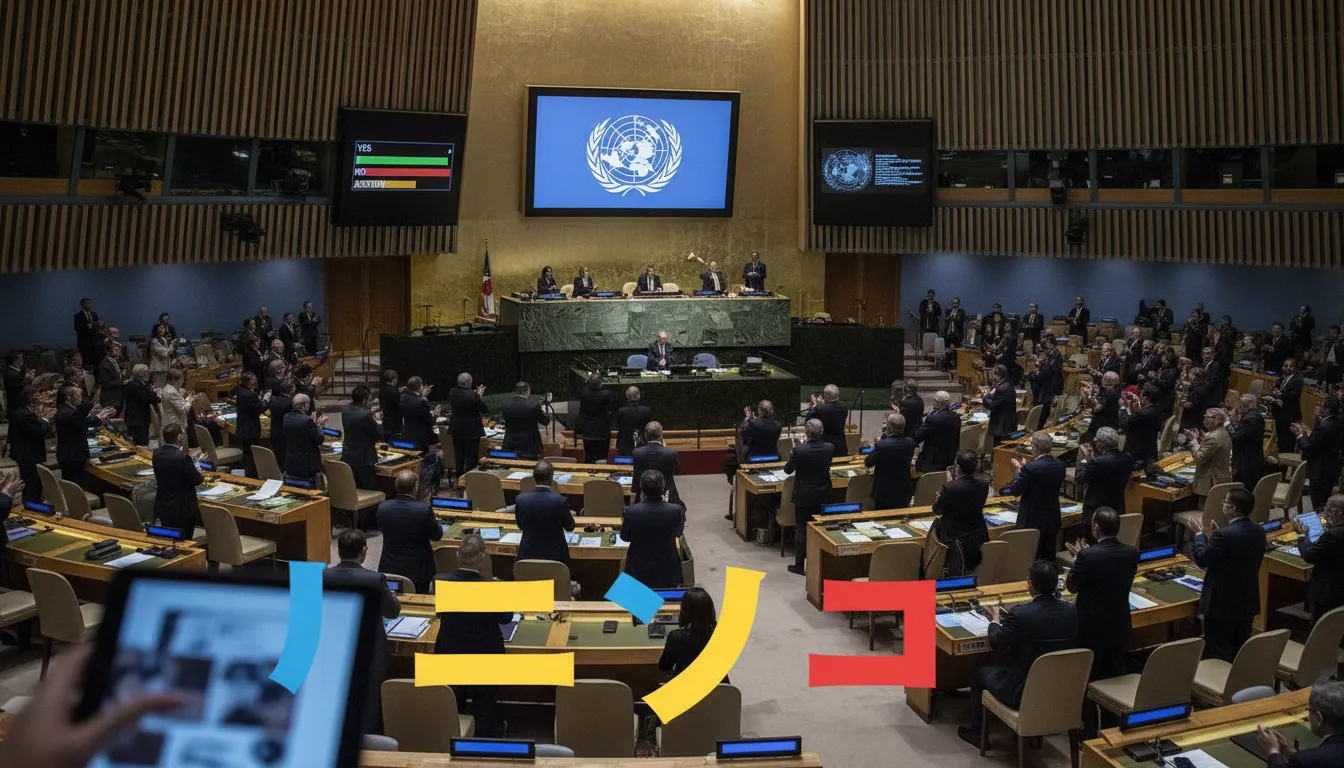
On February 24, 2026 — exactly four years after Russia launched its full-scale invasion of Ukraine — the United Nations General Assembly adopted a resolution titled "Support for Lasting Peace in Ukraine." The text passed by a vote of 107 in favor, 12 against, and 51 abstentions, out of 193 member states. While the resolution carries no legally binding force, the symbolism of the vote — and who abstained — sent shockwaves through international diplomacy.
What the Resolution Demands
Drafted by Ukraine and a coalition of European nations, the resolution calls for an "immediate, full and unconditional ceasefire" between Russia and Ukraine. It reaffirms the sovereignty, independence, and territorial integrity of Ukraine within its internationally recognized borders, and demands the release of all unlawfully detained civilians, including forcibly transferred children.
The United States Steps Back
The most striking development was Washington's decision to abstain — not from a procedural technicality, but from endorsing a principle it had championed for years: Ukraine's right to its internationally recognized borders. Under the Trump administration, U.S. Deputy Ambassador Tammy Bruce argued that the resolution's territorial integrity language could "distract from ongoing negotiations rather than support the full range of diplomatic avenues."
Before the final tally, Washington attempted to strip key sovereignty clauses from the text by requesting a separate vote on two specific paragraphs. That motion failed decisively: only 11 countries backed it against 69 in opposition, with 62 abstentions. The resolution then passed intact, sovereignty language and all.
"We believe we are closer to a deal than at any point since this war began," Bruce told the assembly — framing Washington's abstention as diplomatic pragmatism rather than abandonment of an ally.
Russia, China, and a Fragmented Global Response
Russia and its closest partners — Belarus, North Korea, Iran, Cuba, Nicaragua, and six African nations (Burkina Faso, Burundi, Eritrea, Mali, Sudan, and Niger) — voted against the resolution. China, Brazil, India, Türkiye, and Hungary were among the 51 abstentions, highlighting deep divisions over how the war should end and on whose terms.
Russia dismissed the resolution as unhelpful, urging "quiet restraint" given what Moscow described as active back-channel peace discussions. China similarly called for addressing "root causes" and building broader consensus rather than pressing for a symbolic vote.
Ukraine's Warning and Europe's Resolve
Ukraine's delegation pushed back sharply, insisting Moscow had shown "no genuine willingness to stop its aggression." European nations rallied strongly behind the text: the Czech Republic's Foreign Minister challenged Russia directly — "Does this war actually lead to more security for your country?" — while the EU bloc voted largely in favor.
With 107 countries in support, the resolution represents a broad expression of international backing for Ukraine's peace terms. Yet the abstention of the United States — once the loudest advocate for Ukrainian sovereignty at the UN — marks an unmistakable and historic shift in the geopolitical landscape surrounding the war.