What Is Diabetic Retinopathy and How It Damages Vision
Diabetic retinopathy is the leading cause of blindness in working-age adults worldwide. Here is how high blood sugar silently destroys the eye's light-sensitive tissue — and what medicine can do about it.
A Silent Thief of Sight
Most people with early diabetic retinopathy feel nothing. No pain. No blurring. No warning. By the time symptoms appear, serious, often irreversible damage has already set in. That invisibility is what makes this condition — the leading cause of blindness among working-age adults globally — so dangerous.
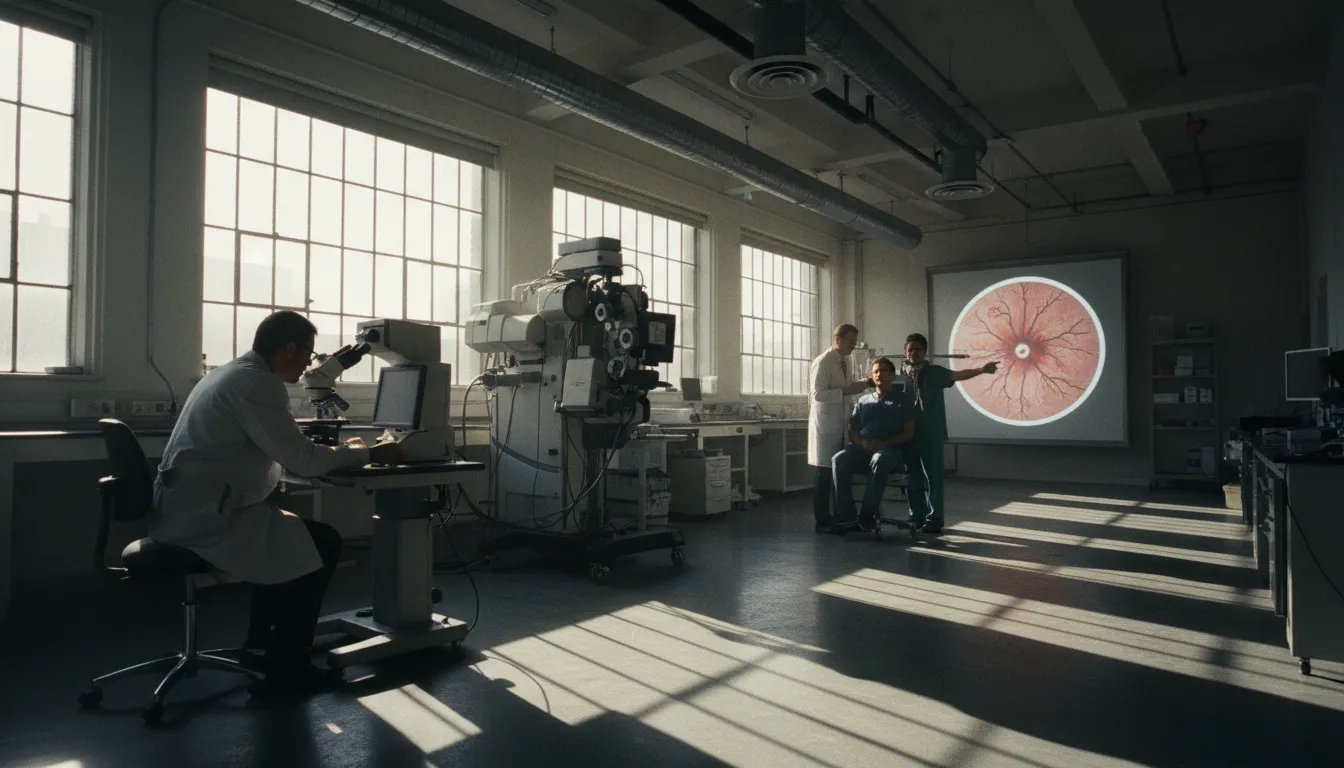
Diabetic retinopathy is a complication of diabetes, both Type 1 and Type 2, that progressively damages the retina: the thin, light-sensitive layer lining the back of the eye. When blood sugar levels remain elevated over time, the tiny blood vessels supplying the retina begin to break down. The consequences range from mild visual disturbance to complete blindness.
How High Blood Sugar Harms the Eye
The retina is one of the most metabolically active tissues in the body, requiring a constant, rich supply of blood. Chronically elevated glucose weakens the walls of the retina's fine capillaries, making them prone to leaking fluid and blood. As these vessels deteriorate, the retina becomes starved of oxygen — a state called ischemia.
In response, the body triggers the release of vascular endothelial growth factor (VEGF), a signalling protein that instructs the body to grow new blood vessels. But these replacement vessels are fragile and abnormally structured. They bleed easily into the gel-like interior of the eye, can pull on the retina and ultimately cause it to detach — with devastating consequences for vision.
Recent research from University College London, published in early 2026, has identified an even earlier trigger in this cascade: a protein called LRG1, which appears to constrict tiny retinal blood vessels and cut off oxygen supply before VEGF even enters the picture. In animal models, blocking LRG1 halted retinal damage at its earliest stage — a finding that could transform how the disease is treated.
Two Stages, One Escalating Threat
Clinicians divide diabetic retinopathy into two broad stages:
- Non-proliferative diabetic retinopathy (NPDR): The early stage, in which capillaries develop tiny bulges called microaneurysms and begin to leak. Vision may still be normal, but the structural damage is underway. Most people with diabetes who develop retinopathy begin here.
- Proliferative diabetic retinopathy (PDR): The advanced stage, in which abnormal new blood vessels grow across the retina and into the vitreous. This is when vision loss accelerates rapidly. Retinal detachment and severe haemorrhage become real risks.
A related complication — diabetic macular oedema (DME) — can occur at either stage when fluid accumulates in the macula, the central region of the retina responsible for sharp, detailed vision. DME is the most common cause of vision impairment among people with diabetes.
A Global Sight Crisis
The scale of the problem is staggering. According to a large-scale meta-analysis published in Ophthalmology, approximately 103 million adults worldwide were living with diabetic retinopathy as of 2020, with over 28 million having vision-threatening forms of the disease. By 2045, those numbers are projected to rise to 160 million and 45 million respectively, driven by the global expansion of diabetes.
Diabetic retinopathy is the leading cause of preventable blindness in the working-age population, according to the International Diabetes Federation. Prevalence is highest in sub-Saharan Africa and parts of North America, and lowest in South and Central America — disparities linked to differences in diabetes control, healthcare access, and screening rates.
Treatments: From Laser to Injection
For decades, laser photocoagulation was the mainstay of treatment. In panretinal photocoagulation, a laser creates hundreds of tiny burns across the peripheral retina, destroying oxygen-deprived tissue and reducing VEGF production. The technique effectively slows abnormal vessel growth, though it can sometimes reduce peripheral or night vision as a side effect.
More recently, anti-VEGF injections — drugs such as ranibizumab and aflibercept — have become the standard of care for macular oedema and advanced retinopathy. Injected directly into the eye under local anaesthetic, they neutralise excess VEGF and can partially reverse some damage. However, they work in only around half of patients, require repeated clinic visits, and do not address the earliest stages of the disease.
For severe cases involving retinal detachment, vitrectomy — surgical removal of the gel-like vitreous — may be necessary to restore some degree of vision.
A New Target on the Horizon
The UCL discovery of LRG1's role in initiating retinal damage opens a new therapeutic window. Because LRG1 acts upstream of VEGF, drugs targeting it could potentially protect the retina before irreversible harm occurs — a significant shift from the current reactive approach. The UCL team has already developed a candidate drug and is advancing it toward clinical trials. UCL spinout company Senya Therapeutics, co-founded in 2019, is leading that effort.
Prevention Starts With Screening
The most powerful tool against diabetic retinopathy remains the simplest: regular eye examinations. Because the disease is symptomless in its early stages, annual dilated eye exams allow clinicians to detect and monitor changes before vision is at risk. Good blood sugar control, management of blood pressure and cholesterol, and avoiding smoking all substantially reduce the rate of progression.
For the hundreds of millions of people living with diabetes worldwide, understanding this condition is not merely academic — it is the difference between keeping and losing sight.