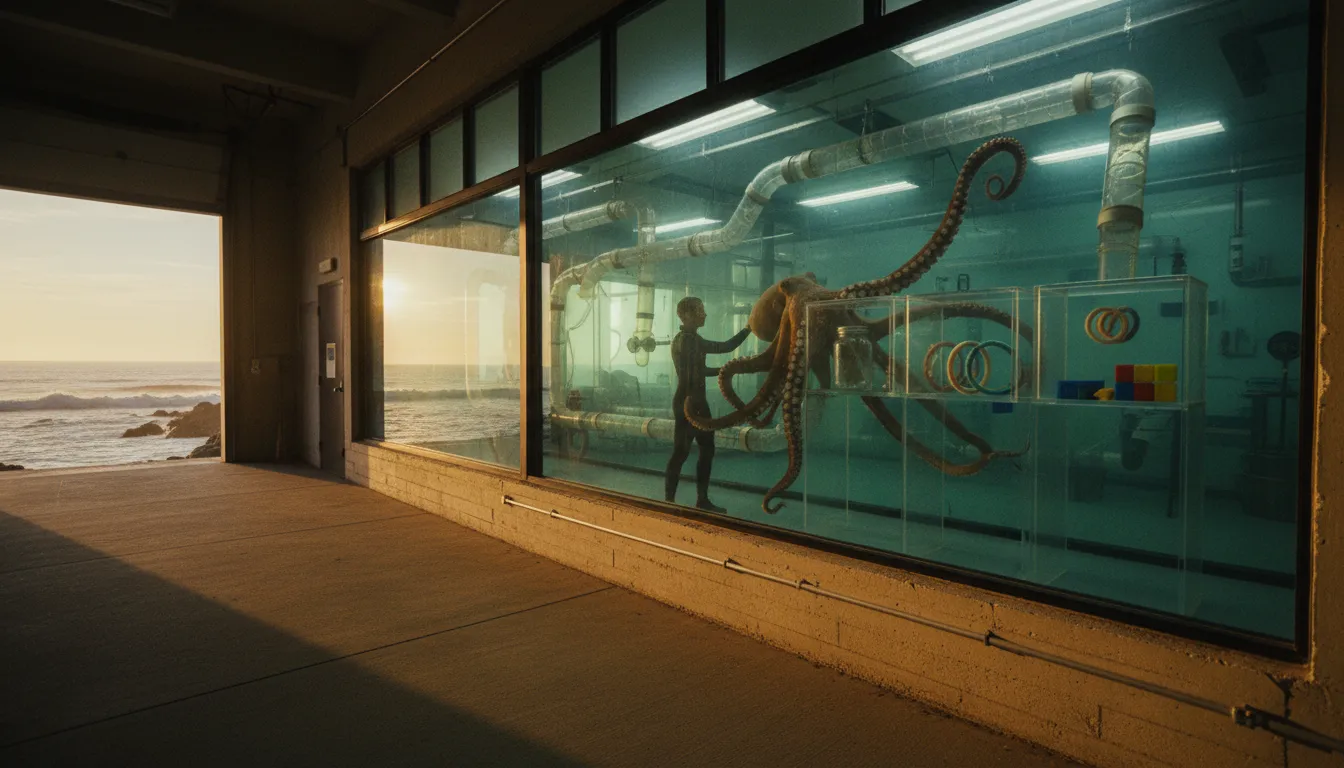
What Is Environmental DNA and How It Maps Ocean Life
Environmental DNA, or eDNA, lets scientists identify marine species from a simple water sample. This non-invasive method is transforming how researchers monitor biodiversity, detect invasive species, and protect fragile ocean ecosystems.
A Genetic Fingerprint in Every Drop
Every living creature leaves a trail. Fish shed scales, whales slough skin cells, crustaceans release waste — and all of it contains DNA. That genetic debris drifts through the water column, creating an invisible archive of every organism in the area. Scientists call it environmental DNA, or eDNA, and it is quietly revolutionizing marine biology.
Instead of dragging nets across the seabed or sending divers into murky depths, researchers can now identify hundreds of species from a single bottle of seawater. The approach is faster, cheaper, and far less disruptive than traditional surveys — and it is already reshaping how governments, conservationists, and industries monitor the ocean.
How eDNA Sampling Works
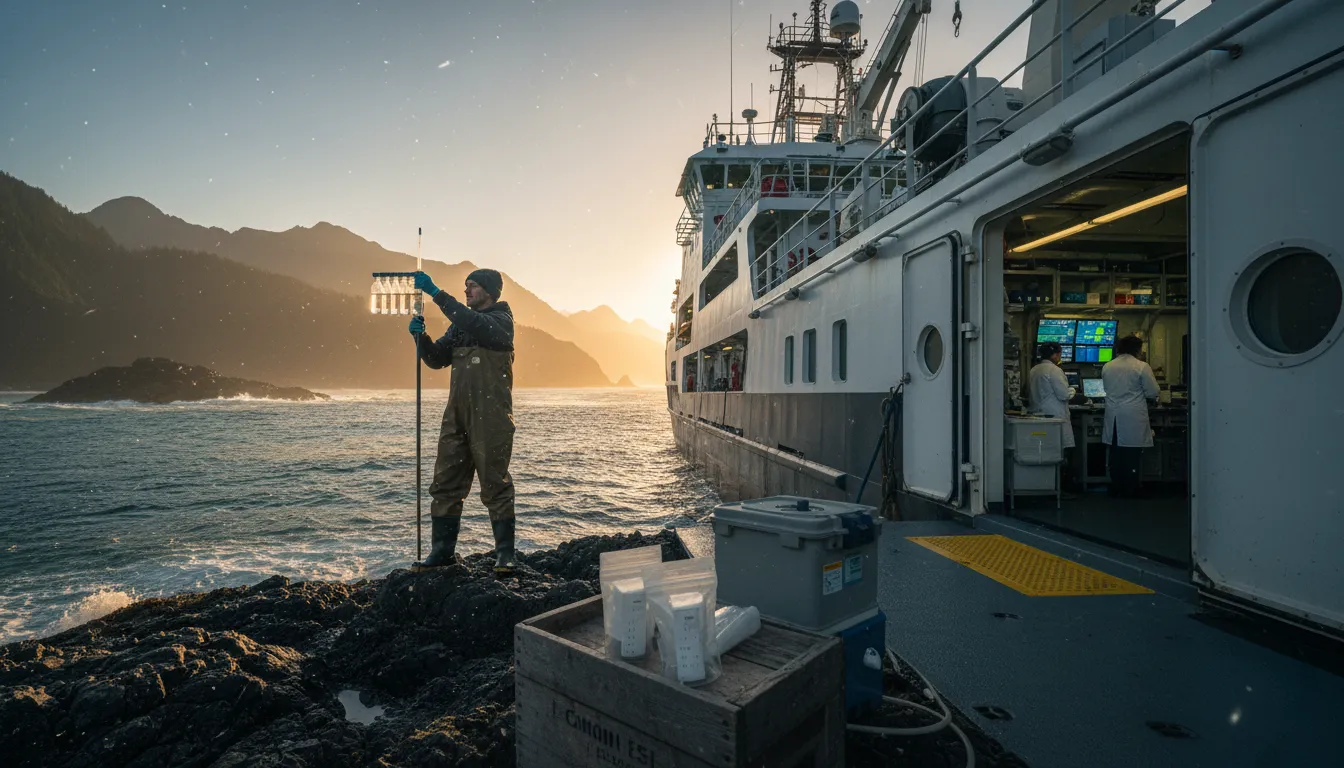
The process begins with water collection. Scientists use sterile bottles or specialized devices — such as Niskin bottles attached to submersibles — to gather samples at precise locations and depths. Each sample is labeled with coordinates, salinity, temperature, and depth data.
Back in the lab, the water is pushed through sub-micron filters that trap microscopic fragments of genetic material. Researchers then extract the DNA and run it through one of two main analytical pipelines:
- Metabarcoding — amplifies short genetic markers and compares them against reference databases to identify multiple species at once, producing a biodiversity snapshot of the entire community.
- Quantitative PCR (qPCR) — targets a single species' genetic marker, allowing scientists to estimate population abundance for endangered, invasive, or commercially important organisms.
The result is what the Bureau of Ocean Energy Management calls "a genetic fingerprint of the ecosystem, ranging from microbes to whales."
Why It Beats Traditional Methods
Conventional marine surveys rely on trawl nets, underwater cameras, and human divers. These techniques are expensive, time-consuming, and often harmful. Nets destroy delicate organisms like jellyfish; bright ROV lights scare away mobile species. Many creatures simply avoid detection.
eDNA sidesteps all of these problems. Because it requires no direct contact with living animals, it can detect species that traditional methods miss — rare deep-sea fish, elusive sharks, or microscopic organisms invisible to cameras. According to Woods Hole Oceanographic Institution, eDNA provides "a more nuanced understanding of biological communities" than net sampling alone.
Cost is another advantage. A 2026 study from the University of Exeter showed that open-source eDNA samplers called Metaprobes — simple plastic spheres packed with gauze — could detect blue sharks, Atlantic mackerel, and European anchovies in Cornwall's waters at a fraction of the cost of standard equipment.
Real-World Applications
The technology is already in active use across several domains:
- Offshore energy — The U.S. Bureau of Ocean Energy Management uses eDNA to measure biodiversity changes before and after wind-farm construction and following oil spills.
- Invasive species detection — Harbour authorities deploy eDNA tests to catch invasive organisms in ballast water before they spread.
- Conservation — Wildlife agencies monitor endangered species without disturbing their habitat, and track the effectiveness of marine protected areas over time.
- Deep-sea exploration — NOAA Ocean Exploration collects eDNA during deep-water missions to identify life forms that avoid ROV lights, expanding the scope of every expedition.
Limitations and the Road Ahead
eDNA is not a perfect tool. It confirms that an organism's genetic material is present — not that the creature is alive, nearby, or in a specific quantity. DNA degrades at different rates depending on temperature and UV exposure, so timing matters. And the entire system depends on comprehensive reference databases; if a species has never been genetically catalogued, its DNA cannot be matched.
To close that gap, institutions like the Smithsonian are building genetic reference libraries for marine invertebrates, while the U.S. government's National Aquatic eDNA Strategy is standardizing sampling and reporting protocols across federal agencies.
As ocean ecosystems face mounting pressure from climate change, pollution, and overfishing, the ability to take a fast, affordable census of marine life from a water bottle may prove indispensable. eDNA will not replace marine biologists — but it is giving them eyes where they have never had them before.