Why Teens Need More Sleep—and Why They Don't Get It
Adolescents need 8–10 hours of sleep per night, yet most get far less. Biology, school schedules, and technology conspire against them—with serious consequences for health, mood, and learning.
The Teenage Sleep Crisis
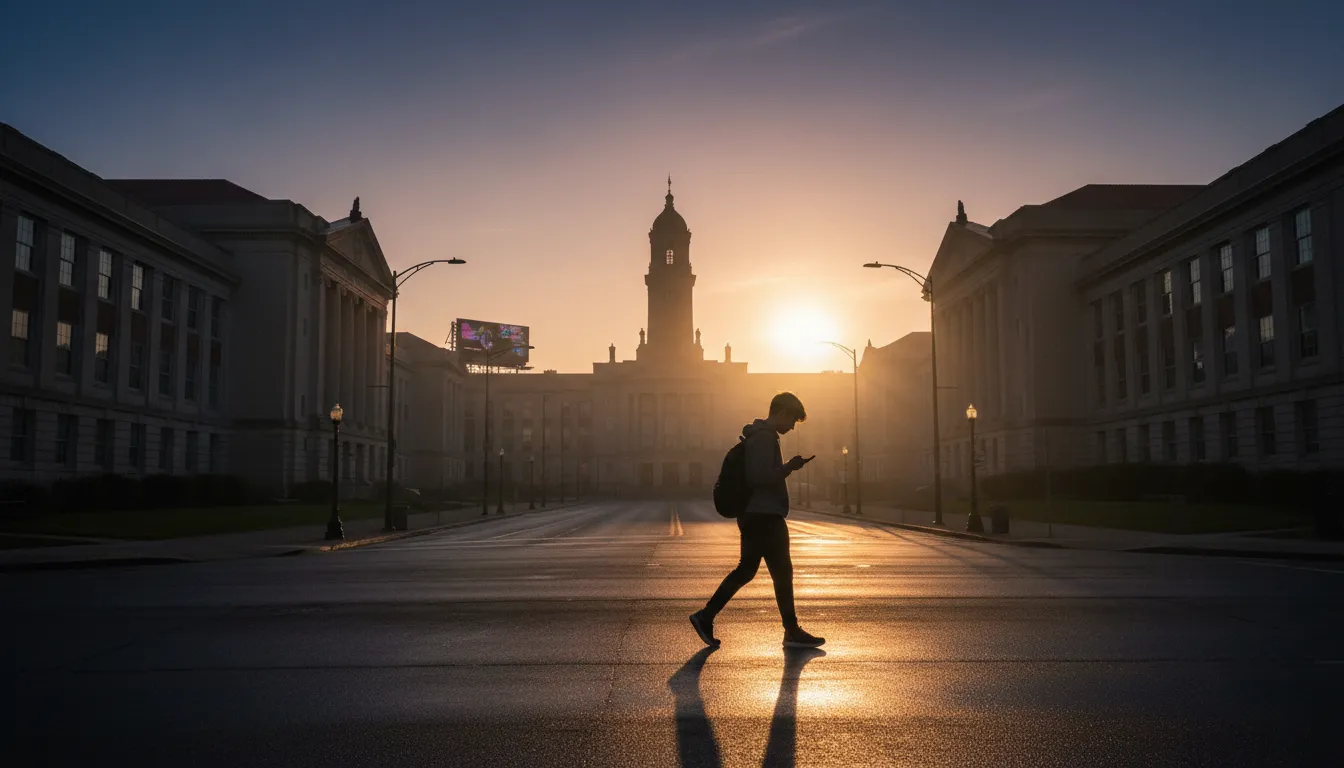
Walk into almost any high school classroom during first period and you'll see it: heads drooping, eyes glazed, coffee cups at desks that once held pencil cases. Teenage sleep deprivation is not a myth or a moral failing—it is a biological and structural crisis that researchers have been documenting for decades. Roughly seven out of ten high school students in the United States do not get the sleep they need on school nights, according to the Centers for Disease Control and Prevention.
Understanding why requires looking at three interacting forces: a profound shift in the adolescent brain, school systems built around adult schedules, and a digital environment that competes for every spare waking hour.
What Biology Does to the Teen Clock
Humans run on a roughly 24-hour internal clock called the circadian rhythm, controlled by light signals and the hormone melatonin. During puberty, that clock shifts—a phenomenon researchers call sleep-phase delay. The adolescent brain begins releasing melatonin later in the evening, typically not until 10 or 11 p.m., making it biologically difficult for teenagers to feel sleepy before midnight.
This shift is universal across cultures and has been confirmed in dozens of studies. It is not laziness. A teenager lying awake at 11 p.m. is not choosing to defy sleep—their brain is simply not yet primed for it. By the early 1990s, sleep researchers at institutions including Stanford University had established that adolescents would naturally sleep from around 11 p.m. to 8 or 9 a.m. if allowed to follow their own schedule.
The problem is that most school bells ring well before 8 a.m. The CDC found that the average middle and high school start time in the United States is 8:03 a.m.—and many districts begin as early as 7:00 a.m. The result is a daily gap between when teenagers' bodies want to sleep and when society forces them to wake.
How Much Sleep Do Teens Actually Need?
The American Academy of Pediatrics (AAP) and the American Academy of Sleep Medicine recommend that teenagers aged 13–18 get 8 to 10 hours of sleep per night. Younger adolescents may need even more. Yet surveys consistently show that most teens average only 6.5 to 7.5 hours on school nights—a chronic shortfall that accumulates into what sleep scientists call sleep debt.
According to Johns Hopkins Medicine, that debt cannot simply be repaid by sleeping in on weekends. Irregular sleep patterns—staying up late Friday and Saturday, then struggling to wake Monday—further disrupt the circadian rhythm in a pattern sometimes called social jet lag.
The Health Consequences
Sleep is not passive rest. It is when the brain consolidates memories, clears metabolic waste, and regulates emotional circuits. Cutting it short has measurable, wide-ranging effects:
- Mental health: Sleep-deprived teens show significantly higher rates of anxiety, depression, and—in severe cases—suicidal ideation, according to research published in the journal Sleep Science and Practice.
- Academic performance: Insufficient sleep impairs working memory, attention, and problem-solving. Students who sleep less consistently score lower on standardized tests.
- Physical health: Chronic sleep loss raises the risk of obesity, high blood pressure, and weakened immune function, according to the CDC.
- Safety: Drowsy driving is a leading cause of crashes among young drivers. Sleep deprivation impairs reaction time to a degree comparable to significant alcohol consumption, according to Stanford researchers.
What Can Actually Help
The most evidence-backed intervention is changing school start times. In 2014, the AAP formally recommended that middle and high schools begin no earlier than 8:30 a.m. Districts that have made the switch—including those in Seattle, Washington and Fairfax County, Virginia—have documented improvements in attendance, grades, and teen mental health.
At the individual level, sleep researchers at UCLA Health and the Sleep Foundation point to several practical strategies:
- Keeping a consistent sleep schedule, even on weekends
- Avoiding screens for at least 30 minutes before bed (blue light suppresses melatonin)
- Keeping the bedroom cool, dark, and quiet
- Avoiding caffeine after early afternoon
Technology is a compounding factor—smartphones and social media create a feedback loop of stimulation precisely when the adolescent brain needs to wind down. But researchers caution against making screens the sole villain: the deeper structural mismatch between teen biology and school schedules remains the primary driver of the crisis.
A Problem Worth Taking Seriously
Teen sleep deprivation is one of the most well-documented and preventable public health problems affecting young people today. The science is clear: adolescents need more sleep than adults, their bodies are wired to sleep later, and the current system does not accommodate either reality. Treating this as a discipline issue—or simply urging teens to go to bed earlier—ignores the biology. The fix requires structural change, starting with the school bell.