China-Iran Supersonic Missile Deal Threatens US Navy
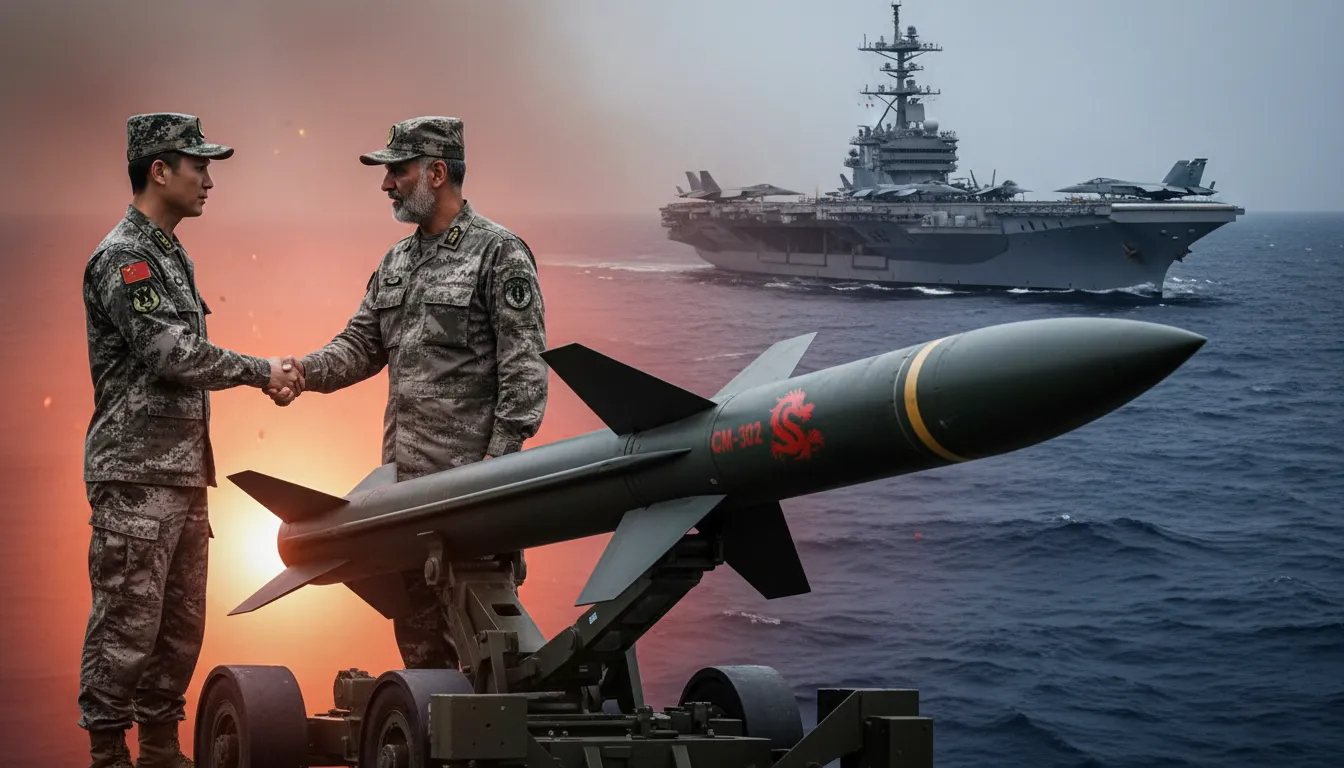
Iran is finalizing a deal to buy Chinese CM-302 supersonic anti-ship missiles capable of striking US aircraft carriers, in a move analysts call a 'game-changer' that could reshape the balance of power in the Persian Gulf.
A Deal Years in the Making
Iran is on the verge of completing a landmark weapons agreement with China to purchase the CM-302 supersonic anti-ship cruise missile — a weapon specifically designed to destroy aircraft carriers. Six sources familiar with the negotiations confirmed to Reuters that talks, which began at least two years ago, have sharply accelerated since last June's 12-day military confrontation between Israel, the United States, and Iran over Tehran's nuclear facilities.
Senior Iranian military officials, including Deputy Defense Minister Massoud Oraei, have made previously unreported visits to Beijing as part of the negotiations. The precise number of missiles, the purchase price, and any delivery schedule have not been disclosed, but sources describe the deal as near completion.
The Weapon That Has Analysts Worried
The CM-302 — the export designation for China's YJ-12 — is no ordinary cruise missile. It travels at Mach 3, carries a 500-kilogram warhead, and has a range of roughly 290 to 460 kilometres depending on the launch platform. It flies low to hug the sea surface and can perform evasive maneuvers in its terminal phase, making it exceptionally difficult for shipborne defense systems to intercept.
A former Israeli intelligence officer quoted by regional media described the potential transfer as "a complete game-changer." "These missiles are very difficult to intercept," he said. "If Iran acquires a supersonic capability to attack ships in the area, it fundamentally alters the threat environment."
Military analysts note that the CM-302's combination of speed, low-altitude flight, and guidance system — which blends inertial navigation with satellite correction and terminal maneuverability — makes it precisely suited for anti-access/area-denial (A2/AD) operations targeting high-value naval vessels.
Dangerously Timed as US Carriers Mass in Region
The deal is advancing as the Trump administration has deployed two carrier strike groups to the region. The USS Abraham Lincoln is operating in the Arabian Sea, and the USS Gerald R. Ford is positioned in the Eastern Mediterranean — both within potential striking range of Iran. Washington declined to comment directly on the reported missile transfer.
The strategic stakes extend beyond military posturing. Iran has long threatened to close the Strait of Hormuz, the narrow chokepoint through which approximately 20 percent of the world's seaborne oil passes. Arming Tehran with a credible ship-killing capability could give those threats far more weight.
China's Calculated Gamble
For Beijing, the deal represents a significant escalation in its military relationship with Tehran — but one with a built-in contradiction. Iran currently accounts for roughly 13.4 percent of China's seaborne oil imports, and Tehran is paying for the missiles partly through oil shipments. Yet nearly 45 percent of China's total oil imports also transit the Strait of Hormuz, meaning any conflict triggered by the deal could disrupt Beijing's own energy lifeline.
The prospective transfer would mark one of the most advanced Chinese weapons systems ever supplied to Iran, potentially violating reimposed UN Security Council sanctions. It comes as Iran is also reported to be in talks for Chinese surface-to-air and anti-ballistic missile systems, signalling a broader military partnership deepening in defiance of Western pressure.
What Comes Next
Analysts caution that it remains unclear whether China will ultimately finalize the transfer given the potential diplomatic fallout with the United States and European partners. The timing — coinciding with ongoing US-Iran nuclear negotiations — adds another layer of complexity. A completed sale would almost certainly derail diplomatic talks and could trigger new US sanctions against Chinese defense entities.
For now, the reported deal has injected fresh urgency into an already volatile regional standoff — one where the margin for miscalculation grows thinner by the week.