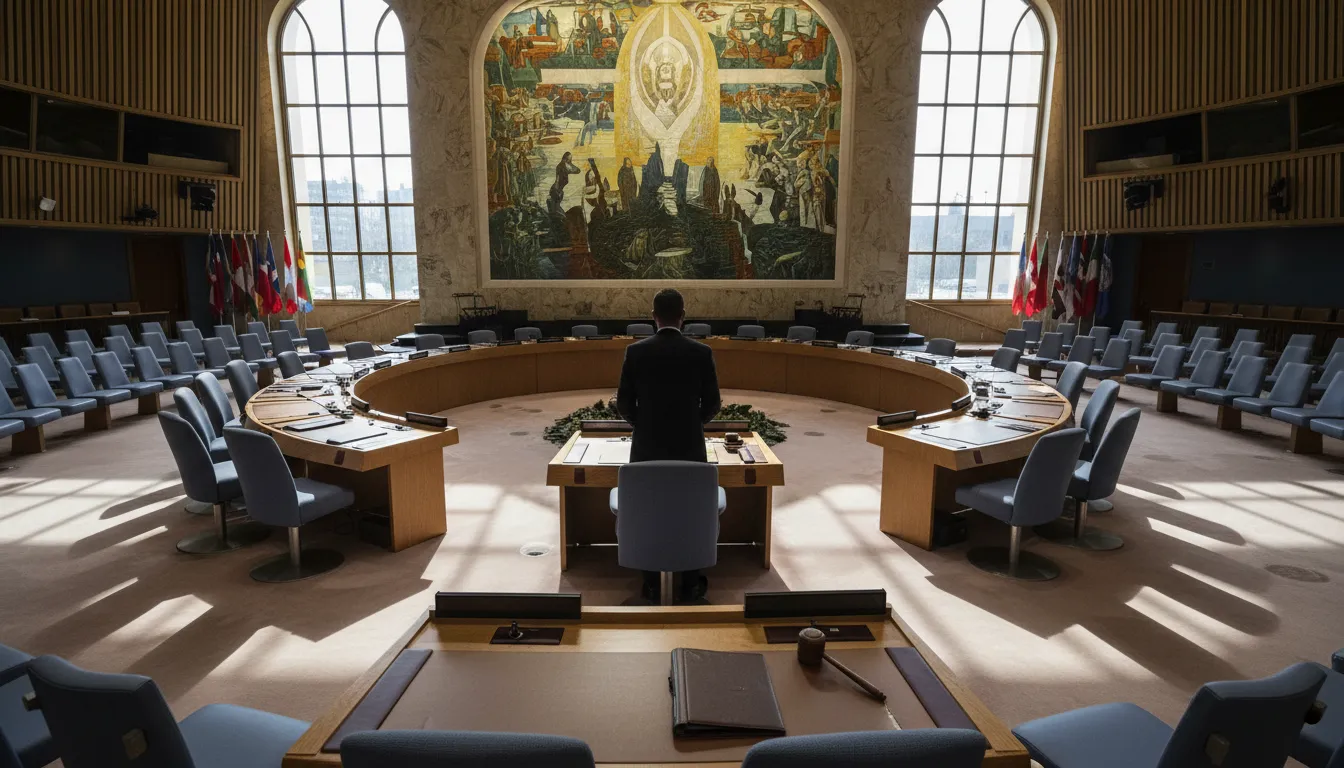
China's Parliament Opens Amid Trade Tensions
China's annual 'Two Sessions' political gatherings opened in Beijing on March 4–5, setting GDP targets and unveiling the 15th Five-Year Plan as the world's second-largest economy navigates US tariffs, weak domestic demand, and a technology race with the West.
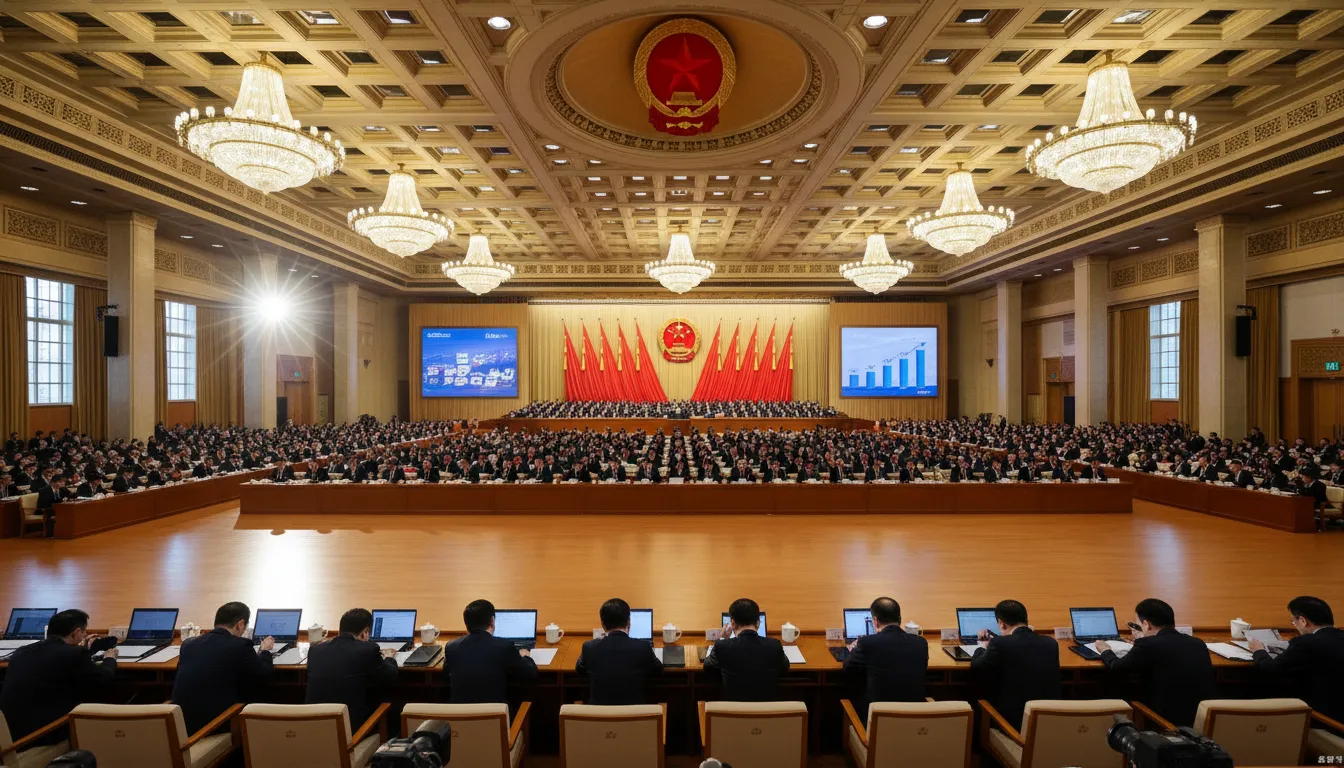
Beijing Sets Its Annual Economic Agenda
China's most important political gatherings of the year opened in Beijing this week, bringing together roughly 5,000 delegates to chart the country's course for the next twelve months — and, crucially, for the next five years. The Chinese People's Political Consultative Conference (CPPCC), an advisory body, convened on Wednesday, followed Thursday by the National People's Congress (NPC), the country's parliament. Together, the two meetings form what Beijing calls the "Two Sessions."
Premier Li Qiang is scheduled to deliver the Government Work Report on March 5, announcing the headline economic targets that markets and governments worldwide will parse for signals about the trajectory of the world's second-largest economy.
A Trimmed Growth Target in Turbulent Times
Economists widely expect Beijing to set its 2026 GDP growth target at a range of 4.5–5 percent, down from last year's "around 5 percent" goal — which China met. Twenty-one of China's thirty-one provincial governments have already trimmed their own targets, providing a clear preview of the national figure, according to analysis by the Asian News Network.
The adjustment reflects genuine headwinds. China's property market remains under pressure, domestic consumer demand is sluggish, and wages are not rising fast enough to drive a consumption-led recovery, CBC News reported. The International Monetary Fund projects only 4.5 percent growth for China in 2026. Analysts note that Beijing has increasingly compensated for weak domestic demand by pushing exports, a strategy that has generated overcapacity complaints from trading partners in Europe and North America.
The 15th Five-Year Plan: A Tech Divorce from the West
This year's Two Sessions carry unusual weight because 2026 marks the opening year of China's 15th Five-Year Plan (2026–2030) — the country's most ambitious technological self-reliance blueprint to date. CNBC described the plan as China's attempt to "show the world its plan to win the future."
Central to the plan is a projected R&D expenditure target exceeding 3.2 percent of GDP by 2030 — a record high. Priority sectors include semiconductors, artificial intelligence, robotics, quantum computing, and 6G communications. The plan calls for domestic industries to achieve over 70 percent self-sufficiency in core chips by 2030, up from current levels that still depend heavily on foreign technology.
The urgency is not ideological — it is structural. The Trump administration's 25 percent tariff on advanced Nvidia AI chips exported to China, formalized in January, has accelerated Beijing's push to develop homegrown alternatives. As analysts told CBC, US technological containment has made self-reliance a matter of economic survival, not just national pride.
Boosting Consumption: Trade-Ins and Vouchers
Alongside the technology agenda, policymakers are expected to expand programs to stimulate domestic spending. Trade-in subsidy schemes that generated an estimated 2.6 trillion yuan in consumer sales in 2025 are likely to be extended and broadened. Fiscal policy is expected to remain expansionary, with a deficit ratio of around 4 percent of GDP, while monetary policy is framed as "moderately loose."
Beijing has also pledged to create at least 12 million new urban jobs in 2026, reflecting persistent concern about youth unemployment, which surged above 18 percent during 2025.
Why the World Is Watching
The Two Sessions are not merely a domestic event. China's policy choices ripple through global supply chains, commodity markets, and trade relationships. A sustained push toward chip self-reliance will reshape the global semiconductor industry. An intensified export drive could increase trade friction with the European Union and Southeast Asian neighbours. And a lower growth target signals that Beijing is accepting a "new normal" of slower, more selective expansion.
As Zhang Liqun of the State Council's Development Research Center put it, 5 percent remains "a practical and achievable objective" — but the emphasis has shifted firmly from speed to quality of growth. In an era of tariffs and tech wars, that distinction matters more than ever.