Colombia: Bloodiest Election Campaign in Decades
With at least 61 political leaders assassinated, the first presidential candidate killed in three decades, and a third of the country unable to campaign, Colombia faces the 2026 elections amid a wave of violence linked to the failure of Petro's 'Total Peace' policy and record levels of coca production.
A Campaign Drenched in Blood
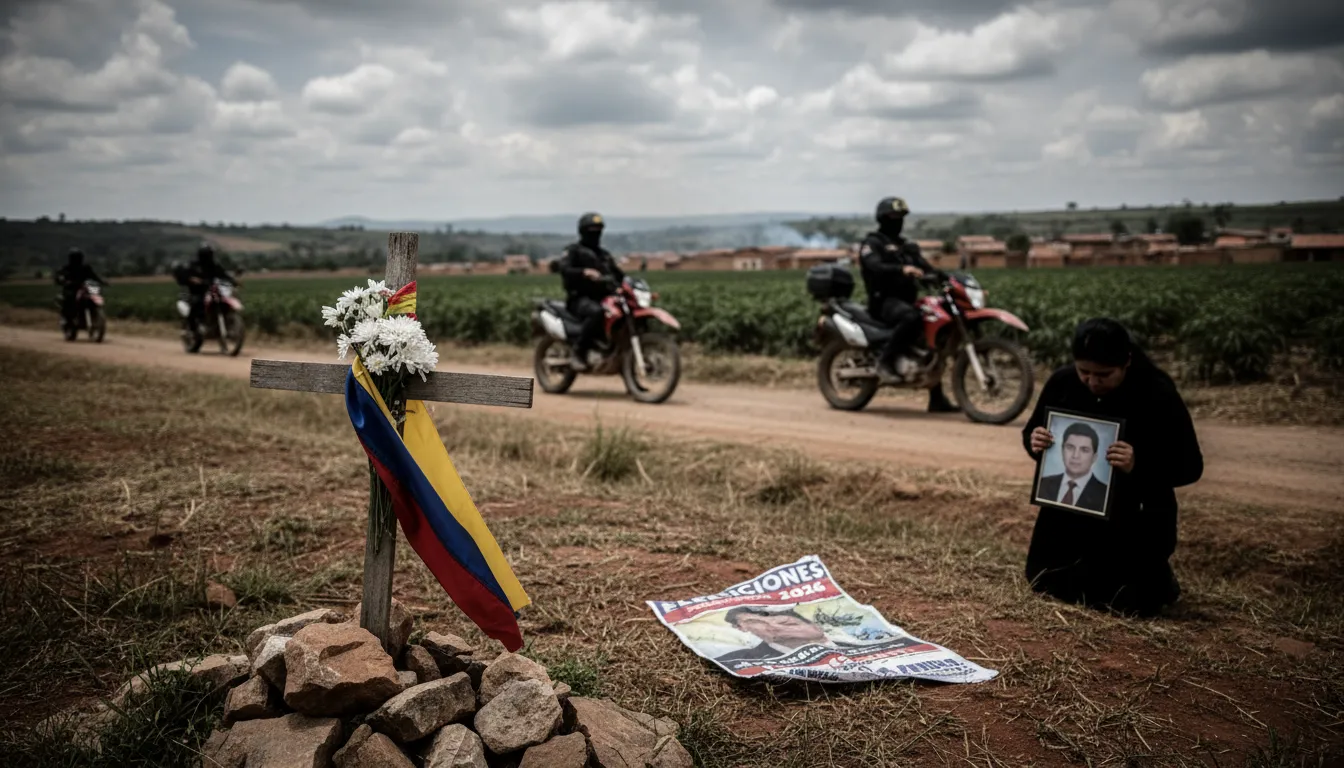
Colombia heads into the legislative elections on March 8 and the presidential elections on May 31, 2026, mired in the most violent election campaign in recent decades. According to the Electoral Observation Mission (MOE), at least 61 political leaders have been assassinated since the start of the campaigns, and 81 municipalities are at "extreme risk," 65% more than in the 2022 elections. The specter of narcoterrorism from the 1980s is once again looming over the Colombian polls.
First Presidential Candidate Assassinated in 30 Years
The most emblematic case was that of Senator and presidential hopeful Miguel Uribe Turbay, shot dead in Bogotá in the first assassination of a presidential candidate in more than three decades. But the violence did not stop there: in the department of Arauca, armed men fired more than 400 bullets at the vehicles of Senator Jairo Castellanos, killing two bodyguards. In Cauca, Senator Aída Quilcué was briefly kidnapped, and presidential candidate Abelardo de la Espriella received a declaration from the ELN that made him a military target.
The MOE warns that armed groups operate in more than 600 municipalities, meaning that approximately half the country faces some type of armed pressure on electoral competition. Candidates describe "invisible borders" that they cannot cross; criminal groups dictate what issues can be debated in the campaign and who citizens should vote for in rural areas.
The Legacy of 'Total Peace'
Critics directly blame President Gustavo Petro and his "Total Peace" policy. The negotiating strategy, instead of reducing the armed threat, provided time and space for the groups to reorganize and expand. The Ideas for Peace Foundation (FIP) documented a 23.5% growth in a single year in the number of illegal armed groups, which now total more than 27,000 combatants. Armed confrontations increased by 34%, attacks on the civilian population by 58%, and forced displacement skyrocketed by 85% in 2025, with the Catatumbo crisis displacing 92,000 people.
In parallel, coca cultivation reached 253,000 hectares and cocaine production reached 3,001 tons in 2024, 13% more than the previous year. Colombia now generates 70% of the cocaine consumed worldwide. Faced with this data, the United States decertified the country for "manifest failure" to meet its anti-drug commitments. The Clan del Golfo, for its part, broke off peace negotiations in February after the meeting between Petro and President Trump, accusing the government of bad faith.
Democracy in Check
In the most affected regions—Cauca, Arauca, Caquetá, and the Pacific coast—the FARC dissidents led by Iván Mordisco and the ELN not only prevent campaigning but also threaten the very act of voting. Armed groups impose curfews, prohibit vehicle traffic, and force the confinement of entire communities during election days. "The post-conflict is proving more violent than the conflict itself," say those working on the ground.
What is at stake in these elections goes beyond who will govern Colombia: it is the very possibility of holding free elections in a country where asking for a vote can cost a life.