Berlinale 2026: Golden Bear for Courageous Film 'Yellow Letters'
The film "Yellow Letters" by German director of Turkish origin, Ilker Çatak, won the Golden Bear at the 76th Berlin International Film Festival. The political drama about the censorship of artists dazzled the jury led by Wim Wenders.
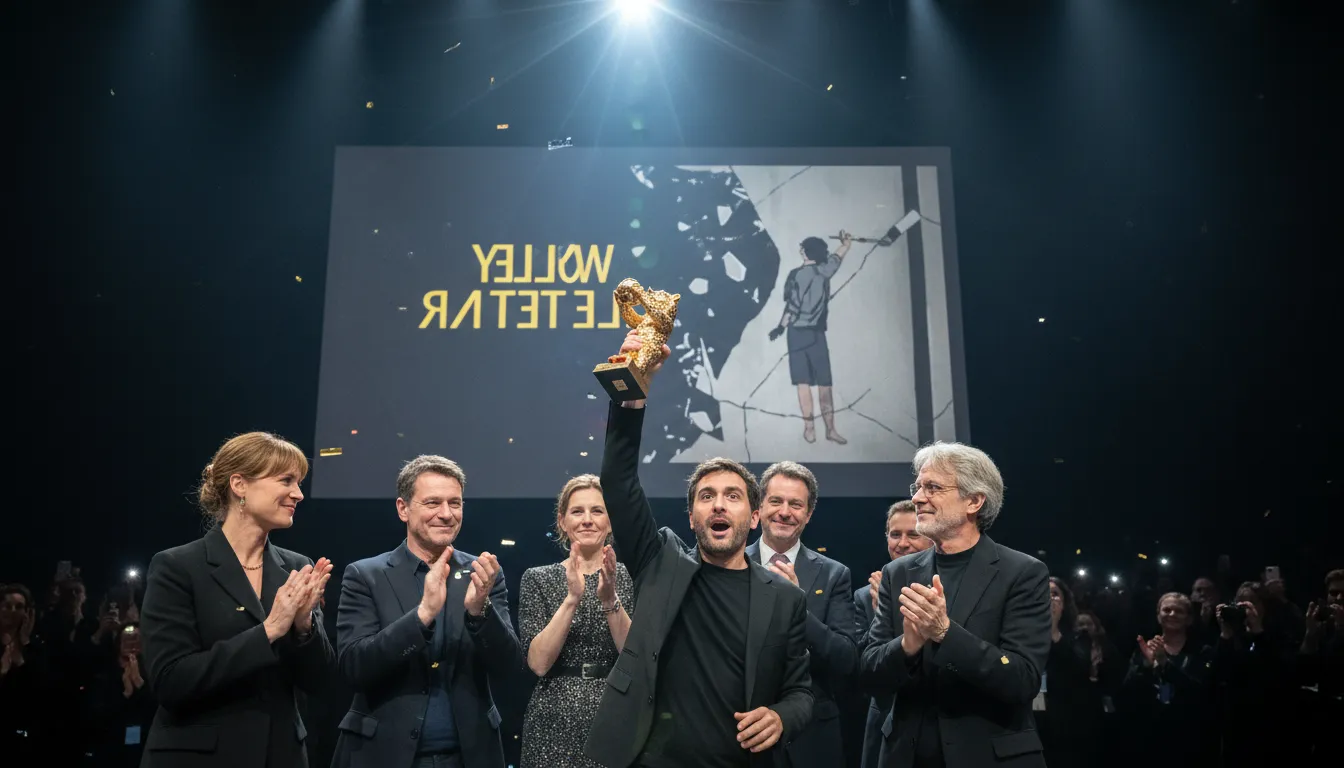
Berlin – At the closing ceremony of the 76th Berlin International Film Festival (Berlinale), held from February 12 to 22, 2026, the Golden Bear was awarded to the film "Yellow Letters" by German director of Turkish origin, Ilker Çatak. The political drama with a sharp message confirmed that this year's Berlinale was marked by courage and engagement.
A Film About Fear and Silence
"Yellow Letters" follows the story of a Turkish filmmaker and his actress wife living in Ankara, who are banned from working by the state because of their political beliefs. The film shows not only their personal struggle, but also the tension between values and compromises that everyday life forces upon them. The jury, headed by Wim Wenders, praised the work for its artistic courage and moral clarity.
"The film explores the political language of totalitarianism in contrast to the empathetic language of cinema. It is a terrifying premonition, a glimpse into the near future that could become a reality in our countries as well." — Wim Wenders, Jury President
Upon accepting the award, Çatak called on filmmakers to show solidarity in the fight against authoritarian threats. He concluded his speech by emphasizing that artists must not remain silent, even if the system ties their hands.
Çatak: From Berlin Back to Berlin
Ilker Çatak was born in Berlin to a family of Turkish immigrants. He gained international attention with the film The Teacher's Lounge (2023), nominated for an Oscar for Best International Film. "Yellow Letters" is his bolder and more personal step — a direct critique of authoritarianism and censorship of art.
This is a historic moment for German cinema. The last time a German film triumphed in Berlin was 22 years ago, when Fatih Akin — also a German of Turkish origin — won the Golden Bear for the drama Head-On in 2004. The parallel is not accidental: both directors grew up at the intersection of two cultures and it is from this intersection that they look at the world.
Other Festival Awards
The Silver Bear for Best Leading Performance went to Sandra Hüller for the film Rose, in which she plays a mysterious soldier returning to a remote German village in the 17th century. Hüller, a European film star nominated for an Oscar for Anatomy of a Fall, won the Berlin award for the second time — the jurors first rewarded her for the film Requiem in 2006.
The Silver Bear for Best Director went to British documentarian Grant Gee for the film Everybody Digs Bill Evans — a biopic about the legendary American jazz pianist. The Grand Jury Prize went to the film Salvation by Turkish director Emin Alper, and the Jury Prize went to Queen at Sea by Lance Hammer.
Political Fire Beneath the Surface
This year's Berlinale took place in a turbulent political atmosphere. Several filmmakers used the ceremony to criticize the war in Gaza. Jury President Wenders declared that the festival "cannot get involved in politics" — which sparked a wave of protests. Indian writer Arundhati Roy withdrew her participation and dozens of personalities, including Javier Bardem and Tilda Swinton, condemned the festival's stance. Director Tricia Tuttle countered by saying that "speaking out is part of democracy."
276 films from 80 countries were screened at the festival. Çatak's Golden Bear speaks clearly: politically engaged art does not intend to back down.