What Are FARC Dissidents—and Why Violence Persists
Colombia's 2016 peace deal was meant to end decades of war with the FARC guerrillas. Instead, splinter factions rejected the accord, rearmed, and now control drug-trafficking corridors across the country. Here is how FARC dissidents emerged and why they threaten Colombia's fragile peace.
A Peace Deal That Didn't End the War
In November 2016, the Colombian government and the Revolutionary Armed Forces of Colombia (FARC) signed a landmark peace agreement in Havana, ending a conflict that had lasted more than five decades, killed an estimated 260,000 people, and displaced over eight million. President Juan Manuel Santos won the Nobel Peace Prize for the achievement. About 13,000 FARC members demobilized and surrendered their weapons to the United Nations.
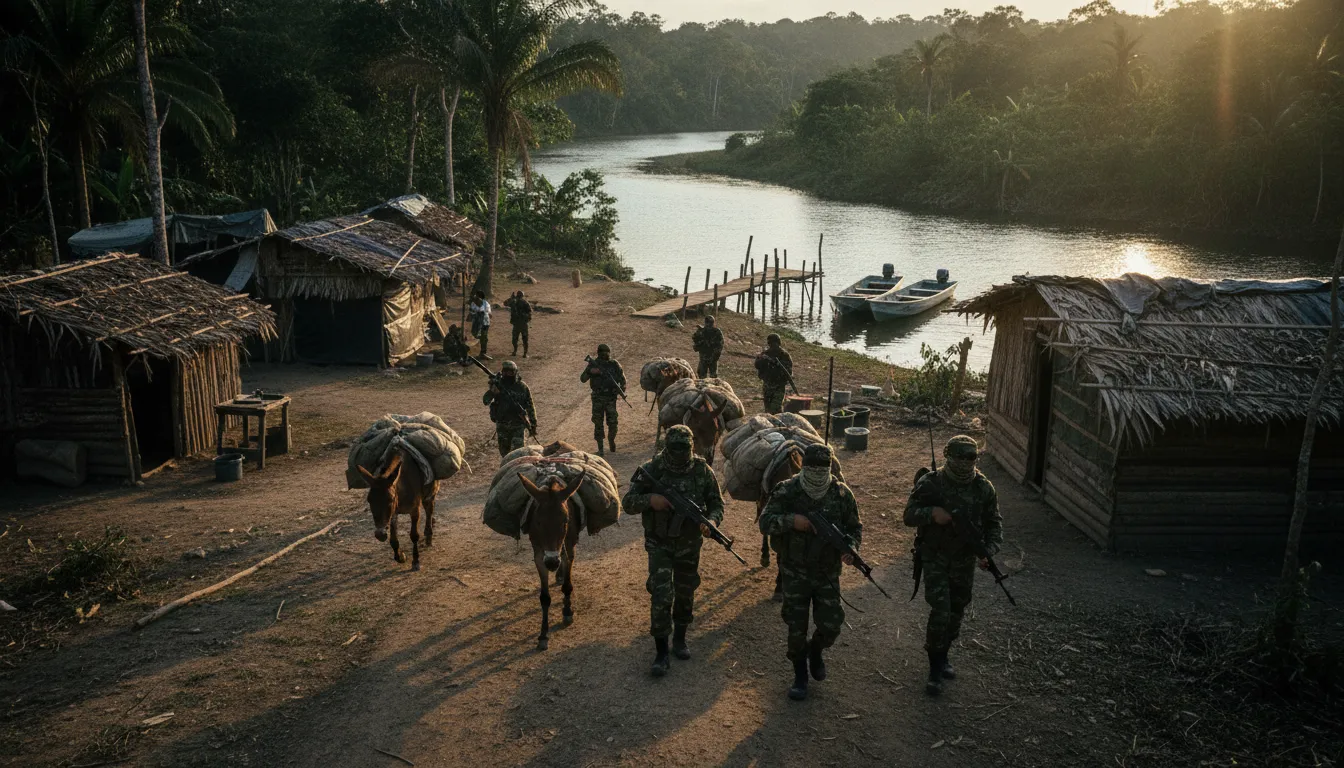
Yet the violence never stopped. Within weeks of the signing, commanders from FARC's former Eastern Bloc returned to their old territories. By the early 2020s, thousands of former fighters had abandoned the peace process entirely. Armed groups—commonly called FARC dissidents—now operate across at least 16 of Colombia's 32 departments, fueling a new cycle of bombings, assassinations, and territorial warfare.
Who Are the FARC Dissidents?
FARC dissidents are former guerrillas who either refused to accept the 2016 accord or initially demobilized and later returned to armed activity. Analysts estimate that roughly 30 dissident organizations have emerged, concentrated into two main blocs.
The Estado Mayor Central (EMC), led by Néstor Gregorio Vera Fernández—known as "Iván Mordisco"—is the larger faction, with an estimated 3,500 fighters spread across 25 sub-structures. The EMC claims to carry on FARC's original revolutionary mission, but its operations center heavily on coca cultivation, cocaine trafficking, illegal mining, and extortion.
The second major bloc, Segunda Marquetalia, was founded in 2019 by Iván Márquez, who had been FARC's lead negotiator during the Havana peace talks. With roughly 1,500 members, this faction controls cocaine routes running through the Colombia-Venezuela border region, particularly in the departments of Arauca and Apure.
Why Did They Reject Peace?
FARC was a sprawling organization with deep internal divisions. Not every commander shared the leadership's willingness to trade rifles for political participation. Several factors drove the split:
- Unfulfilled promises: The accord pledged rural development, land reform, and crop-substitution programs. Implementation has been slow and underfunded, leaving many former fighters and rural communities with few legal economic alternatives.
- Political opposition: When President Iván Duque took office in 2018, his right-wing government openly opposed key provisions of the deal, weakening institutional support for reintegration.
- Lucrative drug trade: Colombia remains the world's largest cocaine producer. Dissident factions quickly moved to control the trafficking corridors and coca-growing regions the old FARC had vacated, generating enormous revenue.
- Security vacuum: As FARC withdrew, other armed groups—including the ELN guerrillas, paramilitary successors, and Mexican cartels—rushed to fill the void. Dissidents had to rearm simply to survive in contested territory.
The Human Cost
The consequences are devastating. According to the United Nations, hundreds of demobilized FARC fighters and community leaders have been systematically killed since the accord. Entire rural departments in southwestern Colombia—particularly Cauca, Nariño, and Valle del Cauca—endure waves of bombings, forced displacement, and extortion. The dissident groups have also forged alliances with international drug cartels, including Mexico's Jalisco New Generation Cartel and the Sinaloa Cartel, dramatically expanding the conflict's reach.
Can Peace Still Be Saved?
Colombia's government has pursued a policy of "Total Peace," attempting parallel negotiations with both dissident blocs and the separate ELN guerrilla group. Some progress has been made: talks with a faction that split from the EMC resumed in mid-2025. But Mordisco's EMC, the largest and most violent bloc, has resisted meaningful engagement and instead escalated attacks, including threats to disrupt the 2026 presidential election.
The Atlantic Council and other analysts argue that lasting peace requires not just military pressure but genuine investment in rural infrastructure, land reform, and alternative livelihoods—the same promises made in 2016 that remain largely unfulfilled. Until Colombia closes that gap, FARC dissidents will continue to recruit from communities that see no benefit in peace.