Day 8: Tehran Bombed, Hormuz Closed, Oil at $91
US and Israeli forces struck Tehran with their most intense bombardment yet on day eight of the Iran war, as a closed Strait of Hormuz sent oil prices surging and threatened to tip European economies into a new energy crisis.
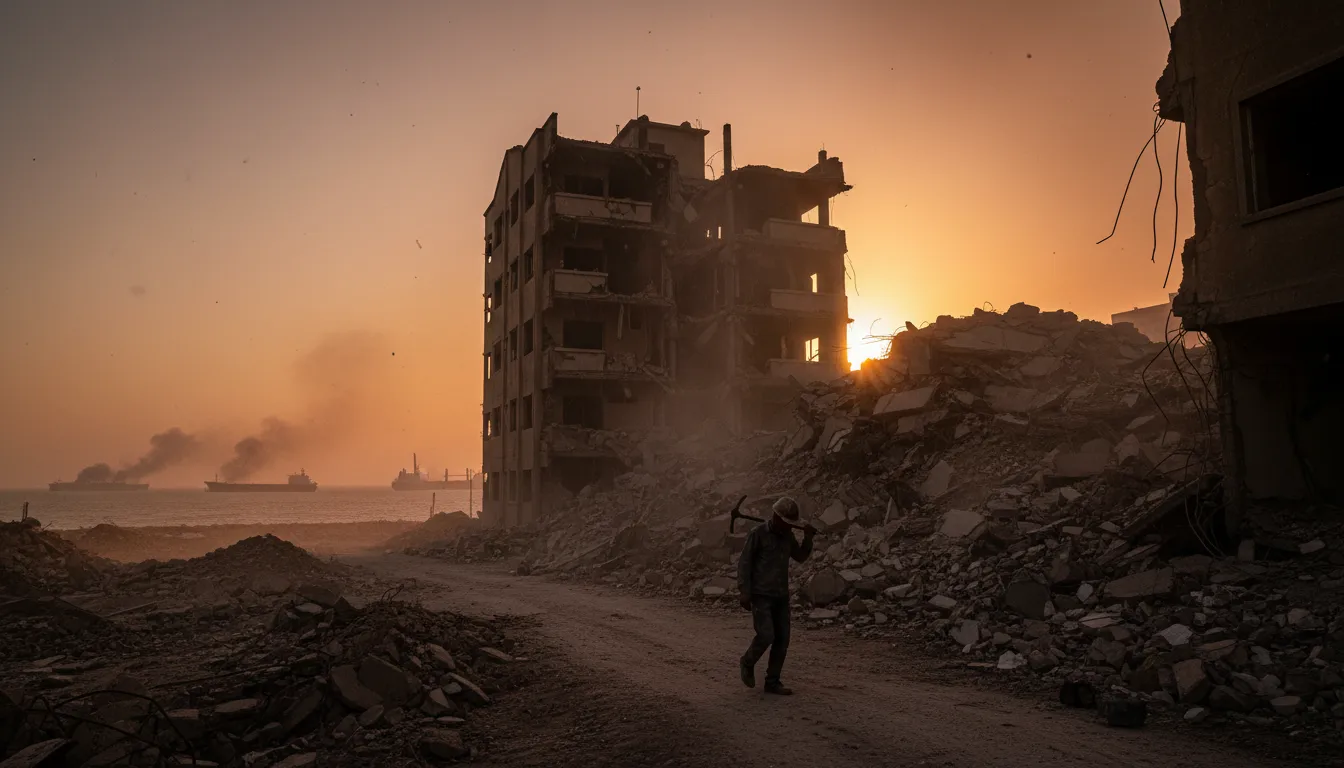
Tehran Under Its Heaviest Fire Yet
Eight days into the US-Israeli campaign against Iran, the capital Tehran endured its most intense night of strikes since the conflict began on February 28. American B-2 stealth bombers dropped dozens of so-called bunker-buster penetrator bombs on deeply buried ballistic missile launchers, while Israeli jets struck what the IDF described as "regime infrastructure" in a "new phase" of the war, according to Haaretz.
An Al Jazeera correspondent in the city described the bombardment as more intense than any previous night, with residential buildings, car parks, and petrol stations among the sites hit. Iran's government said US and Israeli forces had struck more than 3,600 civilian sites since hostilities began. The overall death toll has now surpassed 1,332, including at least 181 children, according to figures cited by UNICEF and tracked by Al Jazeera. An elementary school in Tehran's Niloufar Square was among the latest sites struck.
The Strait That Moves the World
The most consequential economic development of the conflict came when Iran formally closed the Strait of Hormuz to commercial shipping and threatened to attack any vessel attempting to transit it. The narrow waterway carries roughly 20% of global oil exports and significant volumes of liquefied natural gas. Tanker traffic fell by approximately 70% within hours of the announcement, with over 150 ships anchoring outside the strait — and traffic eventually dropping to near zero, according to Kpler.
Brent crude climbed to $91 per barrel — its highest level since 2023 — as traders priced in the supply shock. US crude also surged sharply. Bloomberg reported that prices had risen more than 10% since the strikes began, with analysts warning that a prolonged closure could push Brent past $100.
Europe's Energy Vulnerability
The ripple effects have hit Europe with particular severity. Dutch TTF natural gas futures — the continent's benchmark price — surged to €50 per megawatt-hour, a 60% jump since the Hormuz closure, according to Euronews. The spike is the sharpest energy shock Europe has absorbed since the 2022 crisis triggered by Russia's invasion of Ukraine — and it is landing at a moment of particular fragility, with gas inventories across the continent at their lowest seasonal levels in years.
Oxford Economics estimates the crisis will shave 0.1 percentage points off eurozone GDP growth this year, dragging it down to approximately 1%, while adding 0.3 to 0.5 percentage points to headline inflation. In a severe downside scenario — an extended Hormuz closure combined with broader regional escalation — inflation could spike by as much as 3.6 percentage points, the consultancy warned.
Trump: No Talks Without Capitulation
On the diplomatic front, the path to a ceasefire remains entirely blocked. President Donald Trump, in remarks reported by NPR, flatly rejected any negotiations with Tehran unless Iran agreed to "unconditional surrender." The position leaves little space for back-channel diplomacy, even as the UN Secretary-General and several European leaders have called for an immediate halt to hostilities.
Iran, for its part, has continued missile barrages against Israeli cities and US military bases in the Gulf, including in the UAE, Qatar, and Bahrain. The IRGC has also vowed to sink any warship that attempts to escort commercial tankers through the strait.
A Crisis With No Ceiling Yet
With no ceasefire in sight and the Strait of Hormuz shut to shipping, markets and governments are now stress-testing worst-case scenarios. The NPR energy desk noted that strategic petroleum reserves in the US and allied nations could offset some of the shortfall in the short term — but not indefinitely. Every additional day of closure tightens the vice on an already strained global economy.


