F1's New Era Begins in Melbourne: No DRS, Cadillac Debuts
Formula 1 opens its most transformative season in decades at Melbourne's Albert Park on March 8, with overhauled aerodynamics, a new American team, and defending champion Lando Norris facing an open field.
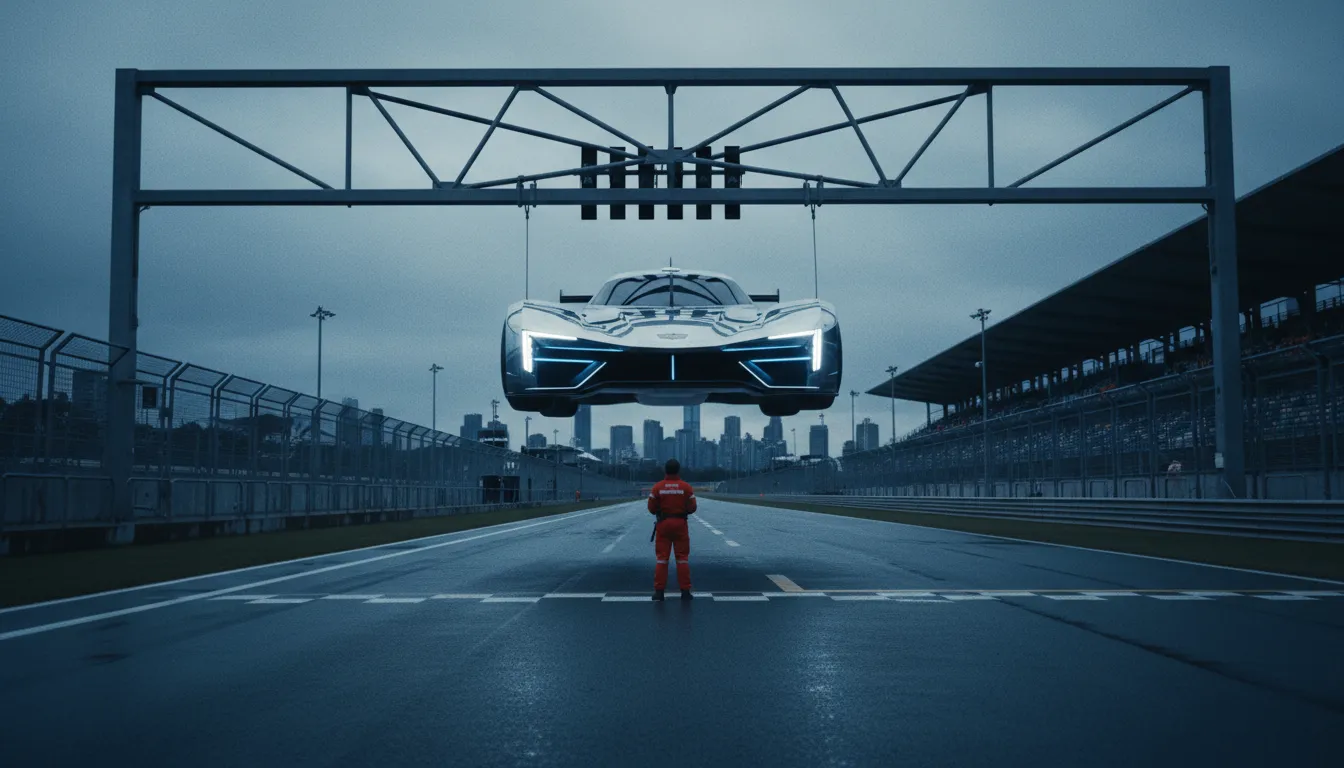
A Sport Reinvented
When the lights go out at Albert Park on March 8, it will mark more than just another Formula 1 season opener. The 2026 Australian Grand Prix signals what many within the sport are calling the most sweeping regulatory revolution in F1 history — new power units, new aerodynamic philosophy, and a field so evenly matched that no team dares predict who will reach the podium first.
The headline change is the abolition of the Drag Reduction System (DRS), the rear-wing opening aid that drivers have used since 2011. In its place, F1 has introduced a trio of new tools: Overtake Mode, Straight Mode, and Boost Mode. Together, they represent a fundamentally different approach to how cars manage downforce and power deployment.
How the New Systems Work
Overtake Mode, the closest equivalent to DRS, allows a driver within one second of the car ahead to deploy an extra 0.5 megajoules of electrical energy and sustain a higher speed for longer. Unlike DRS, it operates from a single detection point and can be deployed flexibly across a lap, not just in designated zones.
Straight Mode operates independently of race position: every driver can reduce aerodynamic drag on any straight, regardless of the gap to the car in front. Familiar DRS boards around circuits will now display SM to indicate where the zone begins. Boost Mode, meanwhile, works like an updated version of KERS, allowing maximum power deployment — drawn from a power unit now split equally between combustion and electrical output — at any point on the lap.
The cars themselves are also physically transformed. Wheelbases have shrunk by 200 millimetres, overall width by 100 millimetres, and minimum weight has dropped 30 kilograms to 770 kg. The intention, according to F1 and the FIA, is to make the machinery more nimble, harder to drive at the limit, and more reliant on driver skill.
Cadillac: F1's Eleventh Team
One of the most significant storylines heading into Melbourne is the debut of Cadillac as Formula 1's eleventh constructor — the first new team to join the grid since Haas in 2016. Running Ferrari power units and led by team principal Graeme Lowdon, the American outfit has assembled a roster of experienced drivers in Valtteri Bottas and Sergio Pérez, both of whom have race wins and championship battles to their names.
The team arrives with upgrades already in hand for the season opener, though expectations are measured. Bottas enters Melbourne facing a grid penalty, yet the team has described its debut as historic and is focused on building performance race by race. Their presence expands the paddock to a full 22-car grid for the first time in nearly a decade.
Norris Under Pressure
Lando Norris arrives in Melbourne wearing the number 1 on his McLaren — earned by clinching the 2025 Drivers' Championship by just two points over Max Verstappen. He won last year's Australian GP from pole, making Albert Park a circuit with happy memories. But defending in a reset year is a different proposition entirely.
McLaren's Oscar Piastri was candid at the Thursday press conference, admitting the team does not believe it is in the same dominant position as twelve months ago. Pre-season testing pointed to Mercedes and Red Bull as a step ahead, with Ferrari also firmly in contention. Sky Sports F1 analysts predict a genuine four-team battle, with Mercedes seen as a narrow favourite for the first win of the year.
A Wide-Open Field
F1 has rarely entered a new season with so much genuine uncertainty. Major regulation changes historically reshuffle the competitive order, and 2026 is no exception. With active aerodynamics, hybrid power now delivering half of all performance, and smaller, lighter chassis demanding more from drivers, Albert Park this weekend is effectively everyone's first real test.
The qualifying format has also been adjusted: six cars will be eliminated in both Q1 and Q2 instead of five, with session durations trimmed. The pit lane speed limit reverts to 60 km/h to accommodate the expanded 22-car grid.
Whatever happens on Sunday, one thing is certain: the Formula 1 that emerges from Melbourne in 2026 will look, sound, and race differently from anything fans have seen before.