Gaza Aid Crisis: 17 Groups Challenge Israel's March Ban
Seventeen international humanitarian organizations, including MSF, Oxfam, and Save the Children, have petitioned Israel's Supreme Court to block a March 1 ban that would expel them from Gaza and the West Bank — threatening to collapse medical care for over two million Palestinians.
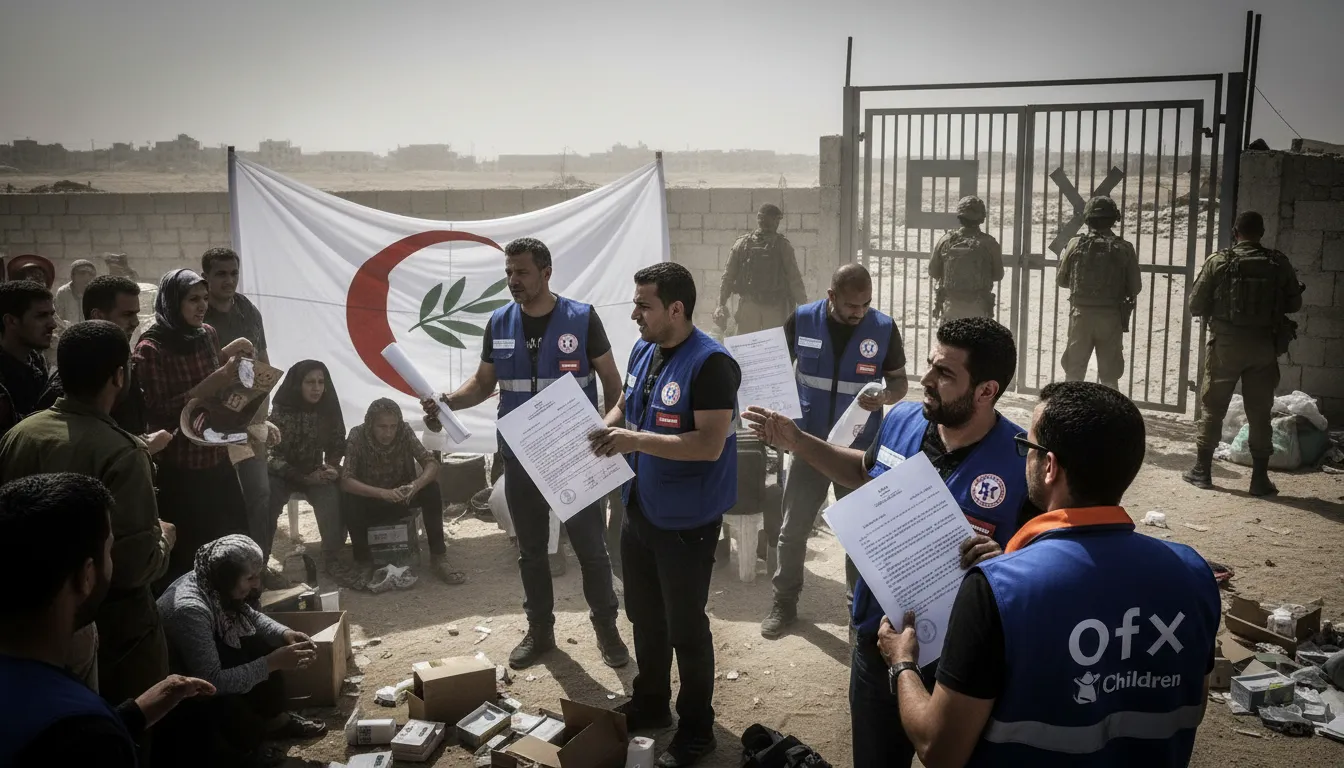
A Countdown to Crisis
With days to spare before a government-imposed deadline, seventeen major humanitarian organizations rushed to Israel's Supreme Court on Tuesday seeking an emergency injunction to block the planned expulsion from Gaza and the occupied West Bank. The ban, set to take effect March 1, 2026, threatens to strip the territory of much of its remaining medical and food infrastructure in the middle of an ongoing war.
Registration Rules That Aid Groups Cannot Accept
The confrontation traces back to Government Resolution No. 2542, approved by Israel in December 2024, which required all international organizations providing humanitarian assistance to Palestinian residents to register with Israel's Ministry of Diaspora Affairs and Combating Antisemitism by December 31, 2025 — or cease operations by March 1.
The registration process demands that organizations hand over names, contact details, and operational data on their Palestinian staff. The affected groups — which include Doctors Without Borders (MSF), Oxfam, the Norwegian Refugee Council, Save the Children, and CARE — flatly refuse to comply, arguing that sharing staff lists would endanger employees in an active conflict zone, violate humanitarian neutrality, and potentially breach European data protection laws.
"Turning humanitarian organisations into an information-gathering arm for a party to the conflict stands in total contradiction to the principle of neutrality," one petitioner argued before the court, as reported by Al Jazeera.
Hundreds of humanitarian workers have already been killed in Israeli strikes since the war began, making the request for staff lists a matter of life and death, organizations say.
The Human Cost of the Ban
The scale of potential harm is staggering. The organizations collectively support over half of all food assistance in Gaza, operate 60 percent of the territory's field hospitals, and run every stabilization center treating children with severe acute malnutrition. More than 2 million residents — the vast majority of Gaza's population — rely on these groups for food, water, healthcare, and shelter after more than two years of war have destroyed much of the territory's infrastructure.
According to UN data cited by Human Rights Watch, the immediate consequences of the ban would include one in three health facilities closing, 20,000 patients losing access to specialized monthly care, and the complete collapse of malnutrition detection services. MSF's head of mission in Gaza, Filipe Ribeiro, told AFP that the squeeze had already begun: "We haven't been able to get international staff inside Gaza since the beginning of January."
Israel's Defense and Rights Groups' Rebuttal
Israel's COGAT — the military body overseeing civilian affairs in Gaza — argues that the organizations losing licenses account for less than 1 percent of total aid entering the territory, and that more than 20 groups have already complied and will continue operating. Tel Aviv frames the registration requirements as a counter-terrorism measure designed to prevent links between aid organizations and militant groups.
Human Rights Watch rejected that framing. "Israel's politicization of registration requirements for aid groups hamstrings their lifesaving activities while Israeli authorities continue to impose a crippling, unlawful blockade on Gaza," said researcher Michelle Randhawa in HRW's analysis of the situation.
A Pattern of Shrinking Humanitarian Space
The move follows Israel's ban on UNRWA, the UN agency for Palestinian refugees, in early 2025. Rights organizations and UN officials say the new NGO restrictions represent a continuation of that policy — systematically reducing the humanitarian footprint in Gaza as the conflict enters its third year.
The Israeli government had until Wednesday afternoon to respond to the court petition. Whether Israel's judiciary acts to halt the ban or allows the March 1 deadline to stand will determine whether aid groups can keep hospitals running and children alive in one of the world's most acute humanitarian emergencies.