Venezuela Frees Thousands Under Historic Amnesty Law
Venezuela's acting government claims over 3,200 people have been released under a sweeping new amnesty law, but independent human rights monitors say hundreds of verified political prisoners remain detained, casting doubt on the scale of the breakthrough.
A Dramatic Reversal After Maduro's Fall
Venezuela's acting president Delcy Rodríguez signed a sweeping amnesty law on February 20, 2026, in one of the most significant political reversals in the country's recent history. The legislation follows the U.S. military operation in January that removed former President Nicolás Maduro from power — a seismic shift that forced Caracas to confront its long-denied record of political imprisonment.
The law grants a "general and full" amnesty to people prosecuted or convicted for political or related offences dating back to 1999, the start of Hugo Chávez's presidency. That sweeping timeframe encompasses the thousands detained during waves of protest in 2014, 2017, 2019, and the more than 2,000 arrested in the chaotic aftermath of the disputed 2024 presidential election.
Government Claims vs. Ground Truth
Venezuela's National Assembly has been quick to trumpet the law's results. Lawmaker Jorge Arreaza, who heads the implementation commission, reported that more than 4,200 amnesty applications were received in the first days after the law took effect. Officials announced that 3,052 people previously under house arrest or other restrictive measures had been granted full freedom, alongside 179 individuals released directly from prison — bringing the headline figure to over 3,200 released.
But the government's numbers face serious scrutiny. The Venezuela-based prisoners' rights group Foro Penal has independently verified only 91 political releases since the law came into force. The organisation says approximately 600 people remain detained on political grounds, with at least 232 cases deemed ineligible for amnesty under the law's exclusion clauses.
The Fine Print
Critics have zeroed in on a key carve-out in the legislation: it explicitly bars amnesty for those prosecuted for "promoting or facilitating armed or forceful actions" by foreign actors against Venezuela's sovereignty. Human rights advocates warn this language is broad enough to cover many opposition figures and activists whom authorities have historically targeted using exactly such charges.
The law also excludes individuals convicted of intentional homicide, drug trafficking, military rebellion, and serious human rights violations — standard international exclusions that, in Venezuela's context, advocacy groups say have often been misapplied.
International Reaction
The United Nations welcomed the amnesty "with caution," urging that it must apply to all victims of unlawful prosecution and be embedded within a broader transitional justice framework consistent with international standards. Opposition lawmakers struck a measured tone as well, calling it "a great step forward" while acknowledging it is "not perfect."
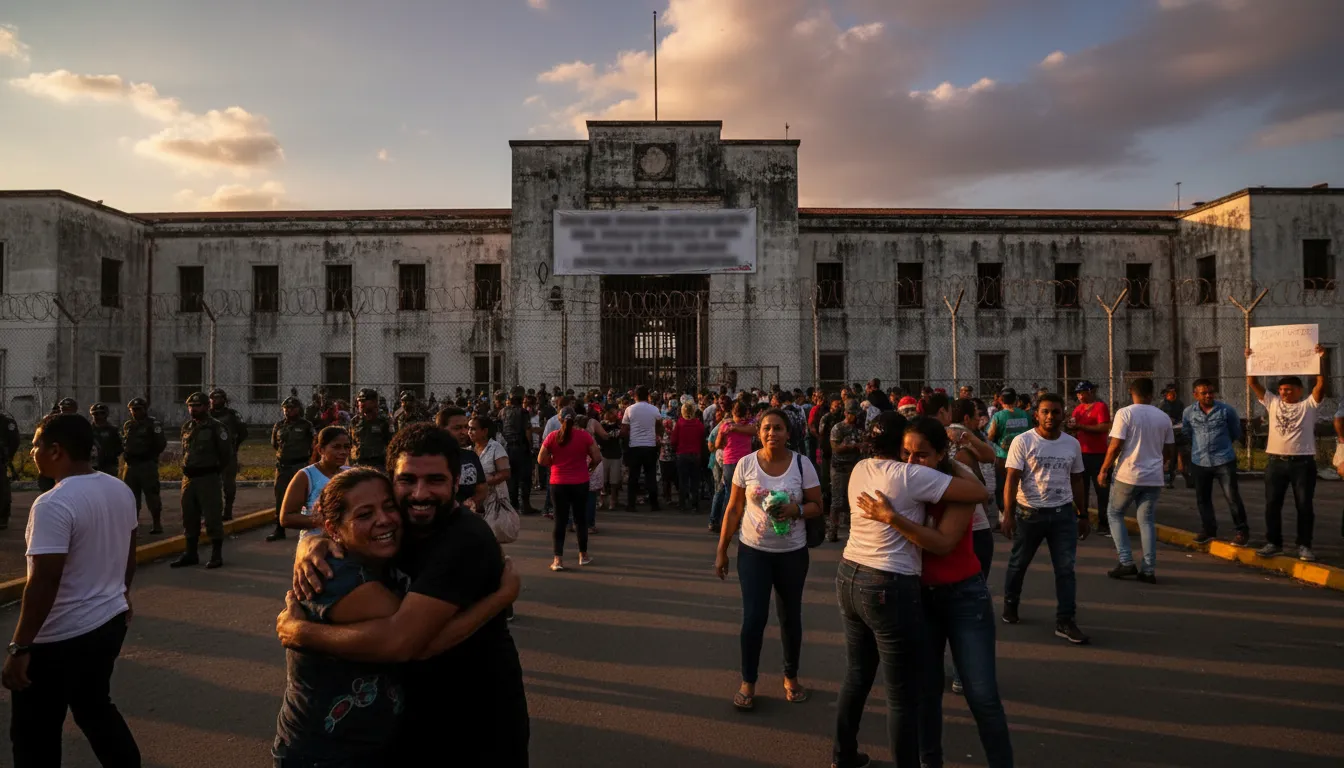
Families of still-detained prisoners have not waited patiently. Some have staged protests outside detention facilities; others began hunger strikes to press for the release of relatives who remain behind bars despite the law's passage.
A Test of Venezuela's Transition
The gap between the government's sweeping claims and independently verified releases encapsulates the fragility of Venezuela's political transition. After decades of authoritarian consolidation under both Chávez and Maduro, international observers say the amnesty law alone cannot substitute for systemic judicial reform. How faithfully it is implemented — and how honestly it is reported — will serve as an early test of whether the post-Maduro era marks a genuine democratic opening or merely a rebranding of the same power structures.