Generational Divide Could Decide Hungarian Election
The key issue in the April 12, 2026 parliamentary election is the political fault line between young and old: while over 60% of those under 30 support Péter Magyar's Tisza party, Orbán's Fidesz dominates among the elderly. The campaign is further dramatized by attempted Russian interference and the arrival of international observers.
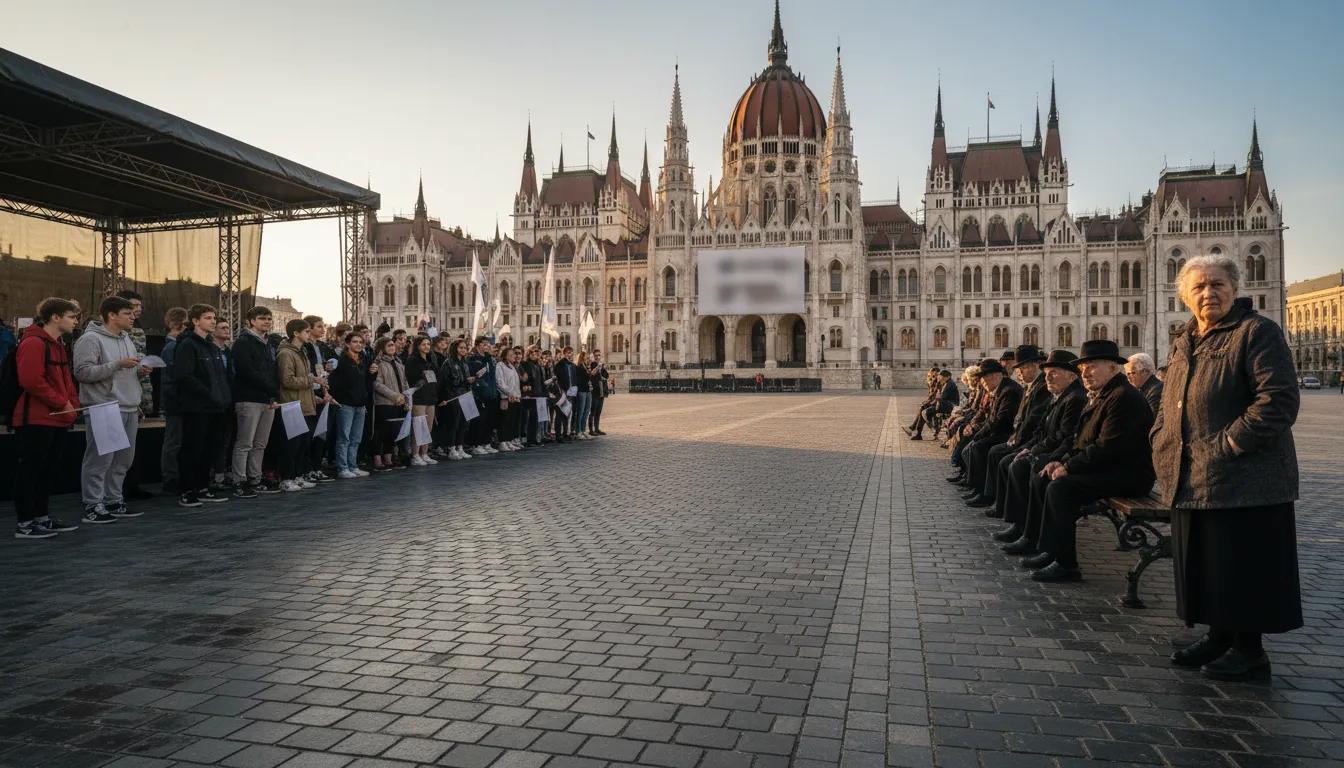
Less than two weeks separate Hungary from the April 12 parliamentary election, which could bring a historic turning point: according to opinion polls, the generational divide has never been so deep in Hungarian politics. The question is whether the momentum of the youth or the loyalty of the elderly will prove stronger.
The Numbers Don't Lie
The latest surveys by 21 Kutatóközpont and Medián paint a dramatic picture. In the under-30 age group, Péter Magyar's Tisza party enjoys 63-65% support, while only 14-15% would vote for Viktor Orbán's Fidesz-KDNP alliance. The other side of the coin is no less telling: among those over 65, Fidesz leads with 50%, while the Tisza party stands at just 19%.
It is particularly noteworthy that young people are not planning to stay home this time. According to research, only 10% of those under 30 said they would definitely not go to vote — significantly lower than the youth abstention rate measured in previous elections.
Two Hungarys, Two Visions
The central message of Péter Magyar's campaign is to restore Western orientation and unlock the frozen EU billions. This economic promise resonates particularly with young people, who feel the country's economic problems most acutely through stagnant wages and soaring housing prices. The 45-year-old lawyer broke with Fidesz in 2024 following a political scandal and has since become the dominant figure in the opposition.
Viktor Orbán, on the other hand, is building his campaign on stability and the threat of war. According to political analysts, the "war danger" narrative is particularly effective among older, rural voters. According to an analysis by Politico, the 40-64 age group and rural settlements could become the real battleground of the election, as neither side enjoys a clear advantage here.
Russian Shadow Over the Campaign
The final weeks of the campaign are overshadowed by an international scandal. In March, The Washington Post revealed that Russian intelligence (SVR) proposed staging an assassination attempt against Viktor Orbán in an internal report to influence public sentiment. In addition, the Kremlin-linked Social Design Agency prepared a plan to flood Hungarian social media with pro-Orbán content, while portraying Péter Magyar as an "EU puppet."
The case deepened when European security sources said that Foreign Minister Péter Szijjártó shared live updates from EU foreign affairs council meetings with Russian Foreign Minister Sergey Lavrov. Péter Magyar called the case "treason" and promised an investigation.
International Attention
The transparency of the election will be monitored by nearly one hundred international observers from four continents. The German Marshall Fund warned that the Sovereignty Protection Act, adopted in 2023, could make the work of domestic civil observers more difficult, compared to the 2022 election, when nearly twenty thousand independent vote counters supervised the process.
On April 12, it will be revealed whether the historic mobilization of young people will be enough to end Viktor Orbán's sixteen-year rule — or whether the rural, older voter base will once again prove to be a decisive force.