How a Papal Conclave Works—and Why Cardinals Lock the Door
A papal conclave is the ancient, secretive process by which the College of Cardinals elects a new pope inside the Sistine Chapel, using smoke signals to announce the result to the world.
Behind the Locked Doors of the Sistine Chapel
When a pope dies or resigns, the Catholic Church activates one of the oldest electoral systems on the planet. Cardinal electors gather inside the Sistine Chapel, the doors are sealed, and no one leaves until they have chosen the next leader of 1.4 billion Catholics. The process is called a conclave—from the Latin cum clave, meaning "with a key"—and its rules blend medieval tradition with modern procedure.
Who Gets to Vote
Only cardinals under the age of 80 may participate. The governing document, Universi Dominici Gregis, issued by John Paul II in 1996 and later amended by Benedict XVI and Francis, caps the number of electors at 120, though the actual count can vary slightly. Any baptised Catholic male can theoretically be elected pope, but in practice the cardinals almost always choose from among themselves.
The Voting Ritual
After celebrating Mass in St. Peter's Basilica, the electors process into the Sistine Chapel beneath Michelangelo's Last Judgment and swear an oath of absolute secrecy. Voting then follows a precise choreography:
- Each cardinal writes a name on a rectangular ballot, folds it in half, and carries it to the altar.
- Holding the ballot aloft for all to see, he recites a Latin oath declaring his vote is given to the candidate he believes God would choose.
- He places the ballot on a plate and tips it into a chalice.
Three scrutineers count the votes, and three revisers verify the tally. A candidate needs a two-thirds supermajority to win. Voting occurs up to four times a day—two rounds each morning and afternoon. If three full days pass without a result, the cardinals pause for a day of prayer and discussion before resuming.
Black Smoke, White Smoke
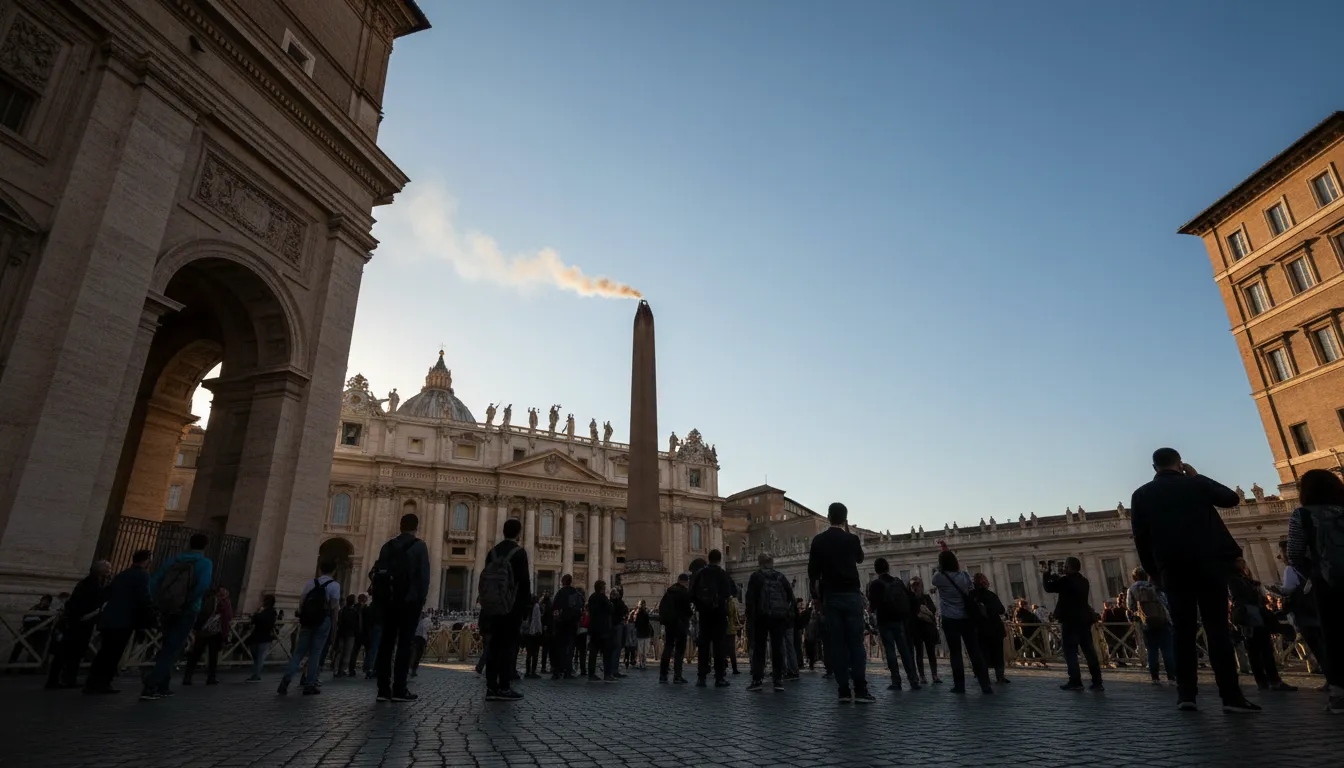
After each session, ballots are burned in a cast-iron stove first used in the 1939 conclave. A second stove, added in 2005, feeds chemicals into the chimney that rises above the Sistine Chapel roof. Black smoke—produced by potassium perchlorate, anthracene, and sulfur—signals no pope has been elected. White smoke—from potassium chlorate, lactose, and pine rosin—tells the world a new pope has been chosen. Since 2005, the bells of St. Peter's Basilica ring simultaneously to remove any doubt about the smoke's colour.
From Three Years to a Few Hours
The conclave system was born from frustration. In 1268, cardinals meeting in Viterbo, Italy, deadlocked for nearly three years. Exasperated citizens locked the prelates inside, tore the roof off the building, and restricted their diet to bread and water. The eventual winner, Gregory X, promptly decreed that future elections must happen in seclusion until resolved.
At the other extreme, the 1503 conclave that elected Julius II lasted only a few hours. In the modern era, no conclave has exceeded four days since 1831. The most recent, in May 2025, elected Robert Francis Prevost—who took the name Leo XIV—on the fourth ballot, making him the first pope from the Americas.
Why It Still Matters
The conclave is more than a curiosity of church governance. The pope shapes moral positions, diplomatic relationships, and social policy that affect billions of people worldwide. The sealed-door ritual is designed to insulate the decision from political lobbying, media pressure, and external manipulation—an ambition as relevant in the digital age as it was in medieval Italy. Whatever the outcome, the white smoke rising above St. Peter's Square remains one of the most watched signals on Earth.