Hormuz Stranglehold: Oil Crisis Shakes the World Economy
The effective closure of the Strait of Hormuz since a US-Israel military campaign against Iran began has sent Brent crude above $100 a barrel, paralyzed global shipping lanes, and triggered the largest emergency oil reserve release in history — yet analysts warn the worst may still lie ahead.
The World's Most Critical Chokepoint Falls Silent
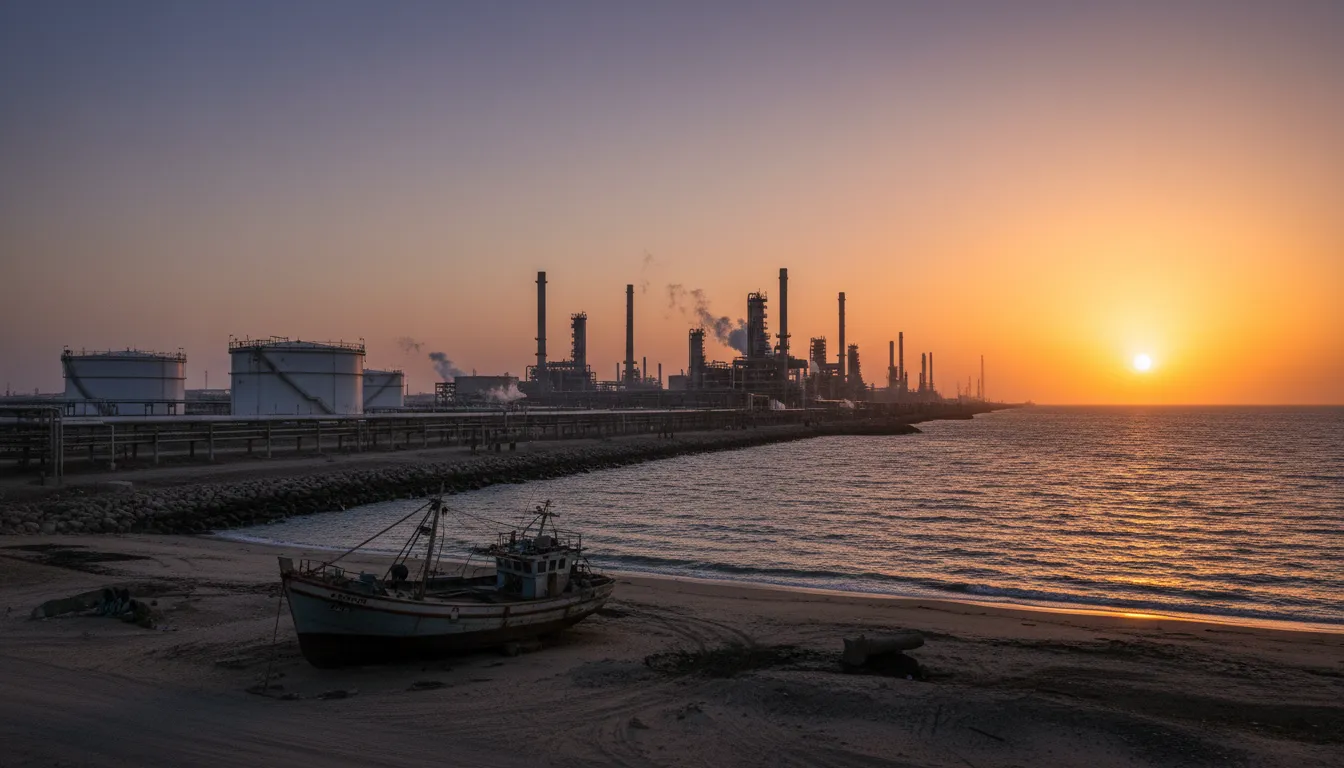
Sixteen days into the military conflict between the United States, Israel, and Iran, the global economy is confronting its most severe energy shock since the 1970s oil embargo. The Strait of Hormuz — a narrow waterway between Iran and Oman through which roughly 20 percent of the world's oil supply and a comparable share of liquefied natural gas normally flow — has been effectively blockaded. Daily ship transits have collapsed from an average of 138 vessels to fewer than five, as major shipping firms suspended operations after 16 vessels were struck and global insurers withdrew war-risk coverage, making commercial transit legally and financially untenable.
"We're now facing what looks like the biggest energy crisis since the oil embargo in the 1970s," said Helima Croft, global head of commodity strategy at RBC Capital Markets. Iran's Islamic Revolutionary Guard Corps has declared that "not one litre of oil" will pass through the strait, and Iran's newly installed supreme leader has reiterated that the closure must remain in force.
Oil Prices Surge, Markets Reel
Brent crude, which traded near $70 a barrel before hostilities broke out on February 28, has surged past $103 a barrel — a rise of more than 40 percent in under three weeks. Prices briefly spiked above $119 in early trading sessions before partially retreating following emergency interventions. The International Energy Agency (IEA) responded with the largest coordinated emergency oil release in its 50-year history: 400 million barrels drawn from member-state strategic reserves, unanimously approved by all 32 member countries.
Yet the mathematics are sobering. At current global consumption rates, 400 million barrels covers roughly four days of worldwide demand. The Strait closure is erasing an estimated 15–20 million barrels per day from markets. Strategists at Dutch bank ING were blunt: "The only way to see oil prices trade lower on a sustained basis is by getting oil flowing through the Strait of Hormuz."
Supply Chains Under Pressure Across Industries
The disruption extends far beyond petrol prices. The Strait carries approximately one-third of global fertilizer trade, including massive volumes of urea and ammonia from Gulf producers — Iran, Qatar, Saudi Arabia, the UAE, and Bahrain — that together accounted for 34 percent of global urea exports in 2024. Urea prices at the New Orleans hub have already jumped from $475 to $680 per metric ton, and Oxford Economics has raised its fertilizer price forecast by around 20 percent for Q2 2026. Countries like India and Brazil, heavily reliant on Gulf imports, face acute agricultural input shortages.
Asia's petrochemical and textile industries are also taking direct hits. Regional plants source 70–80 percent of their naphtha feedstock from the Middle East, most of it shipped through Hormuz. Force majeure declarations and production cutbacks are already emerging across the continent, threatening to raise prices for packaging, synthetic fabrics, pharmaceuticals, and electronics components.
Recession and Stagflation Risks Mount
The economic modeling from leading institutions paints a troubling picture. Oxford Economics projects that if global oil averages $140 a barrel for two months, the eurozone, the UK, and Japan would tip into contraction, while US growth would stall — amounting to a 0.7 percent drop in global GDP and a spike in world inflation to 5.1 percent. Goldman Sachs has already raised its US recession probability to 25 percent. Morgan Stanley and Deutsche Bank have flagged stagflation — the toxic combination of rising prices and slowing growth — as a mounting risk.
Chatham House analysts note that even a swift end to the conflict may not quickly normalize energy flows, as damaged infrastructure, lingering insurance exclusions, and shattered confidence among shipping operators could keep the strait suppressed for months.
A Test With No Easy Answer
The IEA's historic reserve release buys time, but analysts across institutions agree it cannot substitute for restored transit. With Iran signaling no intent to reopen the waterway and military operations continuing, the global economy faces a prolonged test of resilience — one that threatens to ripple from energy markets into food security, industrial output, and consumer prices worldwide.