How Carbon Sinks Work—and Why They're Weakening
Earth's forests, oceans, and soils absorb roughly half of humanity's carbon emissions each year, but climate change and deforestation are steadily undermining these natural buffers.
What Is a Carbon Sink?
A carbon sink is any natural or artificial system that absorbs more carbon dioxide from the atmosphere than it releases. Earth's three major carbon sinks—forests, oceans, and soils—together absorb roughly half of all human-generated CO₂ emissions each year. Without them, atmospheric carbon levels would rise far faster, and global warming would accelerate dramatically.
Understanding how these sinks work matters because they are not permanent. Recent research published in Nature shows that climate change has already weakened both land and ocean sinks, contributing roughly 8% of the total rise in atmospheric CO₂ since 1960.
Forests: The Land Sink
Trees and other vegetation absorb carbon dioxide through photosynthesis, converting it into sugars and locking it away in wood, leaves, roots, and soil. The world's forests absorb an estimated 2.6 billion tonnes of CO₂ annually, according to the World Economic Forum.
Not all forests pull their weight equally. Tropical rainforests can sequester up to 20 tonnes of CO₂ per hectare during peak growth. Boreal forests in colder climates store carbon more slowly but span enormous areas across Canada, Russia, and Scandinavia, holding vast reserves in both trees and underlying peat soils.
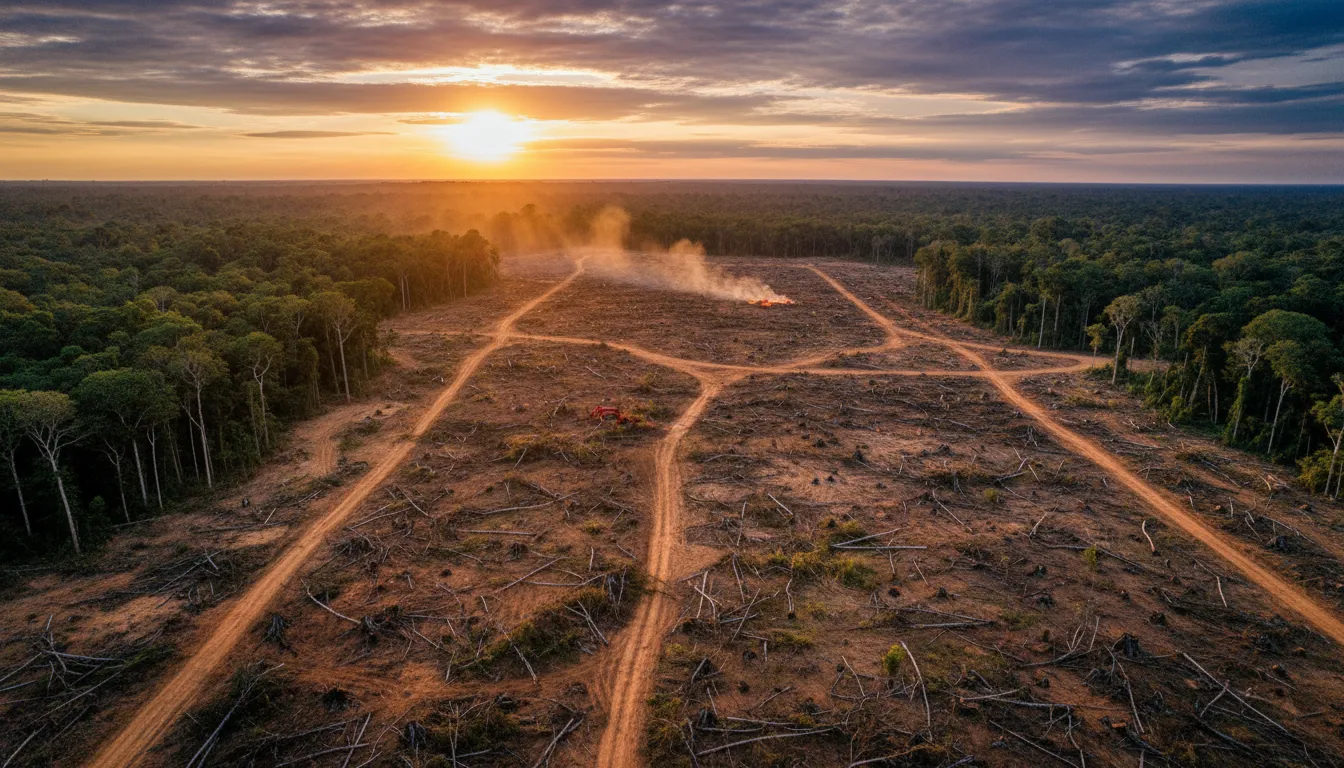
When forests are cleared or burned, that stored carbon floods back into the atmosphere. A study in Scientific Reports found that Africa's tropical forests have already flipped from net carbon absorbers to net emitters, driven by widespread deforestation after 2010. The same reversal has occurred in parts of Southeast Asia and South America.
Oceans: The Liquid Buffer
The ocean absorbs about 25% of all human carbon emissions. It does so through two mechanisms. First, CO₂ dissolves directly into surface waters, where currents carry it into the deep ocean for long-term storage. Second, microscopic phytoplankton consume dissolved CO₂ through photosynthesis. When they die, their remains sink to the seafloor in what scientists call the biological pump, sequestering carbon for centuries.
Coastal ecosystems add another layer. Mangroves, seagrasses, and salt marshes—collectively known as blue carbon habitats—cover less than 1% of the ocean floor yet bury carbon 10 to 50 times faster than terrestrial forests, according to the Ocean & Climate Platform.
But absorbing CO₂ comes at a cost. As oceans take in more carbon, they become more acidic, threatening coral reefs, shellfish, and the very plankton that power the biological pump.
Soils: The Hidden Giant
Soil stores more carbon than the atmosphere and all plant life combined—roughly 2,500 billion tonnes in the top three metres. Carbon enters the soil through decaying organic matter—dead leaves, roots, and microorganisms. Healthy soils with rich microbial communities lock that carbon away for decades or centuries.
Intensive agriculture, overgrazing, and rising temperatures all destabilise this store. Warmer soils accelerate microbial decomposition, releasing stored CO₂ back into the air—a feedback loop that amplifies warming.
Why Carbon Sinks Are Weakening
The Global Carbon Budget project tracks these trends annually. Its latest data confirms that the natural land sink is substantially smaller than previously estimated, while emissions from land-use change—primarily deforestation—are higher than thought.
Three forces drive the decline:
- Deforestation eliminates forests that would otherwise absorb CO₂ and releases their stored carbon simultaneously.
- Rising temperatures speed up decomposition in soils and reduce the efficiency of photosynthesis in heat-stressed trees.
- Ocean warming reduces the water's capacity to dissolve CO₂ and disrupts plankton populations.
At current emission rates, the remaining carbon budget consistent with limiting warming to 1.5°C—about 170 billion tonnes of CO₂—will be exhausted before the end of this decade.
Why It Matters
If natural sinks continue to weaken, humanity loses its most powerful silent ally against climate change. Every tonne of CO₂ that forests and oceans fail to absorb stays in the atmosphere, accelerating warming and making emissions-reduction targets even harder to meet. Protecting and restoring these systems—halting deforestation, expanding blue carbon habitats, and adopting soil-friendly farming—is not a luxury. It is a prerequisite for any credible climate strategy.