How Chagas Disease Works—and Why It Hides for Decades
Chagas disease infects roughly 8 million people worldwide and kills more than 10,000 each year, yet most carriers never know they have it. Here's how the parasite spreads, why it can lurk silently for decades, and why it's now reaching new regions.
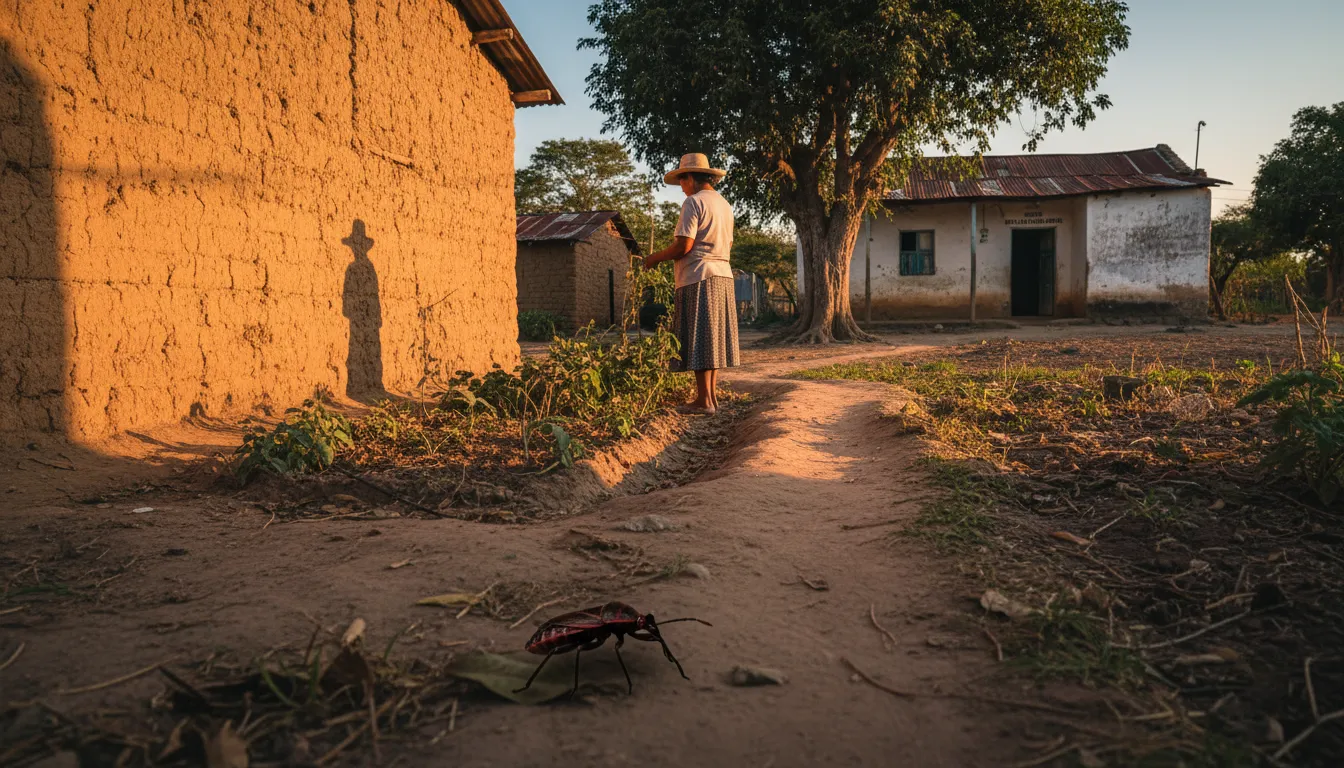
The "Kissing Bug" Parasite
Chagas disease—formally known as American trypanosomiasis—is caused by the single-celled parasite Trypanosoma cruzi. It spreads primarily through blood-feeding insects called triatomine bugs, better known as "kissing bugs" because they tend to bite people around the mouth and eyes while they sleep.
The transmission mechanism is surprisingly indirect. The bug doesn't inject the parasite when it bites. Instead, it defecates near the wound, and the parasite enters the body when the person scratches the bite and rubs the infected feces into the break in their skin or into mucous membranes. T. cruzi can also spread through blood transfusions, organ transplants, contaminated food, and from mother to child during pregnancy.
Two Phases, One Long Silence
What makes Chagas disease so dangerous is its ability to remain hidden. The illness unfolds in two distinct phases.
The acute phase begins shortly after infection and lasts four to eight weeks. Most people experience no symptoms at all, or only mild flu-like signs—fever, fatigue, body aches—that are easily dismissed. A telltale clue can be swelling around the eye nearest the bite, known as Romaña's sign, but even this appears in only a fraction of cases.
After the acute phase resolves, the disease enters an indeterminate chronic phase that can last 10 to 30 years with zero symptoms. During this entire period, the parasite quietly persists in cardiac and digestive tissue. About 60 to 70 percent of infected people will never develop clinical disease. But for the remaining 30 to 40 percent, the consequences are severe: chronic Chagas cardiomyopathy—a progressive weakening of the heart muscle that can lead to heart failure, arrhythmias, stroke, and sudden cardiac death.
A smaller subset develops digestive complications, including enlargement of the esophagus or colon, which cause difficulty swallowing and chronic constipation.
Scale of the Problem
The World Health Organization estimates that roughly 8 million people are infected with T. cruzi worldwide, with the disease killing more than 10,000 people annually. It is endemic in 21 countries across Latin America, where it ranks as the leading cause of infectious-disease death—ahead of malaria.
Yet Chagas remains, in the words of the Johns Hopkins Bloomberg School of Public Health, "the most neglected of neglected tropical diseases." Because most carriers are asymptomatic and because the disease disproportionately affects low-income rural populations, it attracts far less research funding and public attention than other tropical infections of comparable burden.
A Disease That's Moving North
Chagas is no longer confined to Latin America. Migration has carried the parasite to Europe, Japan, Australia, and North America. The U.S. Centers for Disease Control and Prevention estimates that around 300,000 people living in the United States carry T. cruzi, most of them born in endemic regions. But locally acquired cases have been documented in at least eight states, from Texas and Arizona to Tennessee and Missouri.
Climate change is expected to accelerate this spread. Research published in The Lancet Microbe projects that warming temperatures will push triatomine habitats northward into central regions of the United States that were historically too cold for the bugs. In 2025, scientists at Texas A&M concluded that Chagas should now be considered endemic in the U.S.—a significant shift in how the disease is classified.
Treatment: Effective but Time-Sensitive
Two antiparasitic drugs—benznidazole and nifurtimox—can cure Chagas disease, but timing matters enormously. When administered during the acute phase, they eliminate the parasite in 50 to 80 percent of patients. In the chronic phase, effectiveness drops to 20 to 60 percent, and the heart damage already done cannot be reversed.
Both drugs require 60 to 90 days of oral treatment and can cause significant side effects, including skin reactions and digestive problems. No vaccine exists, and no new drugs have been approved in over five decades, though organizations like the Drugs for Neglected Diseases initiative (DNDi) are running clinical trials for next-generation treatments.
For now, the most effective strategy remains prevention—insecticide-treated housing, window screens, blood-supply screening—and early detection. The challenge is that in a disease defined by silence, catching it early means looking for something most patients don't yet feel.