How Enhanced Geothermal Systems Unlock Energy Anywhere
Enhanced geothermal systems use horizontal drilling and hydraulic fracturing to tap Earth's heat in places where no natural hot springs exist, promising 24/7 carbon-free electricity almost anywhere on the planet.
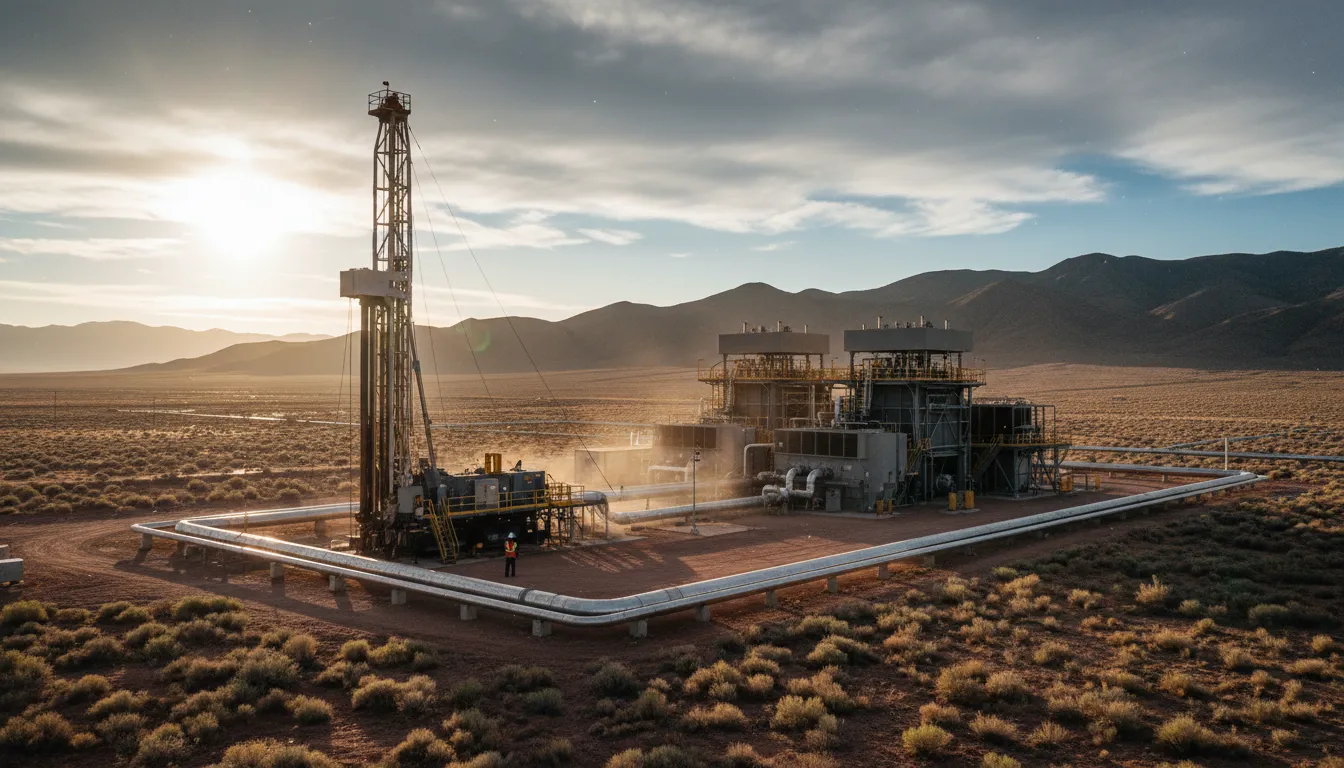
Geothermal Energy Without Boundaries
Conventional geothermal power depends on rare geology—natural reservoirs of steam or superheated water near tectonic plate boundaries and volcanic hotspots. Only a handful of countries, led by the United States, Indonesia, and the Philippines, have built significant capacity. Global installed geothermal power stood at roughly 17,200 MW at the end of 2025, a tiny fraction of world electricity supply.
Enhanced geothermal systems (EGS) aim to change that equation. By borrowing drilling techniques from the oil and gas industry, engineers can create artificial reservoirs deep underground and harvest Earth's heat virtually anywhere.
How EGS Works
The basic principle is simple: hot rock exists a few kilometres beneath every point on Earth's surface. In an EGS project, engineers drill two or more boreholes thousands of metres into hard, impermeable basement rock where temperatures can exceed 200 °C. They then drill laterally and use hydraulic stimulation—controlled injection of high-pressure fluid—to open or widen fracture networks that connect the wells underground.
Once the fracture network is established, cool water is pumped down one well, heated as it flows through the cracks in the rock, and extracted as hot fluid from a second well. At the surface, that thermal energy drives a turbine to generate electricity. The cooled water is then re-injected, creating a closed loop.
Unlike solar and wind, geothermal is a baseload resource: it delivers power around the clock, regardless of weather or season. A single EGS plant can run at capacity factors above 90 percent, rivalling nuclear reactors.
What Makes EGS Different From Fracking?
EGS borrows horizontal drilling and hydraulic fracturing from the shale industry, but the goal is different. Oil and gas fracking extracts hydrocarbons; EGS circulates water through hot rock in a closed loop without extracting fossil fuels. The injected fluid is water, not a chemical cocktail, and it stays within the engineered reservoir. Still, the shared technology means EGS can tap the oil sector's vast drilling expertise and supply chain, which is one reason costs are falling rapidly.
Who Is Building EGS?
Fervo Energy, a Houston-based startup, is the highest-profile player. Its pilot Project Red in Nevada became the first EGS facility to use horizontal wells, and its Cape Generating Station in Utah—a 53 MW commercial plant—is scheduled to come online in mid-2026, according to the U.S. Energy Information Administration. Fervo has also announced plans to supply 24/7 power to AI data centres, a market hungry for carbon-free baseload electricity.
In the United Kingdom, the United Downs Deep Geothermal Power project in Cornwall began feeding electricity to the grid in February 2026—the country's first geothermal power. Though a conventional deep-well project rather than full EGS, it demonstrates growing interest in tapping subsurface heat beyond traditional volcanic regions.
Meanwhile, the International Energy Agency estimates that, with continued cost reductions, geothermal could meet up to 15 percent of global electricity demand growth through 2050—roughly 800 GW of capacity.
The Earthquake Question
Injecting fluid underground can trigger small earthquakes, a phenomenon called induced seismicity. A 2017 EGS project in Pohang, South Korea, caused a magnitude-5.5 quake that injured dozens and shut down the operation. An earlier project in Basel, Switzerland, was scrapped after a series of quakes rattled the city in 2006.
Modern EGS developers use traffic-light protocols: seismic monitors track ground movement in real time, and operations are scaled back or halted if tremors exceed safe thresholds. Fervo Energy reports that its horizontal drilling approach distributes pressure more evenly across fracture zones, reducing peak seismic risk compared with older vertical designs.
Why EGS Matters
Solar and wind dominate clean-energy headlines, but neither solves the baseload problem without expensive battery storage. EGS offers a complementary path: constant, weather-independent, carbon-free power with a tiny land footprint. If drilling costs continue to fall and seismic risks remain manageable, enhanced geothermal could become one of the most significant clean-energy breakthroughs of the decade.