How Iron-Air Batteries Work—Storing Power as Rust
Iron-air batteries store electricity through reversible rusting, offering 100 hours of grid-scale energy storage at a fraction of lithium-ion costs. Here is how the chemistry works and why it matters for renewable energy.
The Battery That Breathes
Most batteries rely on expensive metals like lithium and cobalt. Iron-air batteries use something far more common: iron, water, and air. The core chemistry is deceptively simple — the battery generates electricity by rusting iron, then reverses the process to recharge. It is, in essence, a battery that breathes.
The technology has attracted billions in investment and major contracts with Google, Xcel Energy, and Georgia Power because it solves a problem lithium-ion cannot: storing energy not for hours, but for days.
How the Chemistry Works
An iron-air battery contains two key components: an iron anode packed with thousands of small iron pellets, and an air cathode that draws oxygen from the surrounding atmosphere. Both sit in a water-based, non-flammable electrolyte similar to what powers ordinary AA batteries.
During discharge, oxygen enters the cell and reacts with the iron pellets. The iron oxidizes — it rusts — releasing electrons that flow through an external circuit as usable electricity. The chemical product is iron oxide, common rust.
During charging, an electrical current reverses the reaction. The oxygen is stripped away from the iron oxide, converting rust back into metallic iron. The oxygen returns to the air. The cycle can then repeat.
This reversible rusting reaction is thermodynamically favorable and uses materials that are abundant, cheap, and non-toxic — a stark contrast to the supply-chain pressures surrounding lithium, cobalt, and nickel.
Why Duration Matters
Lithium-ion batteries dominate short-duration storage, typically delivering energy for two to four hours. That works well for smoothing out a cloudy afternoon on the solar grid. But what happens during a week-long winter storm when solar and wind output plummets?
Iron-air batteries are designed for exactly this scenario. Form Energy, the leading developer, has built systems capable of storing and discharging electricity for up to 100 hours — more than four days. That kind of duration can bridge extended gaps in renewable generation, making a grid powered primarily by wind and solar far more reliable.
The cost advantage is equally dramatic. Form Energy has demonstrated costs below $20 per kilowatt-hour of storage capacity, roughly one-tenth the cost of equivalent lithium-ion systems. For multi-day storage, lithium-ion is simply too expensive to deploy at scale.
The Trade-Offs
Iron-air technology is not a replacement for lithium-ion — it is a complement. The batteries have a round-trip efficiency of 50 to 60 percent, meaning that for every 100 units of energy put in, only 50 to 60 come back out. Lithium-ion achieves 90 to 95 percent. This energy loss comes from hydrogen evolution at the iron electrode and high overvoltage at the air cathode.
Power density is also lower, which means iron-air systems respond more slowly than lithium-ion and are unsuitable for rapid-response grid services like frequency regulation. They are designed for energy-duration applications — keeping the lights on during prolonged renewable droughts, not smoothing out momentary voltage spikes.
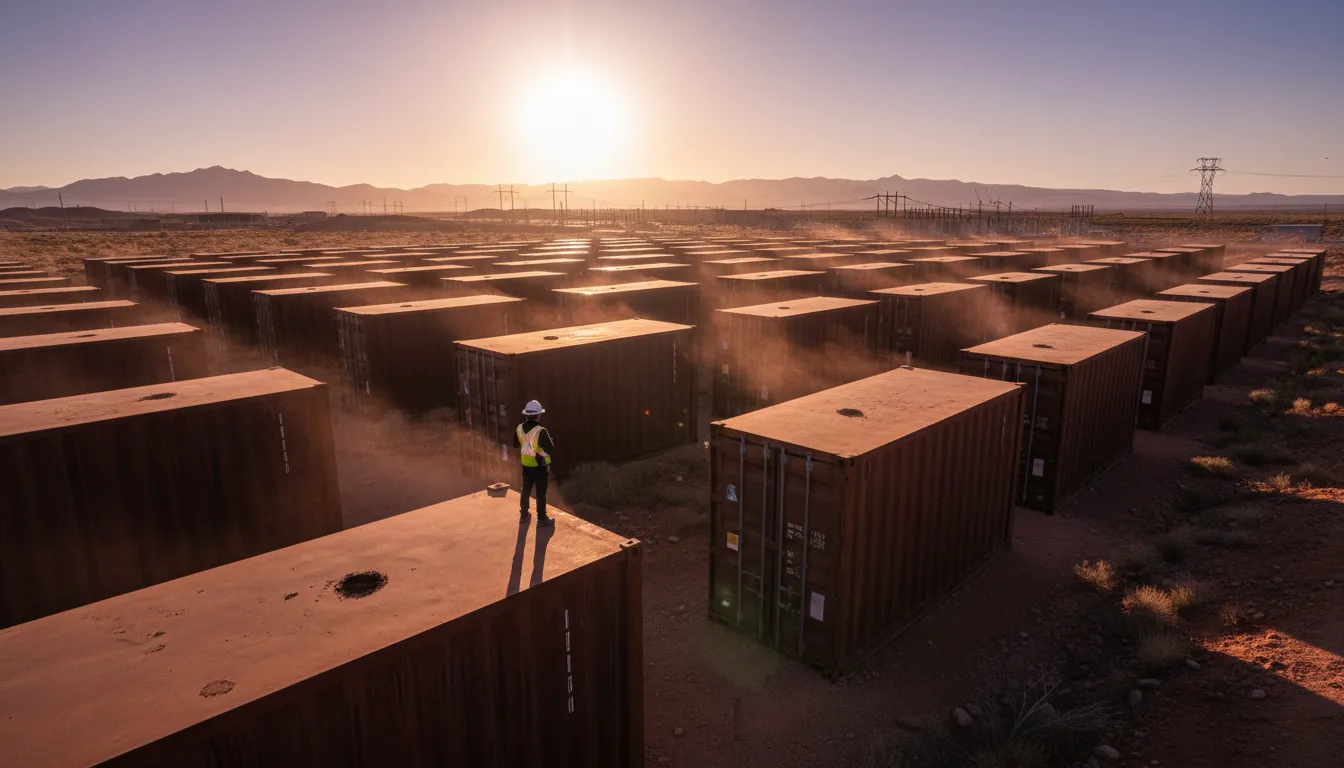
The systems are also physically large. A 100-hour iron-air installation occupies significantly more space than a comparable lithium-ion array, making them better suited for utility-scale deployments than urban rooftops.
From Steel Town to Grid Scale
Form Energy has built its commercial manufacturing facility in Weirton, West Virginia, on the site of a former steel mill — a fitting location for a technology built on iron. The company is expanding toward a one-million-square-foot manufacturing footprint with 500 MW of annual production capacity targeted by 2028.
Deployments are already underway. A pilot project with Minnesota's Great River Energy came online in late 2025. Additional installations for Xcel Energy, Georgia Power, and a California project backed by a $30 million state grant are scheduled through 2026. In early 2026, Google announced a 30-gigawatt-hour iron-air deployment for a Minnesota data center — the largest battery system by energy capacity ever announced globally.
The Bigger Picture
The challenge of decarbonizing electricity grids has always been less about generating renewable energy and more about storing it reliably. Iron-air batteries do not solve every storage problem, but they address the one that lithium-ion cannot touch: multi-day resilience at an affordable price, built from materials the earth has in abundance.