How Lunar Oxygen Extraction Works—From Dust to Air
The Moon's soil is roughly 45% oxygen by weight. Engineers are now developing reactors that melt lunar regolith and use electrolysis to split that oxygen free—a technology that could slash the cost of deep-space missions and sustain future lunar settlements.
A Hidden Reservoir Beneath Your Feet
Rocket fuel, breathable air, and water all share one critical ingredient: oxygen. Launching it from Earth to the Moon costs thousands of dollars per kilogram. Yet the Moon already holds vast quantities of oxygen—locked inside the fine, powdery soil that blankets its surface. Lunar regolith, as scientists call it, is roughly 41–45% oxygen by weight, bound tightly to metals such as silicon, iron, aluminum, and titanium.
The challenge is not finding oxygen on the Moon. It is ripping it free from the rock. A family of technologies collectively known as In-Situ Resource Utilization (ISRU) aims to do exactly that, and recent engineering milestones suggest the first working lunar oxygen plants could operate within the decade.
How Molten Regolith Electrolysis Works
The leading approach is molten regolith electrolysis (MRE). The concept is deceptively simple: heat crushed lunar soil until it melts, then pass an electric current through the molten pool to separate oxygen from metals—much like industrial aluminum smelting on Earth.
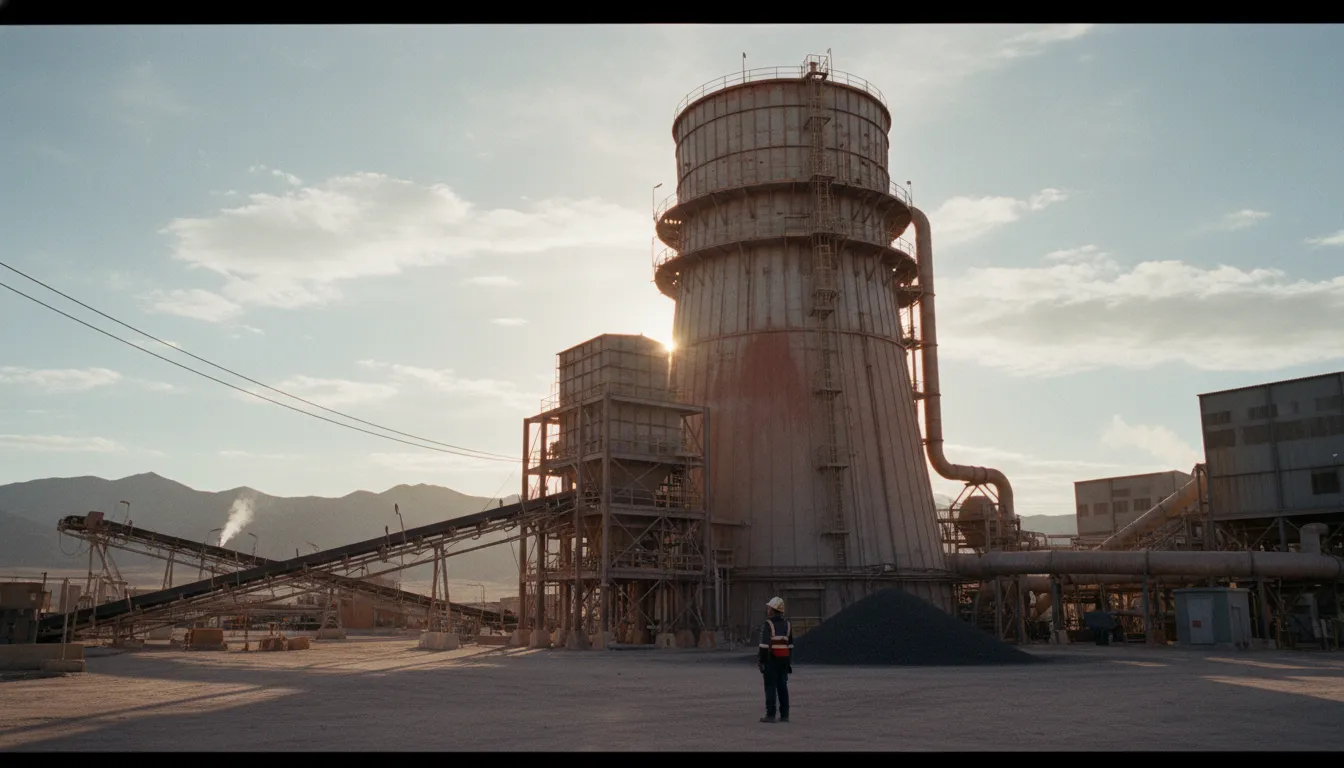
In practice, a robotic excavator scoops regolith and delivers it to a reactor. Inside, electrodes heat the powder to roughly 1,600 °C, creating a glowing pool of liquid oxide. When current flows between an anode and a cathode, oxygen ions migrate to the anode, where they combine into O₂ gas that can be captured, purified, and stored. Meanwhile, molten metal alloys—iron, aluminum, silicon—collect at the cathode as valuable byproducts.
A clever engineering trick makes the process self-insulating: the regolith at the edges of the reactor stays solid, forming a natural crucible that protects the vessel walls from the extreme heat. No exotic containment materials are needed.
Alternative Methods
MRE is not the only game in town. Molten salt electrolysis, adapted from the FFC Cambridge process originally developed in the 1990s for titanium extraction, submerges regolith in molten calcium chloride heated to about 950 °C. The salt acts as a conducting liquid, and when current passes through it, oxygen migrates to the anode for collection. ESA has funded development of this approach through its ISRU demonstration program.
A third technique, hydrogen reduction, blows hydrogen gas over heated regolith. The hydrogen strips oxygen from iron-oxide minerals to produce water, which is then electrolyzed into hydrogen (recycled back) and oxygen. While less efficient overall, it operates at lower temperatures and has been tested by NASA since the early 2000s.
Why It Matters for Space Exploration
Oxygen accounts for roughly 80% of rocket propellant mass in common bipropellant engines. Manufacturing it on the Moon instead of hauling it from Earth could reduce the cost of lunar landings by up to 60%, according to Blue Origin, which is developing its own MRE reactor called Blue Alchemist. The company reported that its "Air Pioneer" reactor has successfully extracted medical- and propellant-grade oxygen from melted lunar regolith simulant on Earth.
Beyond propellant, locally produced oxygen would supply life-support systems for habitats, reducing the constant resupply burden that currently limits how long crews can stay on the surface. Metal byproducts from the electrolysis process could be used for construction and manufacturing, turning regolith into a comprehensive resource.
How Close Are We?
Multiple organizations are racing toward demonstration. Blue Origin has completed a Critical Design Review for Blue Alchemist and plans a full autonomous terrestrial demonstration in vacuum chambers that simulate lunar conditions. ESA has partnered with the Belgian company Space Applications Services to build experimental reactors for a lunar surface ISRU demonstration mission. NASA continues to fund MRE research through its Space Technology Mission Directorate.
Significant hurdles remain. Lunar dust is abrasive and electrostatically charged, posing risks to mechanical systems. Reactors must operate autonomously for months with minimal maintenance. And scaling from laboratory grams to the tonnes of oxygen needed for a permanent base requires substantial engineering advances.
Still, the physics is proven, the chemistry works on Earth, and the economic case is compelling. The Moon is not barren—it is an oxygen mine waiting for the right tools.