How the Federal Reserve Chair Is Chosen—and Why It Matters
The Federal Reserve chair is the most powerful economic policy position in the U.S. government. Here's how the nomination and confirmation process works, what powers the chair holds, and why the role's independence matters for the global economy.
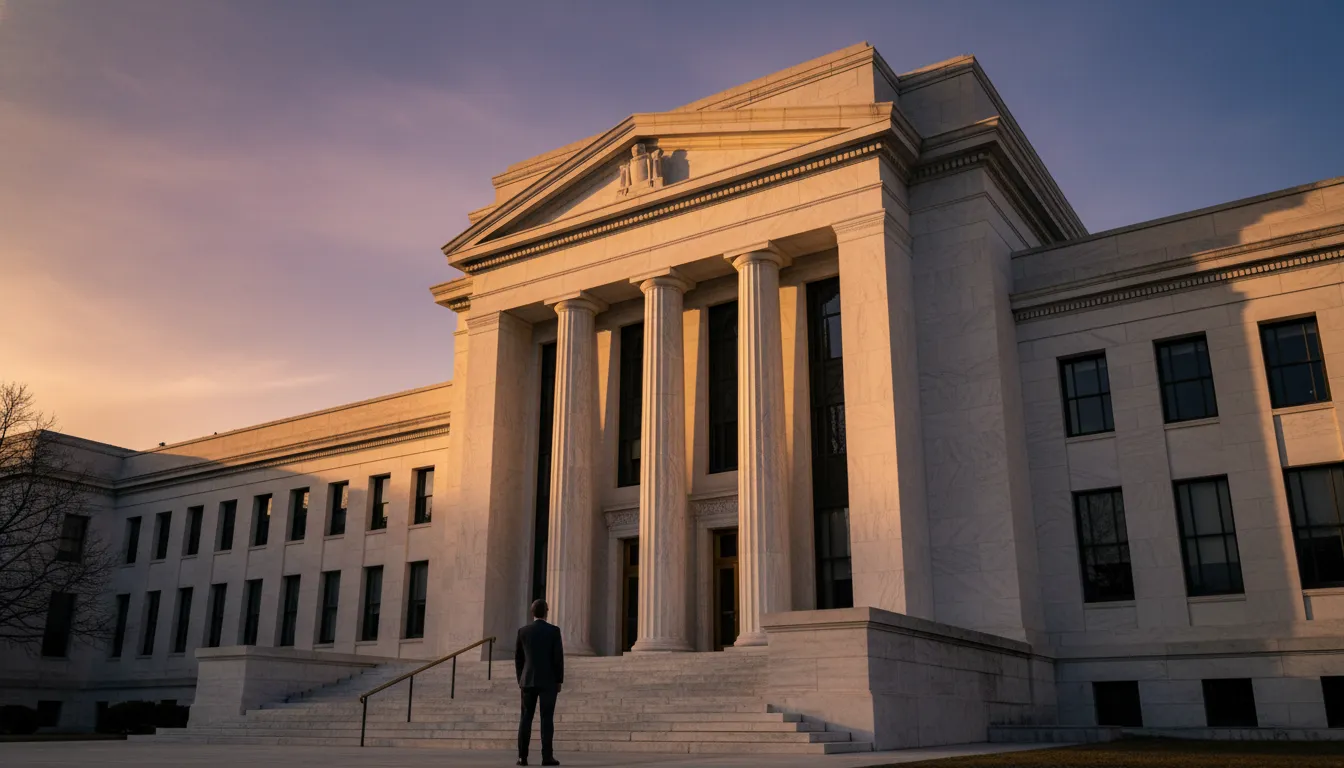
The Most Powerful Economic Job in the World
The chair of the Federal Reserve System presides over the central bank of the United States, an institution whose decisions on interest rates ripple through every mortgage payment, stock portfolio, and currency exchange on the planet. Often called the second most powerful person in Washington, the Fed chair shapes monetary policy for the world's largest economy—yet most people have little idea how someone lands the job.
Nomination: The President's Pick
Under the Federal Reserve Act, the president of the United States nominates the Fed chair for a renewable four-year term. The president may select a sitting member of the Board of Governors or nominate someone new to fill a board vacancy simultaneously. In practice, presidents often reappoint the incumbent regardless of party—Ronald Reagan reappointed Paul Volcker, a Jimmy Carter pick, and Donald Trump initially reappointed Jerome Powell, a Barack Obama-era board member elevated by Trump himself.
The nomination is a deeply political calculation. Presidents seek candidates who align with their economic priorities while projecting enough independence to maintain market confidence. A nominee perceived as a political puppet can trigger bond sell-offs before a single hearing begins.
Confirmation: The Senate's Role
Once nominated, the candidate faces the Senate Banking Committee, which holds public hearings to scrutinize the nominee's views on inflation, employment, financial regulation, and central bank independence. If the committee votes favorably, the nomination advances to a full Senate floor vote, where a simple majority is required for confirmation.
The timeline varies. Janet Yellen was nominated in October 2013, faced hearings in November, won confirmation in January 2014, and began her term in February. Other nominations have moved faster or stalled for weeks due to political maneuvering. Importantly, the chair confirmation is a separate vote from confirmation as a member of the Board of Governors—a distinction that matters if the nominee is not already serving on the board.
What the Chair Actually Does
The Fed chair serves as the presiding officer of both the Board of Governors and the Federal Open Market Committee (FOMC), the body that sets interest rates. The chair controls meeting agendas, acts as the Fed's public spokesperson, and testifies before Congress twice a year on economic conditions and monetary policy.
Yet the chair's formal power has clear limits. On the FOMC, the chair holds exactly one vote out of twelve. Decisions on raising or lowering the federal funds rate—the benchmark interest rate that influences borrowing costs economy-wide—require a majority. In reality, however, the chair's influence far exceeds a single vote. Through agenda control, public communication, and sheer institutional prestige, the chair typically builds consensus before votes occur. Dissents are rare and notable.
The Dual Mandate
Congress has tasked the Fed with two sometimes competing goals: maximum employment and stable prices. The Fed interprets price stability as an average inflation rate of roughly 2% per year. When inflation runs hot, the chair must guide the committee toward higher rates that cool the economy—potentially at the cost of jobs. When unemployment spikes, pressure builds to cut rates even if inflation risks linger. Navigating this tension is the chair's central challenge.
Independence Under Pressure
The Banking Act of 1935 established key protections shielding Fed governors from political interference. Board members serve staggered 14-year terms and can only be removed by the president "for cause"—a standard rooted in the Supreme Court's Humphrey's Executor ruling. This means a president cannot fire a Fed governor simply for disagreeing on policy.
The chair's position, however, occupies a legal gray area. While the chair cannot be removed from the Board of Governors without cause, scholars debate whether a president could strip the chair title while leaving them as an ordinary governor—as President Truman effectively did to Marriner Eccles in 1948. This ambiguity keeps the question of Fed independence perpetually alive in constitutional law.
Why It Matters Beyond Washington
The Fed chair's decisions affect global markets, not just American ones. When the Fed raises rates, capital flows toward dollar-denominated assets, strengthening the dollar and pressuring emerging-market economies with dollar-denominated debt. When it cuts rates, cheap money fuels investment—and sometimes asset bubbles. Central banks from Frankfurt to Tokyo calibrate their own policies partly in response to what the Fed chair signals.
Understanding how this role is filled—and what guardrails exist to keep it independent—is essential for anyone trying to make sense of why interest rates move, why markets react to Senate hearings, and why the most consequential economic decisions in the world are made by an unelected official confirmed by a committee vote.


