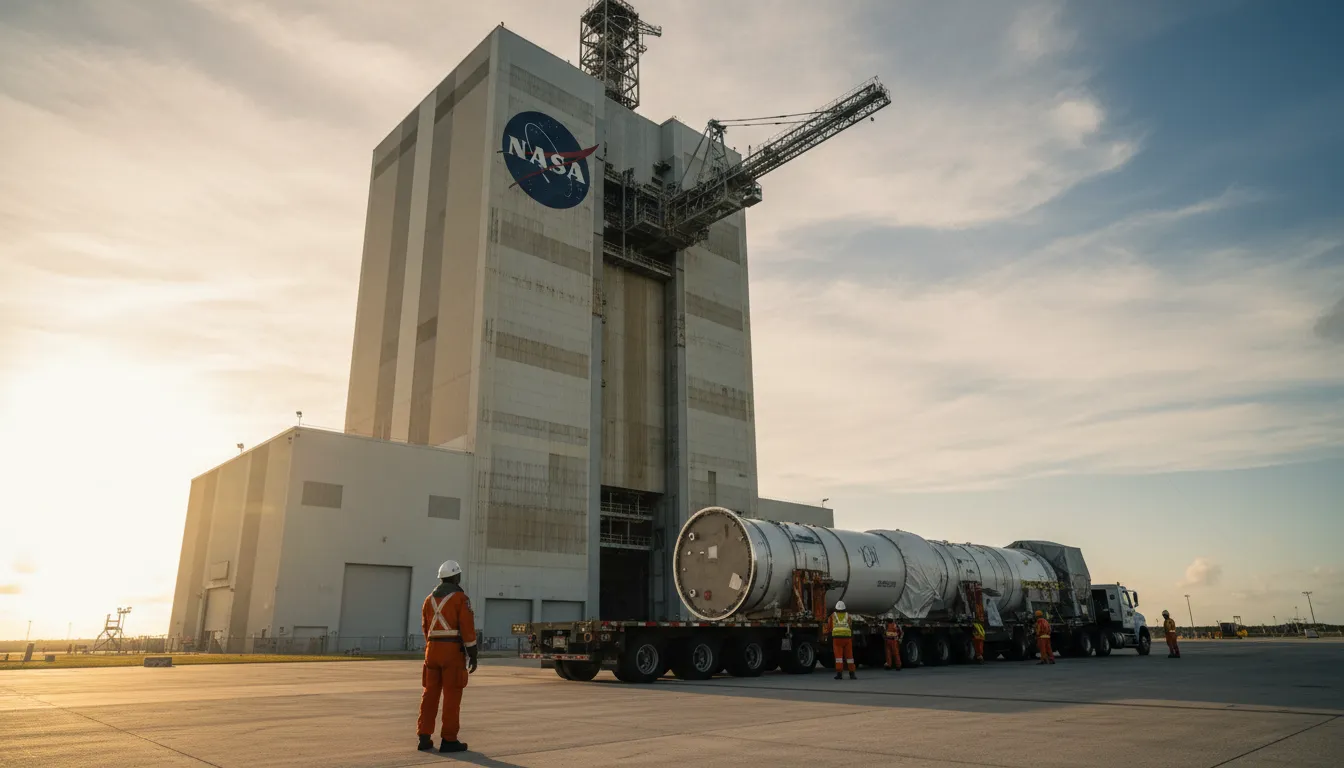
How NASA's Deep Space Network Talks to Spacecraft
NASA's Deep Space Network is a trio of giant antenna complexes that keep Earth connected to every interplanetary mission, from Mars rovers to Voyager probes billions of miles away.
Earth's Interplanetary Switchboard
Every command sent to a Mars rover, every image beamed back from Jupiter, and every faint whisper from the Voyager probes passes through a single system: NASA's Deep Space Network (DSN). Built in the 1960s and expanded ever since, the DSN is the only facility on Earth capable of communicating with spacecraft across the solar system—and beyond.
Three Sites, 24-Hour Coverage
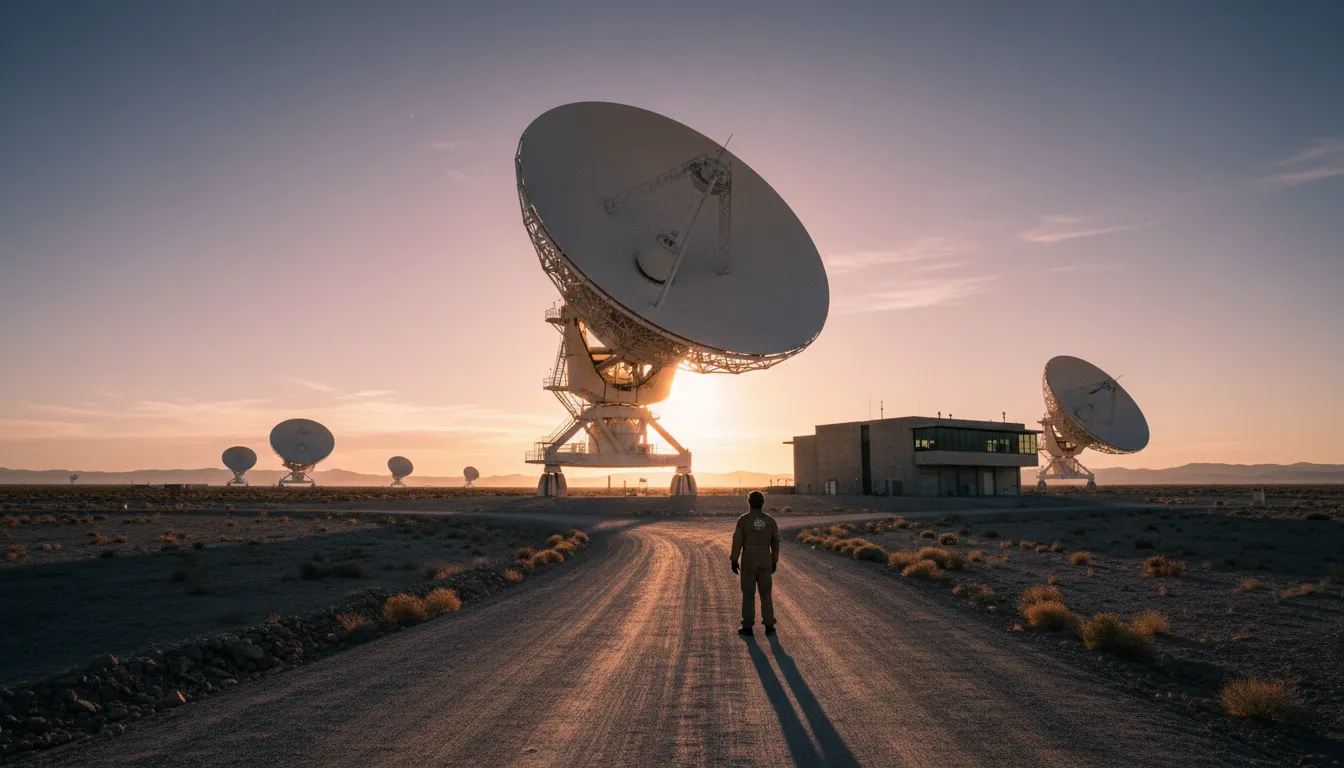
The DSN consists of three antenna complexes spaced roughly 120 degrees apart in longitude: Goldstone in California's Mojave Desert, a site near Madrid in Spain, and one near Canberra in Australia. The placement is deliberate. As Earth rotates, at least one complex always has a line of sight to any spacecraft in the solar system. Before a probe dips below the horizon at one station, the next station picks up the signal seamlessly.
Each site is equipped with a massive 70-meter (230-foot) dish antenna—the largest steerable scientific antennas on the planet—along with several 34-meter dishes and a smaller 26-meter antenna. Together, the network currently operates 14 antennas across three continents, with a fifteenth under construction at Goldstone.
How the Signals Travel
Communication with deep-space probes relies on radio waves in three frequency bands: S-band (around 2 GHz), X-band (8 GHz), and Ka-band (32 GHz). Operators at JPL's Space Flight Operations Facility encode commands into digital bits, aim an antenna at the target spacecraft with pinpoint precision, and transmit. The spacecraft's transponder receives the signal, processes it, and sends data back.
The challenge is distance. Signals travel at the speed of light, yet a one-way message to Voyager 1—now over 24 billion kilometres from Earth—takes roughly 23 hours to arrive. A round trip to confirm a single command takes nearly two full days. Even communicating with Mars involves delays of 4 to 24 minutes depending on orbital positions.
Signal strength is equally daunting. By the time Voyager's transmissions reach Earth, they are 20 billion times weaker than the power needed to run a digital watch. The DSN's giant dishes and cryogenically cooled receivers must pluck those whispers from the cosmic noise.
Navigation Without GPS
The DSN does more than relay messages. Engineers use it to navigate spacecraft by measuring tiny shifts in radio signal frequency caused by the Doppler effect. As a probe moves toward or away from Earth, its signal frequency changes slightly. By combining Doppler data from multiple stations, navigators can calculate a spacecraft's position, velocity, and trajectory with extraordinary accuracy—enough to thread a probe through Saturn's rings or land a rover on a specific Martian crater.
A Network Under Strain
The DSN was designed in an era when NASA flew a handful of missions at a time. Today it juggles communications for more than 40 active missions simultaneously, from the Perseverance rover and James Webb Space Telescope to the Europa Clipper headed for Jupiter. A NASA Inspector General report found the network is oversubscribed, with upgrade projects running behind schedule and over budget.
The problem will intensify. Crewed Artemis missions to the Moon will demand priority antenna time, and every two years they share the same patch of sky—and the same antennas—as the DSN's busiest Mars-based users. Future flagships to Uranus and Enceladus will add further pressure.
To cope, NASA is building new 34-meter antennas at each site. Deep Space Station 23 at Goldstone had its 133-ton dish reflector installed in late 2024 and is expected to become operational in 2026. A fifth dish at Canberra broke ground in early 2025. The agency is also exploring optical (laser) communications to supplement radio, promising data rates 10 to 100 times faster.
Why It Matters
Without the Deep Space Network, every robotic explorer beyond Earth orbit would go silent. It is the thread connecting humanity to its most distant emissaries—a thread that, nearly seven decades after the first dish was built, remains as essential as ever.