How Naval Blockades Work—and Why They Shape Wars
Naval blockades use warships to seal off enemy ports and coastlines, choking trade and military supply lines. From the Napoleonic Wars to the Cuban Missile Crisis, blockades have altered the course of history—but strict international laws govern when and how they can be imposed.
Sealing Off the Sea
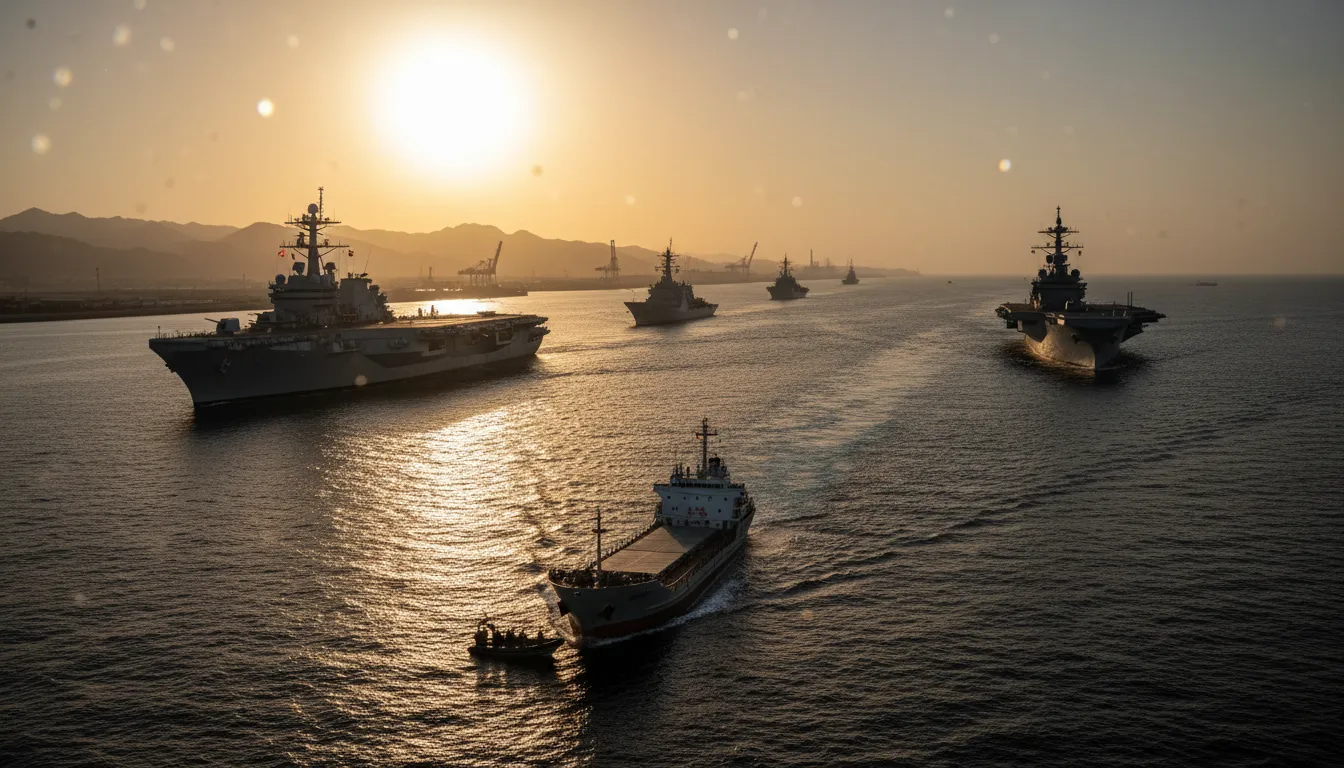
A naval blockade is one of the oldest and most powerful tools in military strategy. By positioning warships to prevent vessels from entering or leaving enemy ports, a blockading force can strangle an adversary's economy, cut off military supplies, and exert enormous pressure—all without firing a shot on land. Despite advances in missile technology and air power, blockades remain a central instrument of modern warfare and coercive diplomacy.
Close vs. Distant Blockades
There are two principal forms. In a close blockade, warships station themselves within sight of the enemy coast, intercepting every vessel that attempts to pass. This approach is highly effective but also dangerous—ships are exposed to storms, shore batteries, and surprise attacks from harbor-based forces.
A distant blockade positions the fleet farther out, often near chokepoints or major shipping lanes. The blockaders operate closer to their own supply bases and face fewer direct threats, but they need more ships to cover a wider area. Britain pioneered the distant blockade during World War I, sealing off the North Sea to starve Germany of imports—a strategy that contributed significantly to the Central Powers' defeat.
The Legal Framework
Under international law, a blockade is considered an act of war. The most comprehensive modern rules come from the San Remo Manual on International Law Applicable to Armed Conflicts at Sea, adopted in 1994. It sets out several strict requirements:
- Declaration and notification: The blockading state must formally announce the blockade, specifying its start date, geographic limits, and duration. All belligerents and neutral nations must be notified.
- Effectiveness: A blockade must be actively enforced by sufficient naval forces. A "paper blockade" with no ships on station has no legal standing.
- Impartiality: The blockade must apply equally to vessels of all nations—singling out ships from specific countries is prohibited.
- Humanitarian access: A blockade may not be used to starve a civilian population. Food and medical supplies essential for survival must be allowed through, subject to inspection.
Violating these conditions can render a blockade illegal and expose the blockading state to international condemnation or legal action.
Blockades That Changed History
During the Napoleonic Wars, the Royal Navy imposed a relentless blockade on French ports, crippling commerce and limiting Napoleon's ability to project power at sea. The strategy played a decisive role in France's eventual defeat.
In the American Civil War, the Union's "Anaconda Plan" blockaded over 3,500 miles of Confederate coastline. Though initially porous, the blockade tightened over four years and helped suffocate the Southern war economy by cutting off cotton exports and arms imports.
Perhaps the most famous modern example came during the Cuban Missile Crisis of 1962. President Kennedy imposed what he carefully termed a "quarantine"—deliberately avoiding the word "blockade" because it constitutes an act of war. The U.S. Navy encircled Cuba to prevent Soviet ships from delivering nuclear missile components. After 13 tense days, the Soviets agreed to withdraw their missiles, and the crisis was resolved without a shot being fired.
Why Blockades Still Matter
Modern navies maintain the capability to impose blockades on strategic waterways such as the Strait of Hormuz, through which roughly one-fifth of the world's oil passes, or the Strait of Malacca, a vital artery for Asian trade. A blockade of either chokepoint could trigger a global economic crisis within days.
Blockades are slow-acting weapons. As military historians note, they have never been the sole key to victory—the Union blockade and the British blockade of Germany both took years to produce decisive results. But combined with other military and diplomatic pressure, a well-executed blockade can tip the balance of a conflict without large-scale ground combat, making it an enduring and strategically vital tool of statecraft.