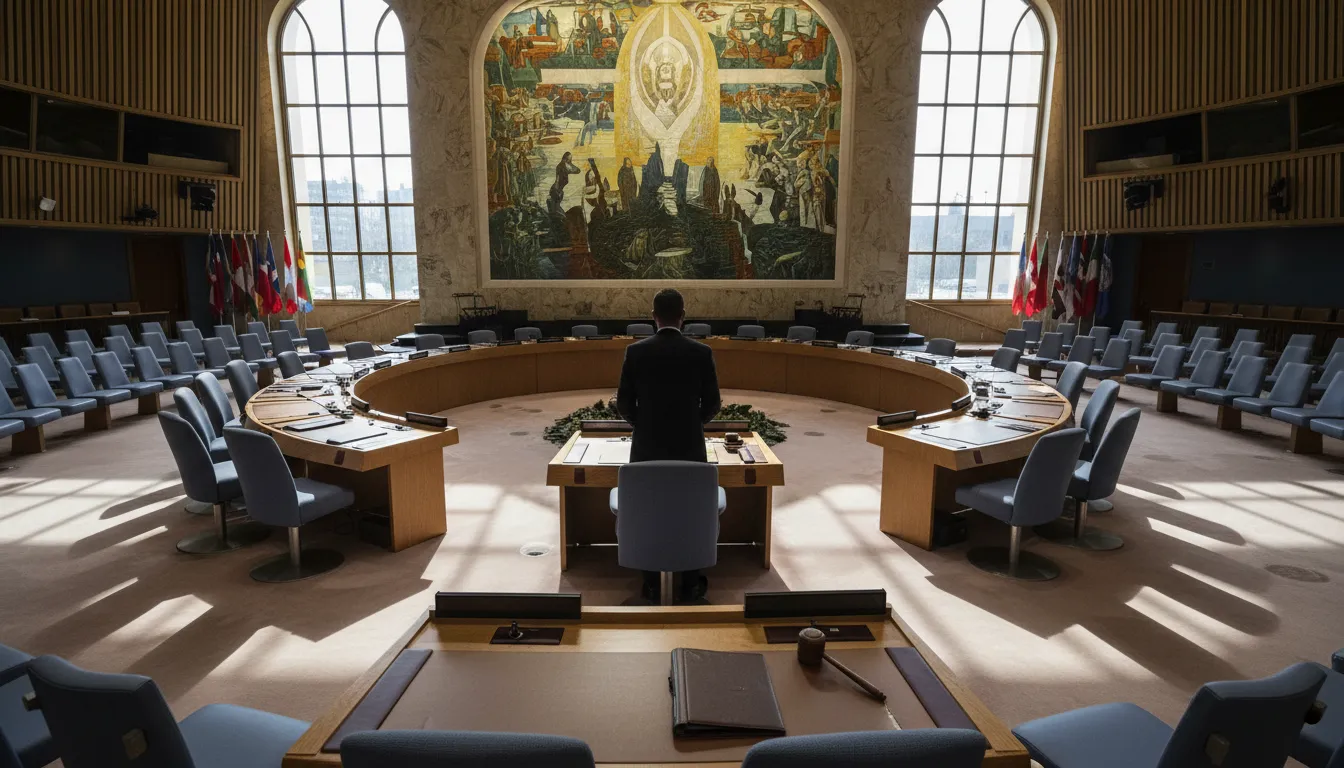
How Hungary's Electoral System Works—and Why It Matters
Hungary uses a unique mixed-member majoritarian system that combines single-member districts with proportional party lists. Its unusual 'winner compensation' mechanism has shaped the country's politics for over a decade.

Two Votes, One Parliament
When Hungarians head to polling stations, each voter casts two votes: one for a local candidate in their single-member district, and one for a national party list. These two ballots feed into a hybrid system that blends elements of British-style first-past-the-post voting with European proportional representation—but with a distinctly Hungarian twist that critics say tilts the playing field.
Of the 199 seats in Hungary's National Assembly (Országgyűlés), 106 are filled through single-member districts where the candidate with the most votes wins outright. The remaining 93 seats are allocated from closed national party lists based on proportional representation. In theory, the combination balances local accountability with nationwide fairness. In practice, the system tends to amplify the advantage of whichever party wins the most districts.
The Winner Compensation Twist
Most mixed electoral systems use the proportional tier to compensate for distortions created by winner-take-all districts—giving extra seats to parties that were underrepresented in local races. Hungary's system does the opposite.
Under rules introduced in a sweeping 2011 reform, surplus votes from winning district candidates are also credited to their party's national list total. If a candidate wins a district by 20,000 votes when they only needed 15,000, those extra 5,000 votes boost the party's share of list seats. The Electoral Reform Society has called this mechanism a key driver of disproportionality, because it rewards parties that are already winning.
According to research published in Public Choice, winner compensation delivered roughly six additional parliamentary seats to the dominant party in each of the 2014, 2018, and 2022 elections—seats that proved essential for securing a constitutional two-thirds supermajority.
Thresholds and Minority Seats
To win any list seats, a single party must clear a 5% threshold of the national vote. Two-party alliances face a 10% bar, and coalitions of three or more need 15%. These high hurdles discourage fragmentation but also make it harder for smaller opposition parties to enter parliament.
One notable exception exists: parties representing Hungary's recognized national minorities—including Roma, German, Slovak, and other communities—are exempt from the threshold entirely. A minority list can win a seat with as little as 0.27% of the vote, guaranteeing at least token parliamentary representation for these groups.
The Gerrymandering Question
District boundaries add another layer of controversy. The 106 constituencies were redrawn as part of the 2011 reform, and analysts at the University of Navarra note that opposition parties typically need an estimated 5 percentage points more in the popular vote than the ruling party to secure a simple majority. A late 2024 redistricting shifted two seats from Budapest—an opposition stronghold—to the more rural Pest County, a move critics called politically motivated.
The France 24 analysis described the system as "tailor-made" to favour the incumbent, while government supporters argue the boundaries simply reflect population shifts recorded in the census.
Why the System Produces Outsized Majorities
The combined effect of first-past-the-post districts, winner compensation, and high coalition thresholds is a system that can convert a modest plurality into a commanding parliamentary majority. In 2014, the governing alliance won 133 of 199 seats—a two-thirds supermajority—with just under 45% of the vote. In 2022, it secured 67% of seats on 49% of the popular vote.
This matters because a two-thirds majority in Hungary allows a government to amend the constitution, appoint judges, and reshape state institutions without opposition consent. Understanding how the electoral math works is essential to understanding Hungarian politics—regardless of which party holds power.
A Model Under Scrutiny
Hungary's system is not unique in blending majoritarian and proportional elements—Japan, South Korea, and Italy use variations of mixed-member systems. But the winner-compensation mechanism and the degree to which district boundaries can be redrawn by a parliamentary majority make Hungary's version particularly consequential. International election observers from the Electoral Integrity Project have repeatedly assessed Hungarian elections as "free but not fair," noting that the legal framework itself creates structural advantages.
For voters and observers alike, understanding the mechanics behind the ballot is the first step toward evaluating whether the results truly reflect the will of the electorate.