How the Federal Reserve Sets Interest Rates
The Federal Reserve steers the U.S. economy by adjusting the federal funds rate through FOMC meetings, open market operations, and key policy tools — decisions that ripple through mortgages, jobs, and prices worldwide.
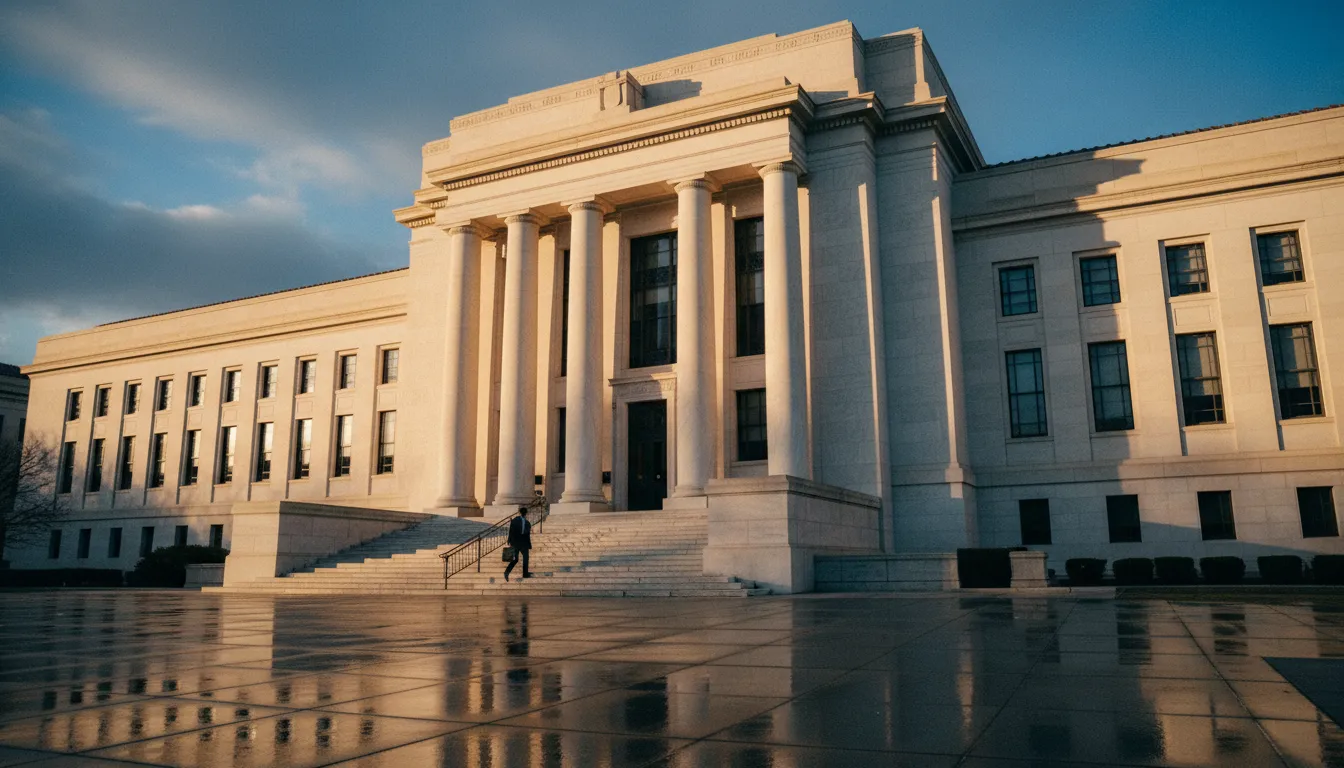
The Most Powerful Interest Rate in the World
Eight times a year, a group of economists gathers in Washington, D.C., to make a decision that affects nearly every wallet on the planet. The Federal Open Market Committee (FOMC) — the policy-setting arm of the U.S. Federal Reserve — votes on whether to raise, lower, or hold the federal funds rate, the benchmark interest rate that shapes borrowing costs from New York to Tokyo.
But what exactly is the federal funds rate, how does the Fed control it, and why does it matter so much?
What Is the Federal Funds Rate?
The federal funds rate is the interest rate banks charge each other for overnight loans of reserves — money held at the Federal Reserve. Banks are required to maintain certain reserve levels, and those with excess cash lend to those running short. The rate they agree on for these overnight transactions is the federal funds rate.
The Fed doesn't set this rate directly. Instead, the FOMC announces a target range — typically a band of 0.25 percentage points — and uses several tools to steer the actual market rate into that corridor.
Who Decides — and How
The FOMC consists of 12 voting members: the seven governors of the Federal Reserve Board, the president of the New York Fed, and four of the remaining eleven regional Fed presidents on a rotating basis. All 19 participants discuss policy, but only 12 vote.
Before each meeting, Fed staff prepare detailed reports on employment, inflation, consumer spending, business investment, and global financial conditions. During the two-day session, officials debate the economic outlook and vote on the appropriate policy stance. A statement is released at 2:00 p.m. Eastern, followed by the chair's press conference.
Four times a year — in March, June, September, and December — the Fed also publishes the Summary of Economic Projections, which includes the famous "dot plot": a chart where each participant marks where they expect the federal funds rate to be at the end of the current year and several years ahead. Clustered dots signal consensus; scattered dots reveal disagreement.
The Tools Behind the Target
Once the FOMC sets its target range, the Fed deploys three main instruments to keep the actual rate on track:
- Interest on Reserve Balances (IORB): The Fed pays banks interest for parking money at the central bank. Because this is risk-free income, banks rarely lend to each other at a rate below the IORB, which acts as an effective floor for the federal funds rate.
- The Discount Window: Banks that need emergency funds can borrow directly from the Fed at the discount rate, which is set above the target range. This creates a ceiling, because no bank would pay more to borrow from a peer than it would pay the Fed.
- Open Market Operations: The New York Fed buys or sells government securities to add or drain reserves from the banking system, fine-tuning liquidity so the overnight rate stays within the target range.
Why It Matters to Everyone
Changes in the federal funds rate ripple outward rapidly. When the Fed raises rates, borrowing becomes more expensive: mortgage rates climb, credit card interest increases, and business loans cost more. Consumer and business spending cools, which eases demand and helps bring down inflation.
When the Fed cuts rates, the opposite occurs. Cheaper credit encourages households to buy homes and cars, and businesses to invest and hire. This stimulates economic growth and reduces unemployment.
The Fed's legal obligation — its dual mandate from Congress — is to pursue both maximum employment and stable prices. These goals can conflict: stimulating jobs may fuel inflation, while fighting inflation may raise unemployment. Balancing the two is the central tension of every FOMC meeting.
Global Ripple Effects
Because the U.S. dollar is the world's primary reserve currency, Fed rate decisions influence global capital flows. Higher U.S. rates attract foreign investment into dollar-denominated assets, strengthening the dollar and making it more expensive for emerging markets to service dollar-denominated debt. Central banks from Frankfurt to São Paulo watch FOMC announcements closely and often adjust their own policies in response.
Understanding how the Fed sets interest rates is essential for anyone with a mortgage, a savings account, or a retirement portfolio. The federal funds rate may be an obscure-sounding benchmark, but its effects touch nearly every financial decision people make.