How Tissue Engineering Grows New Organs From Scratch
Tissue engineering combines biology, medicine, and engineering to build replacement organs from a patient's own cells, offering hope to millions on transplant waiting lists.
The Organ Shortage Crisis
More than 100,000 people in the United States alone sit on organ-transplant waiting lists, and thousands die each year before a donor match arrives. Tissue engineering—a discipline that merges biology, medicine, and engineering—aims to solve that crisis by growing functional organs in the laboratory from a patient's own cells.
The field scored its first landmark success when surgeon Anthony Atala at the Wake Forest Institute for Regenerative Medicine implanted a lab-grown bladder into a patient in 1999. Since then, researchers have engineered skin, blood vessels, tracheas, muscle, and—most recently—a functioning esophagus.
How It Works: Cells, Scaffolds, and Bioreactors
Building an organ in the lab follows three broad steps.
1. Harvesting and Expanding Cells
Scientists begin with a tiny tissue biopsy—sometimes no larger than a postage stamp. From it they isolate the relevant cell types and culture them in nutrient-rich media. According to Wake Forest researchers, a single-cell layer could theoretically cover a football field within about six weeks of growth. When a patient's own cells cannot be multiplied easily, stem cells—capable of maturing into many tissue types—serve as an alternative.
2. Building the Scaffold
Cells need a three-dimensional framework to organize into a working organ. Engineers create this framework, called a scaffold, in one of two ways:
- Decellularization — A donor organ is flushed with detergents and enzymes that strip away all living cells, leaving behind the extracellular matrix (ECM), a ghostly protein skeleton that retains the organ's original shape and biochemical signals.
- Synthetic or bioprinted scaffolds — Biodegradable polymers or hydrogels are moulded or 3D-printed into the desired shape, sometimes with embedded channels that mimic blood vessels.
The scaffold is then seeded with the patient's expanded cells in a process called recellularization.
3. Maturing in a Bioreactor
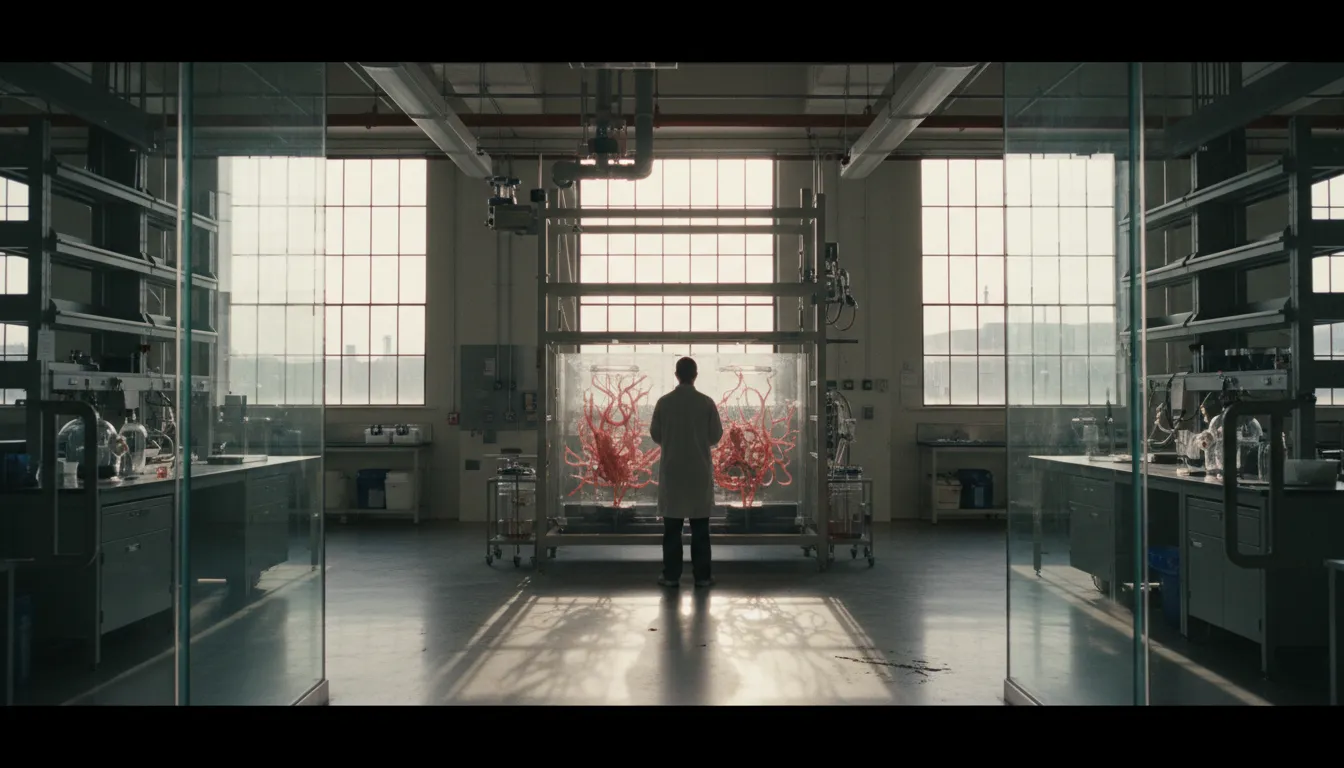
The seeded scaffold is placed inside a bioreactor—a chamber that mimics the body's conditions, providing temperature, oxygen flow, and mechanical stress. Over days or weeks, cells multiply, differentiate, and weave themselves into functional tissue. Only then is the engineered organ ready for implantation.
What Has Already Been Transplanted
Tissue engineering follows a rough complexity ladder. Flat tissues like skin were the easiest to master and have been standard clinical practice for decades. Tubular organs came next: Atala's team implanted lab-grown bladders into seven young patients, and follow-ups exceeding seven years showed sustained improvement, Wake Forest reported. A stem-cell-derived trachea was transplanted into an adult—and later into a child—by a team led by Martin Birchall, marking the first paediatric transplant of a tissue-engineered organ.
In the latest milestone, scientists at Great Ormond Street Hospital and University College London created a 2.5-centimetre esophageal graft, seeded it with the recipient's own cells, and implanted it into pigs. Within three months the graft integrated fully; by six months it had developed functional muscle, nerves, and blood vessels capable of propelling food toward the stomach.
The Challenge of Solid Organs
Hearts, livers, kidneys, and pancreases remain the field's "Holy Grail." These solid organs demand dense networks of blood vessels to supply oxygen deep inside the tissue—a problem called vascularization that no team has fully solved at transplant scale. Wake Forest researchers have built a miniature kidney that can secrete urine, and multiple groups have demonstrated beating heart tissue in the lab, but scaling these prototypes to clinical size remains years away.
Why It Matters
Because engineered organs use a patient's own cells, they sidestep the two biggest problems of conventional transplantation: donor scarcity and immune rejection. Patients would no longer need lifelong immunosuppressant drugs. As 3D bioprinting improves resolution and bioreactor designs become more sophisticated, the field is steadily moving from simple tissues toward the complex organs that could one day eliminate transplant waiting lists entirely.