Invisible Intelligence: Smart Homes in 2026 Will Be Silent
The smart home industry is undergoing a paradigm shift in 2026: Instead of visible gadgets, AI will work invisibly in the background — with great potential for energy savings, security, and data protection, especially in the German market.
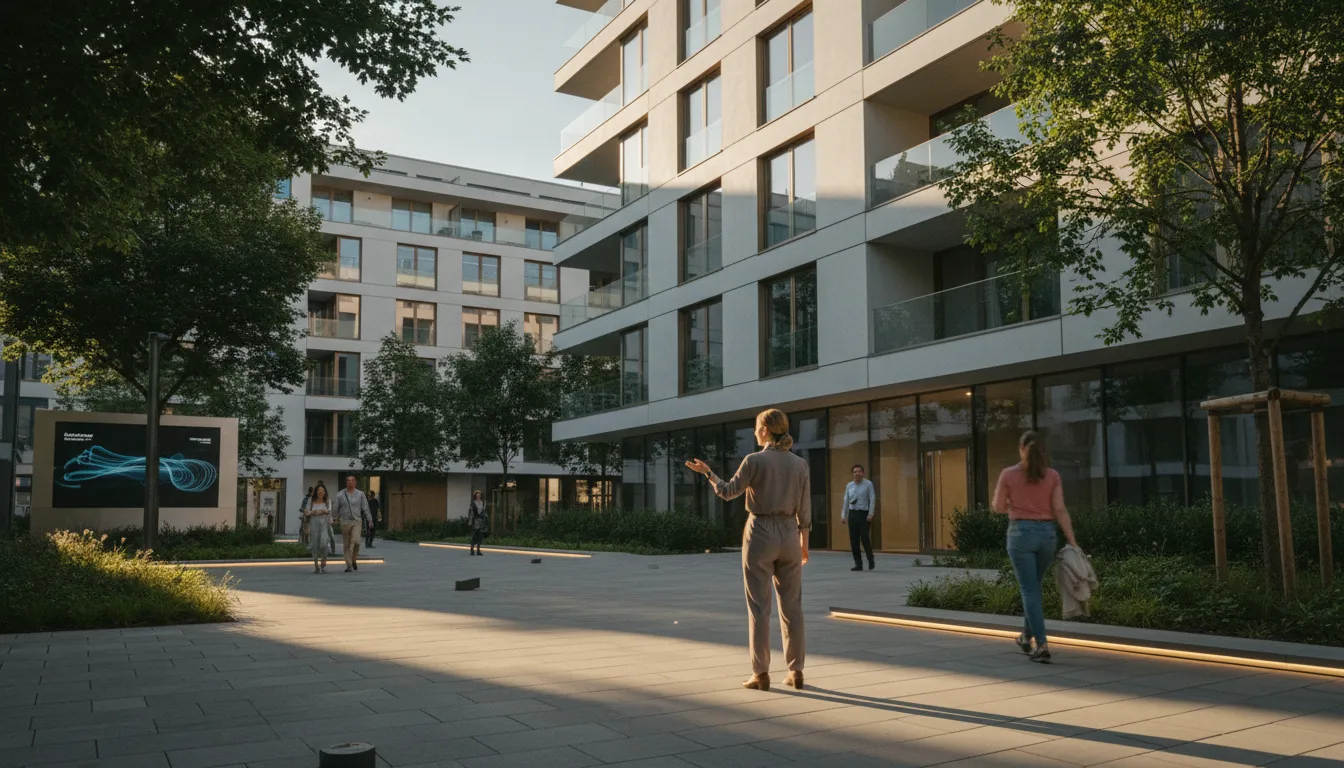
The End of the Gadget Era
The intelligent home in 2026 looks surprisingly unspectacular. Instead of flashing displays and conspicuous devices, the technology disappears into walls, networks, and software layers. Industry experts speak of "Ambient Intelligence" — an omnipresent but invisible intelligence that adapts to residents instead of being operated by them. According to IDC, by 2026, around 60 percent of households in industrialized countries will have some form of ambient technology.
Samsung Sets the Standard
A prime example of this change is Samsung's EdgeAware AI Home, which received an Innovation Award at CES 2026. The system recognizes twelve different sounds — from breaking glass to running water to coughing — and provides context-related recommendations for action. Crucially, all data is processed locally on the device, without ever reaching a cloud. If a break-in is detected, the system can automatically alert emergency services; in the event of persistent coughing, it suggests a telemedicine consultation.
Energy Management as a Killer Feature
For the German market, which is facing rising energy prices and the widespread expansion of Dynamic Pricing, intelligent energy management is becoming the most important smart home function. AI-powered systems automatically shift the operation of washing machines, heat pumps, and wallboxes to favorable tariff times.
The savings potential is considerable: According to an analysis by Priwatt, households can save a total of up to 800 euros annually through load shifting (200–300 euros), optimized self-consumption of solar power (300–400 euros), and standby reduction (100–200 euros). A complete smart home system costs between 2,200 and 3,700 euros — the amortization period is three to five years.
National funding programs further support the trend: In Germany, Austria, and Luxembourg, up to 70 percent of the costs for smart heat pumps are subsidized.
Data Protection as a European Competitive Advantage
German consumers are particularly sensitive when it comes to data protection — and that is precisely what is driving technological change. Edge computing is increasingly replacing cloud dependency: AI runs directly on the devices, biometric data does not leave the house. European manufacturers such as Bosch, Nuki, and Homematic are specifically using this local processing as a competitive advantage over US competitors such as Amazon and Google.
The new Matter-1.3 standard is simultaneously solving another core problem: It creates true interoperability between manufacturers — from Philips Hue to IKEA to Yale — and thus ends the years of vendor lock-in.
A Market on the Move
The figures underscore the dynamics: According to industry surveys, 67 percent of German households are planning smart home investments by 2026. With around 33 percent, Germany holds the largest share of the European smart home market. Market researchers from Fortune Business Insights predict a market volume of over twelve billion US dollars.
The trend is clear: The smart home of the future is no longer noticeable — it just works. Fewer screens, fewer commands, more silent intelligence that makes living more comfortable, safer, and cheaper.