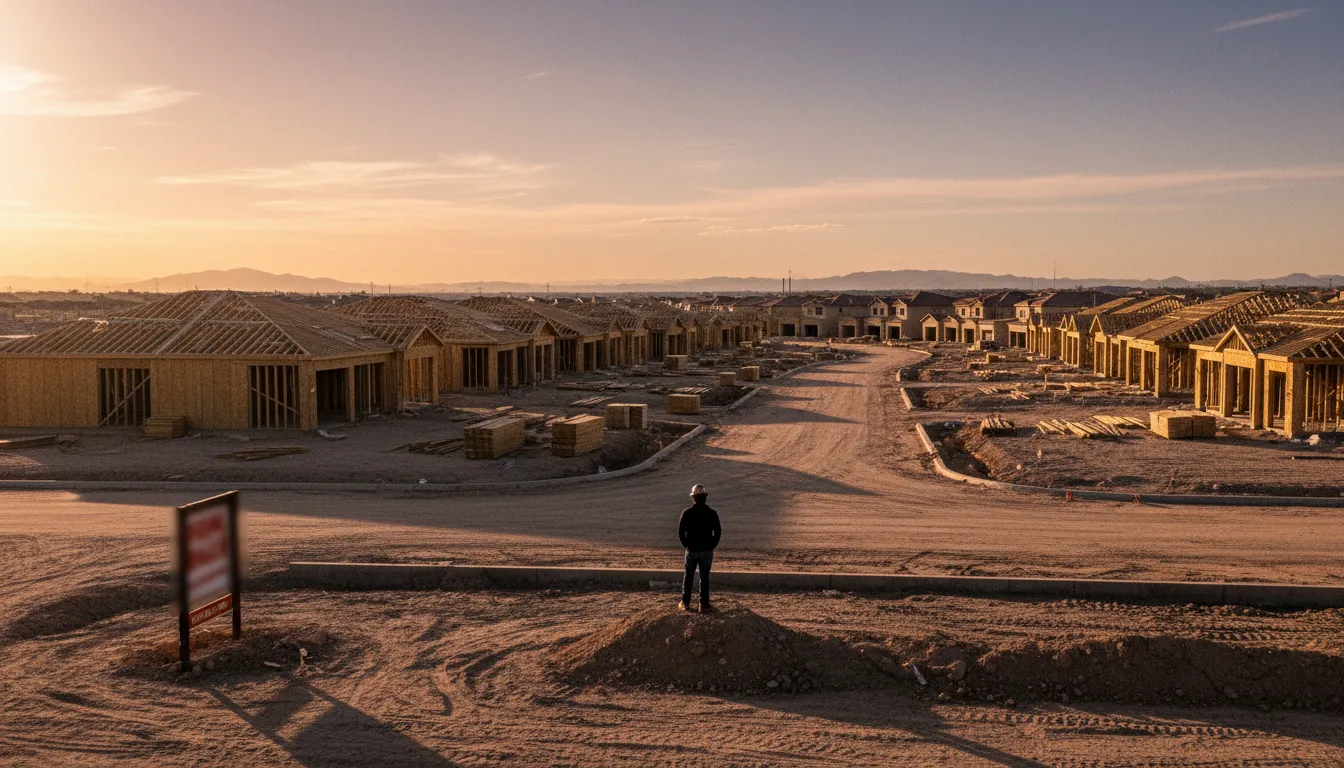
Iran War Sends Mortgage Rates to Six-Month High
The conflict in Iran and the Strait of Hormuz blockade have driven U.S. mortgage rates to 6.38%, their highest in six months, as surging oil prices push Treasury yields higher and sideline homebuyers during the critical spring selling season.

Oil Shock Ripples Into Housing
The war in Iran has opened an unexpected front — in the global housing market. The average 30-year fixed mortgage rate in the United States climbed to 6.38% in the week ending March 26, according to Freddie Mac data, marking the fourth consecutive weekly increase and the highest level since October 2025. The 0.16 percentage-point jump in a single week was the steepest since April 2025.
Before U.S. and Israeli strikes on Iran commenced on February 28, the benchmark rate had been drifting downward toward 5.99%. One month later, the picture has reversed sharply — and the mechanism runs straight through the oil market.
From the Strait of Hormuz to Your Front Door
Iran's partial blockade of the Strait of Hormuz — through which roughly 20% of the world's daily oil supply passes — has sent crude prices soaring. Brent crude reached $105 per barrel this week, with brief spikes near $120 earlier in March. The disruption cut tanker traffic by roughly 70% at its peak and forced over 150 vessels to anchor outside the chokepoint.
Higher oil prices feed directly into inflation expectations, which in turn push up yields on U.S. Treasury bonds. The 10-year Treasury yield, the benchmark to which mortgage rates are pegged, has surged nearly half a percentage point in a month to around 4.39–4.45%, approaching levels last seen during the tariff turbulence of April 2025.
"The conflict is hurting the opportunity for Americans to make ends meet, much less afford a potential home purchase," said Mark Hamrick, senior economic analyst at Bankrate. Deutsche Bank strategist Jim Reid described the yield increases as "aggressive," warning they could climb further if economic disruption deepens.
Buyers Retreat From the Market
The rate spike is already chilling demand. Refinance applications fell 15% week-over-week, according to the Mortgage Bankers Association, while purchase applications also declined for a second straight week. A recent survey found that one in four Americans have paused major purchases — including homes and cars — because of war-related uncertainty.
"Higher mortgage rates, coupled with affordability constraints and economic uncertainty, pushed some potential homebuyers to the sidelines," said MBA Vice President Joel Kan.
The timing is particularly painful. Spring is traditionally the strongest selling season for residential real estate, and analysts had expected 2026 to mark a modest recovery in affordability after years of elevated rates. Instead, the Federal Reserve has raised its core inflation forecast for 2026 to 2.7% and signaled only one possible rate cut this year, dashing hopes for rapid relief.
A Global Ripple Effect
The damage extends well beyond the United States. European and Asian bond markets have tracked Treasury movements upward, raising borrowing costs for homebuyers from London to Sydney. Energy-importing economies face a double squeeze: higher fuel bills erode household budgets even as mortgage payments climb.
For now, the housing market is caught between two forces — a long-term trend toward improved affordability and a sudden geopolitical shock pulling in the opposite direction. Until the conflict in Iran de-escalates or oil markets find a new equilibrium, prospective buyers may have little choice but to wait on the sidelines.