Iran-US Nuclear Talks in Geneva: Deal or Strike?
The US and Iran held a third round of high-stakes nuclear negotiations in Geneva on February 26, as Washington deployed its largest Middle East military force in decades and imposed fresh sanctions on Tehran.
Third Round in Geneva Ends With Cautious Progress
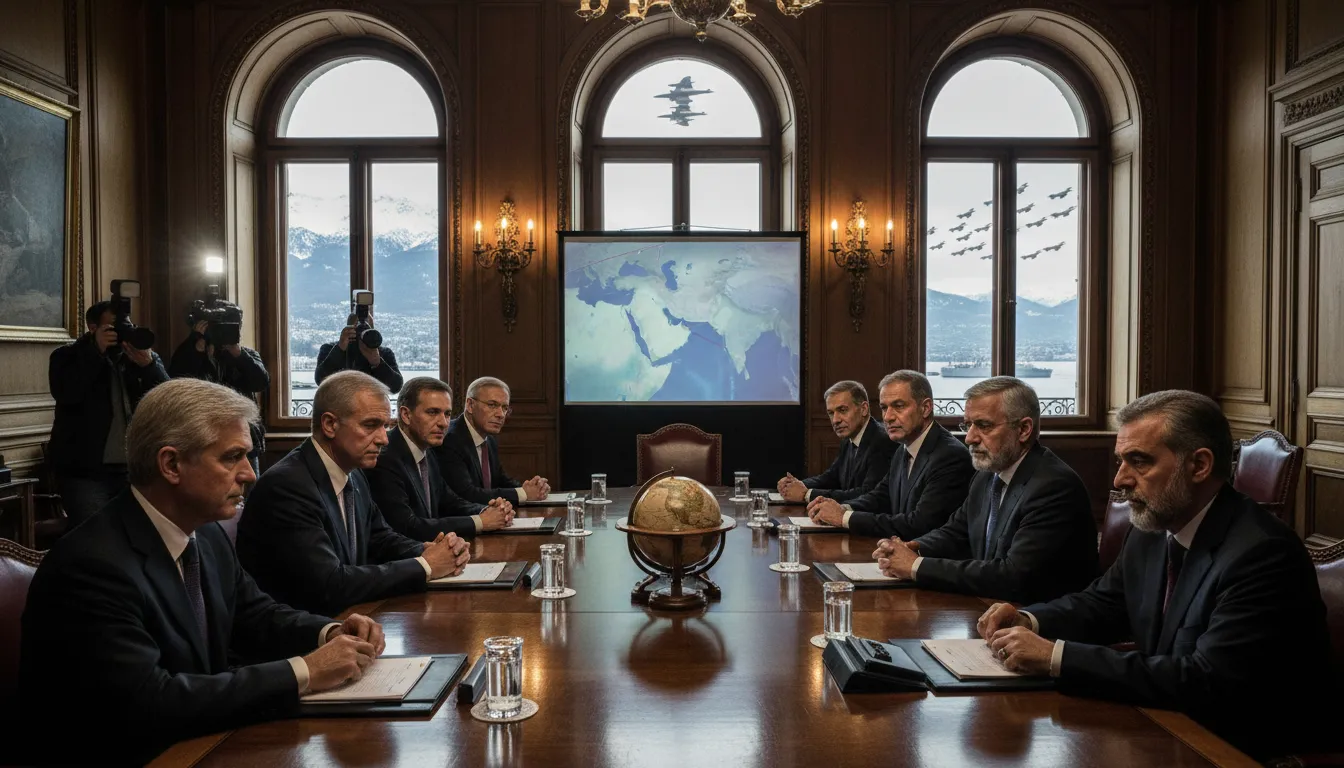
The United States and Iran wrapped up their most intensive round of nuclear negotiations yet in Geneva on February 26, with both sides claiming forward movement but no final agreement in sight. Iranian Foreign Minister Abbas Araghchi, who led Tehran's delegation, called it "the longest, most serious round" of talks so far and said "very good progress" had been made on both the nuclear and sanctions fronts. A senior U.S. official described the session as "positive," though American negotiators were reportedly disappointed by Iranian positions during the morning session.
The talks, mediated by Oman and held at the residence of the Omani ambassador to the United Nations in Geneva, were led on the American side by Special Envoy Steve Witkoff and presidential adviser Jared Kushner. Araghchi announced that technical discussions would move to Vienna — at the headquarters of the International Atomic Energy Agency — next week, with a fourth round of political-level talks to follow shortly after.
Maximum Pressure: Sanctions and an Armada
The diplomatic engagement unfolded against a backdrop of unprecedented U.S. military muscle-flexing. According to the Military Times, the Pentagon has assembled the largest concentration of American warships and aircraft in the Middle East in decades — two carrier strike groups, including the USS Abraham Lincoln and the USS Gerald R. Ford, 16 surface warships, and over 100 combat aircraft including F-35s, F-22s and F-16s. The scale rivals the five-carrier deployment that preceded the 2003 invasion of Iraq.
President Donald Trump has been characteristically blunt. Warning of "bad things" if Iran fails to reach a deal, he described a "massive Armada" heading toward the region and suggested military options — ranging from targeted strikes to broader operations — remain on the table. Vice President JD Vance struck a slightly softer tone, saying Washington prefers "the diplomatic option" and that any military action would not drag into a prolonged regional war.
Just one day before the Geneva talks began, the Treasury Department announced new sanctions targeting 12 vessels and multiple companies and individuals involved in Iran's oil exports and weapons procurement. Treasury Secretary Scott Bessent stated Iran was "exploiting financial systems to sell illicit oil" and fund its nuclear and conventional weapons programs.
What Each Side Wants
The negotiating gaps remain significant. Washington is pushing for Iran to abandon nuclear weapons development, make concessions on its ballistic missile program, and curtail support for militant proxies across the Middle East. Tehran, for its part, insists that uranium enrichment must continue on Iranian soil under IAEA supervision and demands the lifting of all U.S. sanctions and UN Security Council resolutions. An Iranian source told NBC News that the "key to any agreement" is comprehensive sanctions relief.
Iran's Supreme Leader has stated his country will not pursue nuclear weapons, but U.S. Vice President Vance told reporters that Washington has seen evidence of Iran attempting to rebuild a nuclear weapon — an allegation Tehran denies.
Stakes: Oil, Stability, and the Global Order
The outcome of these talks carries enormous consequences. A breakdown could trigger strikes on Iranian nuclear sites, destabilizing the Persian Gulf and driving oil prices sharply higher. A deal, conversely, could ease sanctions, reintegrate Iran into global energy markets, and reshape the regional balance of power. Analysts note that the military buildup itself — the largest in the region in over two decades — signals how seriously Washington views its deadline, which Trump has set at roughly ten to fifteen days.
With technical teams now heading to Vienna and a fourth round expected within days, the window for diplomacy remains open — but narrow.